Three months into an Accutane (isotretinoin) course, most patients are past the worst of it and beginning to see real, measurable improvement. The initial purging phase “” that frustrating period where acne actually gets worse before it gets better “” has typically resolved by weeks eight through ten, and by month three, many people report a 40 to 60 percent reduction in active inflammatory lesions. Skin oil production drops significantly, and the deep, painful cystic breakouts that prompted the prescription in the first place are often smaller, less frequent, and quicker to heal. A patient who started treatment with persistent jawline cysts, for example, might find that by month three they are dealing with only occasional smaller pimples and a good deal of residual redness rather than active, inflamed nodules.
That said, three months is not the finish line. Most Accutane courses run five to seven months, and some patients “” particularly those on lower doses or with severe nodulocystic acne “” may not see dramatic clearing until month four or five. The three-month mark is better understood as the turning point, the stage where the drug’s cumulative effects start to become visible and where dermatologists typically evaluate whether the current dosage is working or needs adjustment. The rest of this article breaks down what specific changes to expect at this stage, why some people respond faster than others, how to manage the side effects that peak during this period, and what the remaining months of treatment typically look like. If you are currently at or approaching the three-month point and feeling uncertain about your progress, the details below should help you calibrate your expectations against what clinical data and patient experience actually show.
Table of Contents
- What Do Typical Accutane Results Look Like After Three Months of Treatment?
- Why Some Patients See Slower Progress at the Three-Month Mark
- Managing Side Effects That Peak During Month Three
- What Changes Between Month Three and Full Clearance
- Common Concerns and Setbacks During Accutane Treatment
- The Role of Skincare Routine During Month Three
- What to Expect After Completing the Full Course
- Conclusion
What Do Typical Accutane Results Look Like After Three Months of Treatment?
By the end of month three, the majority of patients on standard-dose isotretinoin “” typically 0.5 to 1.0 mg per kilogram of body weight per day “” have moved past the inflammatory flare that often characterizes the first four to eight weeks. Clinical studies consistently show that the drug begins producing statistically significant reductions in acne lesion counts somewhere between weeks eight and twelve. In practical terms, this means fewer new breakouts forming each week, noticeably less oily skin (many patients describe their skin as almost uncomfortably dry by this point), and a general shift from active acne to post-inflammatory marks. The degree of improvement varies considerably, though. Someone taking a higher dose relative to their body weight tends to clear faster, while patients started on a conservative dose of 20 or 30 mg daily may still be dealing with moderate breakouts at month three. Acne location matters as well.
Facial acne generally responds faster than truncal acne “” back and chest breakouts often lag behind by several weeks. A person whose primary concern is back acne should not be alarmed if their face is clearing nicely at three months while their back still shows active lesions. It is also worth noting what “results” means at this stage. True clearance “” the kind where you look in the mirror and see genuinely clear skin “” is uncommon at month three for anyone who started with severe acne. What most people experience is a dramatic reduction in the severity and frequency of breakouts, not yet the absence of them. The skin may look significantly better than it did at baseline, but it is still in transition.

Why Some Patients See Slower Progress at the Three-Month Mark
Not everyone follows the same timeline, and falling behind the average curve does not necessarily mean the medication is failing. One of the most common reasons for slower results is underdosing. Some dermatologists start patients at lower doses to minimize side effects or reduce the severity of the initial purge. While this approach has its merits “” particularly for patients prone to scarring, where a bad purge could cause lasting damage “” it also delays the cumulative dose accumulation that drives long-term clearance. Isotretinoin works on a cumulative basis, and most dermatologists target a total cumulative dose of 120 to 150 mg per kilogram over the full treatment course. At a lower daily dose, it simply takes longer to reach that target.
However, if you are three months in and seeing no improvement whatsoever “” or if your acne is actively getting worse “” that is a different situation. Continued worsening past the eight-week mark is unusual and warrants a conversation with your dermatologist. It may indicate that the dose needs to be increased, that there is a hormonal component that isotretinoin alone cannot fully address, or in rare cases, that the diagnosis needs revisiting. Conditions like gram-negative folliculitis can mimic severe acne and will not respond to isotretinoin. Absorption is another often-overlooked factor. Isotretinoin is a fat-soluble drug, and studies have shown that taking it with a meal containing at least 20 grams of fat can roughly double its absorption compared to taking it on an empty stomach. A patient who has been taking their capsules with coffee and toast each morning may genuinely be absorbing half the intended dose, which would explain lagging results.
Managing Side Effects That Peak During Month Three
By the three-month mark, the side effects of isotretinoin are typically at or near their peak intensity. Dry lips are almost universal “” virtually every patient experiences them “” and by month three, lip dryness has usually progressed well beyond minor chapping into something that requires near-constant maintenance with a heavy occlusive balm like Aquaphor or CeraVe Healing Ointment. Dry skin on the face and body, dry eyes, and dry nasal passages are also common. Some patients develop nosebleeds from the nasal dryness, particularly in winter months or dry climates. Joint and muscle aches are a side effect that tends to build gradually over time and can become noticeable around months two and three, especially in physically active patients.
A college athlete on Accutane, for instance, might find that their knees ache after practice in a way they never did before starting the drug. This side effect is dose-dependent and generally manageable, but it is worth reporting to your dermatologist because it occasionally prompts a dose reduction. The more serious potential side effects “” mood changes, liver enzyme elevations, elevated triglycerides “” are monitored through the regular blood work that should be happening monthly during treatment. Most patients tolerate isotretinoin without significant laboratory abnormalities, but month three is often the point where lipid elevations, if they are going to occur, become apparent. This is one reason dermatologists check bloodwork regularly rather than just at the start and end of treatment.

What Changes Between Month Three and Full Clearance
The period from month three through the end of treatment is where the real transformation typically happens. While the first three months are largely about reducing active inflammation and shutting down oil production, months four through six (or seven) are when the skin fully clears and begins to heal. Post-inflammatory hyperpigmentation “” those flat red or brown marks left behind after pimples resolve “” starts to fade more noticeably during this phase, though it often takes months after treatment ends to fully resolve. There is a real tradeoff in how dermatologists approach the back half of treatment. Maintaining a higher dose throughout accelerates clearance and helps ensure the patient reaches an adequate cumulative dose, which is associated with lower relapse rates.
But higher doses also mean more intense side effects over a longer period. Some dermatologists will increase the dose gradually and keep it high for the final months; others prefer a steady moderate dose extended over a slightly longer course. Both approaches can work, and the right choice depends on how well the individual patient tolerates the drug. Patients who reach month three with significant improvement should expect continued, steady progress from this point forward. The gains tend to be less dramatic week over week compared to the initial turnaround “” going from 60 percent clear to 90 percent clear feels slower than going from actively broken out to 60 percent clear “” but the trajectory is generally consistent.
Common Concerns and Setbacks During Accutane Treatment
One of the most unsettling experiences during an Accutane course is having a breakout after a period of improvement. This can and does happen, even at month three or later, and it does not mean the treatment is failing. Hormonal fluctuations, stress, and even dietary factors can trigger isolated breakouts during treatment. The difference is that these breakouts tend to be smaller, resolve faster, and occur far less frequently than pre-treatment acne. A warning worth emphasizing: some patients, seeing significant improvement at month three, are tempted to stop treatment early. This is almost always a mistake.
The cumulative dose matters enormously for long-term outcomes. Studies show that patients who complete a full course reaching the 120 to 150 mg/kg cumulative target have relapse rates of roughly 20 to 30 percent, while those who stop short of that target relapse at significantly higher rates, sometimes exceeding 50 percent. The improvement visible at month three is largely the drug suppressing sebum production and inflammation in real time; it has not yet finished the deeper changes to sebaceous gland activity that provide lasting results. Scarring is another concern that patients often raise at the three-month point. Active acne scars will not improve while on isotretinoin, and procedural scar treatments “” laser resurfacing, microneedling, chemical peels “” should be avoided during treatment and for at least six months after completing the course, because isotretinoin impairs normal wound healing. This is a limitation that frustrates many patients, but attempting these procedures too early risks making scarring worse.
The Role of Skincare Routine During Month Three
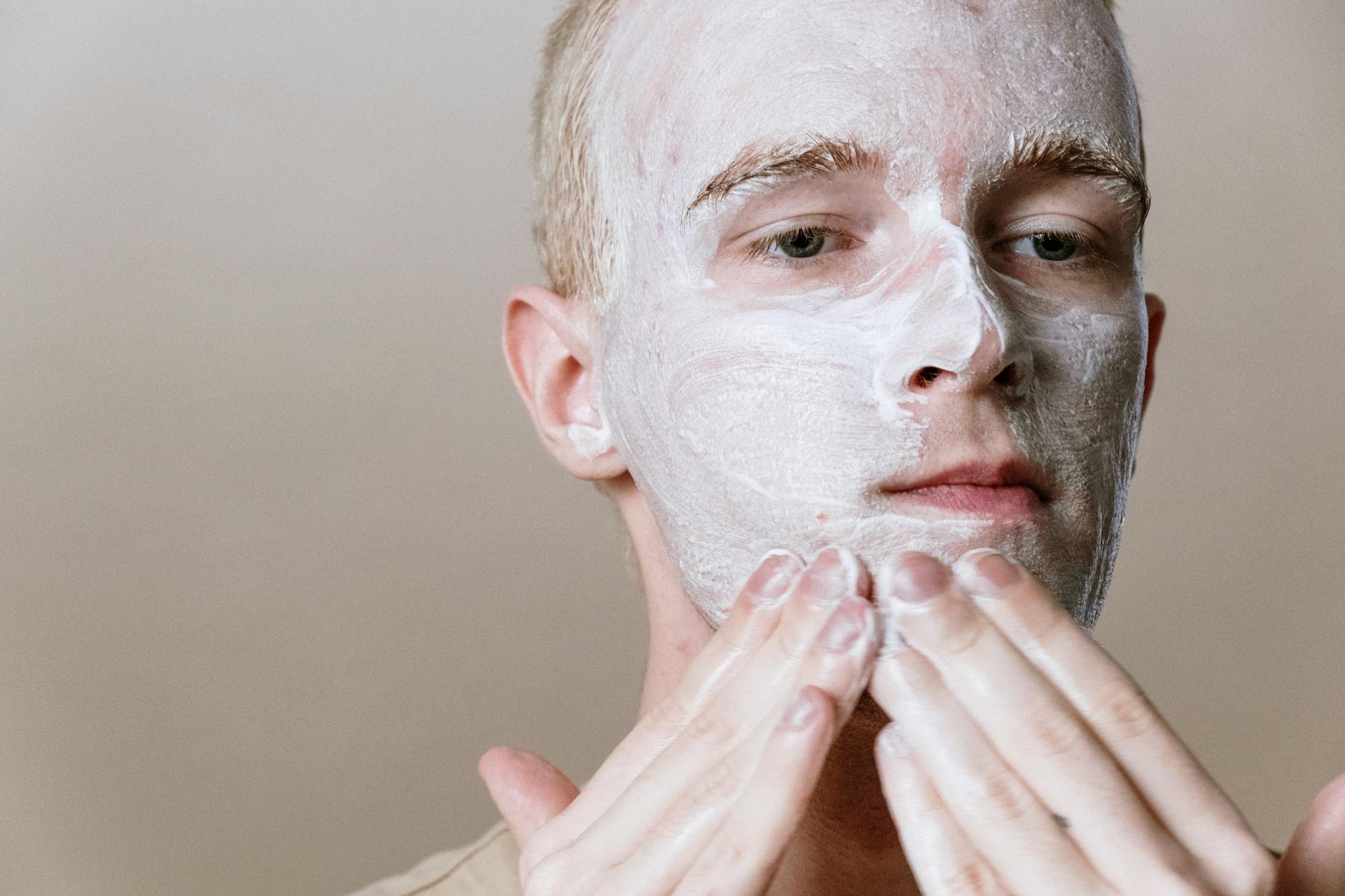
By month three, most patients have learned through trial and error that their pre-Accutane skincare routine no longer works. Active ingredients like benzoyl peroxide, salicylic acid, retinol, and glycolic acid are generally too harsh for skin that has been thinned and sensitized by isotretinoin. The ideal routine at this stage is aggressively simple: a gentle, non-foaming cleanser, a rich moisturizer applied to damp skin, and a mineral or hybrid sunscreen during the day.
A patient who was previously using a five-step routine with multiple actives may find that paring down to these three products actually produces better-looking skin than the elaborate regimen ever did. Sunscreen deserves special attention. Isotretinoin increases photosensitivity significantly, and sun exposure during treatment can both worsen post-inflammatory hyperpigmentation and increase the risk of sunburn at exposures that would not have caused problems before. This is not a theoretical concern “” a patient who spends a weekend at the beach during month three of Accutane can end up with a painful burn and darkened acne marks that take months longer to fade.
What to Expect After Completing the Full Course
Finishing an Accutane course after five to seven months, with the three-month results as a foundation, typically yields clear or near-clear skin for the majority of patients. Studies report that 85 to 90 percent of patients achieve significant or complete clearance by the end of a full course. The months following treatment completion involve a gradual return of some oil production “” skin will not stay as dry as it was on the drug “” and continued fading of residual marks.
Most dermatologists advise waiting at least two to three months after the final dose before assessing whether a second course might be needed, since improvement can continue even after stopping the medication. For those who do relapse, it most commonly occurs within the first year after completing treatment and tends to be milder than the original acne. A second course of isotretinoin is effective in the vast majority of these cases. The three-month milestone, while not the end of the journey, is reliably the point where the treatment shifts from an act of faith into visible, tangible evidence that the drug is doing what it was designed to do.
Conclusion
Accutane results at three months represent a genuine turning point for most patients. The initial purge has resolved, active breakouts are substantially reduced, and oil production has dropped to a fraction of its pre-treatment level.
While full clearance typically takes another two to four months beyond this point, the three-month mark is where the drug’s effectiveness becomes undeniable for the large majority of people taking it. The key takeaways are straightforward: expect meaningful but incomplete improvement at month three, do not stop treatment early regardless of how good your skin looks, take the medication with adequate dietary fat to ensure proper absorption, keep your skincare routine simple and gentle, and maintain open communication with your dermatologist about side effects and progress. The remaining months of treatment are where the cumulative dose reaches the threshold associated with lasting remission, and patience through this phase is what separates a temporary suppression of acne from a durable result.