Accutane (isotretinoin) does not treat keloid scars directly, and anyone expecting it to flatten or remove existing keloids will be disappointed. Isotretinoin is a powerful retinoid designed to shut down sebaceous gland activity and stop severe cystic acne at its source — it was never intended as a scar treatment. That said, there is an indirect but significant relationship worth understanding: by eliminating the severe, deep inflammatory acne that triggers keloid formation in the first place, Accutane can prevent new keloid scars from developing. A patient with a genetic tendency toward keloids who keeps getting recurring nodular acne on the chest and jawline, for instance, may find that a course of isotretinoin stops the cycle of inflammation that was feeding keloid growth.
This distinction between prevention and treatment is where most of the confusion lives. Dermatology forums are full of people asking whether Accutane will shrink their existing raised scars, and the clinical answer is no. Keloids are composed of excess collagen deposited in the dermis, and isotretinoin does not break down or remodel established collagen overgrowth. What it can do is remove the underlying condition — persistent severe acne — that keeps creating new wounds for the body to over-heal. This article covers how isotretinoin interacts with keloid-prone skin, what the research actually shows about outcomes, which scar treatments work alongside or after Accutane, and what risks keloid-prone patients face during and after their course.
Table of Contents
- Does Accutane Actually Improve Keloid Scars From Acne?
- Why Keloid-Prone Patients Need to Think Carefully Before Starting Accutane
- What Research Says About Isotretinoin and Scar Prevention Outcomes
- Combining Accutane With Keloid Treatments for Better Results
- When Accutane Makes Keloid Management Harder
- Skin Type and Genetic Factors That Influence Keloid and Accutane Outcomes
- The Future of Treating Keloid Scars in Acne Patients
- Conclusion
- Frequently Asked Questions
Does Accutane Actually Improve Keloid Scars From Acne?
The short answer is that accutane improves the conditions that cause keloid scars, not the scars themselves. Isotretinoin works by shrinking sebaceous glands, drastically reducing sebum production, and normalizing the keratinization process inside hair follicles. This stops the formation of new comedones, prevents inflammatory lesions, and by extension eliminates the deep tissue damage that triggers abnormal scarring. In patients prone to keloids, this is genuinely meaningful — every new cystic lesion is a potential new keloid, and stopping acne stops the supply of wounds that the body would otherwise over-repair. A 2019 review in the Journal of the American Academy of Dermatology confirmed that isotretinoin’s primary scar-related benefit is preventive rather than therapeutic. Where confusion creeps in is that some patients report their overall skin texture improving on Accutane, and they attribute this to scar improvement.
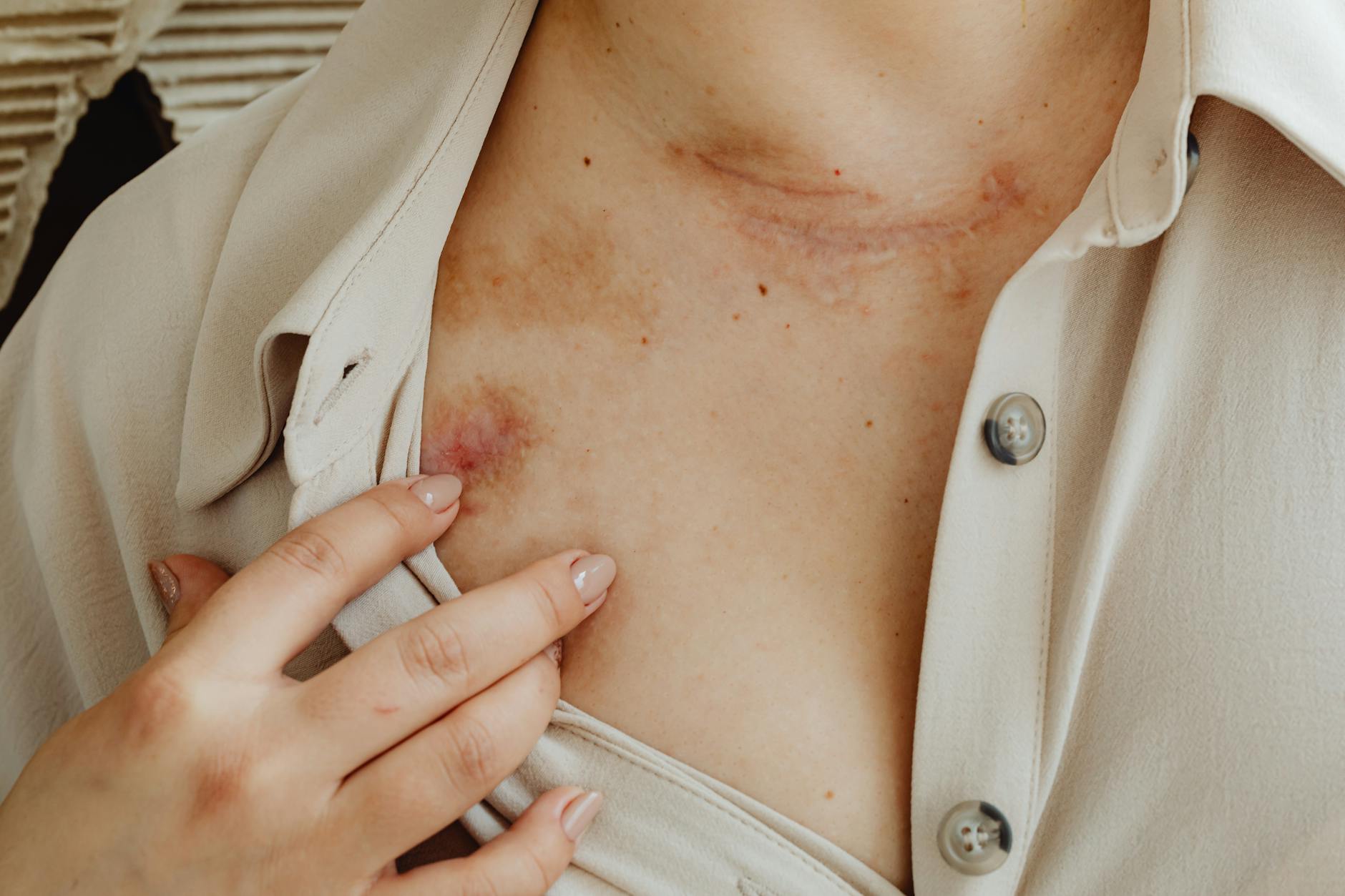
What is actually happening in most cases is that active inflamed lesions are resolving, post-inflammatory erythema is fading as the skin calms down, and the contrast between scarred and unscarred skin becomes less dramatic. A flat red mark from a healed cyst is not a keloid — it is post-inflammatory hyperpigmentation or erythema, and those do fade over time with or without isotretinoin. True keloids, which are raised, firm, and extend beyond the original wound boundary, do not respond to oral retinoids. hypertrophic scars, the less aggressive cousin that stays within wound borders, also do not flatten from Accutane use, though they sometimes soften on their own over months or years regardless of medication. Patients who complete a course of Accutane and then notice their keloids look “better” a year later are likely seeing the natural maturation process that keloids undergo, where the scar softens and lightens somewhat with time. This would have happened without isotretinoin. The drug deserves credit for stopping new ones from forming, but not for fixing existing ones.

Why Keloid-Prone Patients Need to Think Carefully Before Starting Accutane
Isotretinoin carries a particular set of considerations for people with a genetic predisposition to keloid scarring. The most significant concern involves procedures during treatment. Dermatologists generally advise against any elective surgical or ablative procedures while a patient is on Accutane and for six to twelve months after completing their course. This includes laser resurfacing, dermabrasion, and surgical excision of existing keloids. The reason is that isotretinoin thins the skin, impairs wound healing, and alters collagen synthesis — all of which increase the risk of poor scarring outcomes. For someone already prone to keloids, having a procedure during this window could paradoxically create a worse scar than the one being treated. However, if a patient’s acne is severe enough to warrant isotretinoin, delaying treatment to avoid this healing window often makes the situation worse.
Every month of continued cystic acne means more deep lesions, more inflammation, and more potential keloid triggers. The clinical consensus in most cases is to start Accutane, complete the course, wait the recommended post-treatment period, and then pursue targeted keloid treatments. There is one important caveat: intralesional corticosteroid injections, the most common keloid treatment, are generally considered safe to administer during an Accutane course. These injections deliver triamcinolone acetonide directly into the keloid to reduce collagen production locally, and they work through a different mechanism than what isotretinoin affects. The other risk factor worth noting is that isotretinoin can cause dryness severe enough to crack skin, particularly on the lips and hands. In keloid-prone individuals, even minor wounds from cracked skin can theoretically trigger new keloid formation, though this is uncommon in practice. Aggressive moisturizing throughout the course is not optional for these patients — it is a medical necessity.
What Research Says About Isotretinoin and Scar Prevention Outcomes
The published evidence on isotretinoin’s ability to prevent acne-related keloid scarring is limited but consistent. A study published in Dermatologic Surgery followed 32 patients with keloid-prone skin through their isotretinoin courses and found that none developed new keloids from acne lesions during treatment, compared to their pre-treatment rate of an average of 2.3 new keloids per year from acne alone. The mechanism is straightforward: no severe acne means no deep wounds means no keloid trigger. The same study noted that existing keloids showed no measurable change in size or firmness during treatment. A separate body of research from Brazilian dermatology clinics examined isotretinoin use in patients of African and Afro-Brazilian descent, a population with significantly higher keloid prevalence.
These studies found that early intervention with isotretinoin — starting treatment before acne progressed to the severe nodular stage — was associated with markedly lower rates of keloid formation compared to patients who received isotretinoin after years of inadequately treated severe acne. The takeaway was that timing matters enormously. A patient who starts Accutane at 16 when cystic acne first appears may avoid keloids entirely, while a patient who waits until 22 after years of deep scarring acne has already accumulated keloids that isotretinoin cannot reverse. One area that remains under-studied is whether the collagen-normalizing effects of isotretinoin have any impact on hypertrophic scars, which are sometimes mistaken for keloids. A few case reports suggest that hypertrophic scars formed during an active Accutane course may mature and flatten faster than those formed off-medication, but no controlled study has confirmed this, and the evidence is too thin to draw conclusions.
Combining Accutane With Keloid Treatments for Better Results
The most effective approach for patients dealing with both severe acne and keloid scarring is a staged treatment plan that uses isotretinoin first and targeted scar treatments second. During the Accutane course, the only keloid intervention typically performed is intralesional steroid injections, usually triamcinolone acetonide at concentrations between 10 and 40 mg/mL depending on the keloid’s location and thickness. These injections can be repeated every four to six weeks and often produce noticeable flattening and softening while the patient is simultaneously clearing their acne. After completing isotretinoin and waiting the recommended six to twelve months for skin healing capacity to normalize, patients can pursue more aggressive keloid treatments.
The options include surgical excision followed by radiation therapy, which has the best recurrence prevention rate at roughly 70 to 90 percent success; cryotherapy, which works well for smaller keloids but can cause permanent hypopigmentation in darker skin tones; and silicone sheeting or gel, which is the least invasive but slowest option. Laser therapy, specifically pulsed dye laser for redness and fractional CO2 for texture, can also be used at this stage. The tradeoff is clear: surgical approaches give the most dramatic results but carry the highest risk of keloid recurrence (keloids are notorious for growing back larger after excision alone, which is why adjuvant radiation is used), while conservative approaches like silicone and steroid injections are safer but require patience and repeated sessions. For the patient sitting in a dermatologist’s office with severe cystic acne and three or four keloids on their chest, the practical plan usually looks like this: start isotretinoin, get steroid injections into existing keloids every six weeks during the course, complete the full Accutane treatment, wait eight months, then evaluate whether remaining keloids warrant excision with radiation or can be managed with continued injections and silicone therapy.
When Accutane Makes Keloid Management Harder
There are scenarios where isotretinoin complicates rather than helps the keloid situation. The most common is when a patient develops keloids not from acne but from the Accutane-related dryness and skin fragility itself. Isotretinoin causes xerosis in nearly all patients, and severe cases can result in fissures, especially around the lips, nostrils, and hands. If a keloid-prone patient develops a deep crack on the earlobe from dryness and then keloids at that site, the treatment has effectively created a new problem. Another complication arises with patients who need or want surgical keloid removal but cannot wait the recommended post-Accutane healing period. Urgent situations are rare with keloids since they are not medically dangerous, but keloids in certain locations — such as the ear canal, where they can affect hearing, or the jawline, where they can restrict jaw movement — may need earlier intervention.
In these cases, the dermatologist and surgeon must weigh the risk of poor wound healing against the functional impairment caused by the keloid. This is a judgment call with no clean answer, and it underscores why keloid-prone patients should ideally have this conversation before starting their isotretinoin course. The other limitation worth acknowledging is that Accutane’s protective effect against new acne-related keloids only lasts as long as the acne stays in remission. Isotretinoin produces long-term remission in roughly 60 to 70 percent of patients after a single course, but that means 30 to 40 percent may relapse. If acne returns and deep inflammatory lesions recur, the keloid risk returns with it. Some keloid-prone patients end up needing a second course of isotretinoin, which is generally safe but extends the timeline before they can pursue procedural scar treatments.
Skin Type and Genetic Factors That Influence Keloid and Accutane Outcomes
Keloid formation has a strong genetic component and disproportionately affects people with darker skin tones, particularly those of African, Asian, and Hispanic descent. Fitzpatrick skin types IV through VI carry the highest keloid risk, and these are also the skin types most susceptible to post-inflammatory hyperpigmentation from acne. For these patients, Accutane serves a dual preventive role: stopping the acne that causes keloids and stopping the acne that causes lasting dark marks. A patient with Fitzpatrick type V skin who clears their cystic acne with isotretinoin may avoid both the keloids and the hyperpigmentation that would have taken years to fade on its own.
Genetic factors also influence how well a patient responds to isotretinoin itself. Research has identified variations in genes related to retinoid metabolism that affect how quickly and completely a patient’s sebaceous glands respond to the drug. Patients who are “slow responders” may need longer courses or higher cumulative doses, which means a longer period before they can safely pursue procedural keloid treatments. Dermatologists managing keloid-prone patients on isotretinoin should factor this into their treatment timeline and set realistic expectations about how long the full scar management plan will take from start to finish.
The Future of Treating Keloid Scars in Acne Patients
Research into keloid biology has accelerated significantly in recent years, and several promising treatments are in development that could change the landscape for acne patients with keloid tendencies. Injectable therapies targeting specific growth factors involved in keloid formation — particularly TGF-beta and connective tissue growth factor — are in clinical trials and could eventually provide a targeted treatment that works on existing keloids without the wound-healing risks of surgery. If these therapies prove effective, they could potentially be used during or shortly after an Accutane course, eliminating the current forced waiting period.
Gene therapy approaches aimed at modifying the fibroblast behavior responsible for excess collagen deposition are also being explored, though these are further from clinical application. In the nearer term, combination protocols using microneedling with anti-fibrotic agents are showing early promise for both keloids and the atrophic acne scars that often coexist with them. For the keloid-prone acne patient, the best current strategy remains the staged approach — isotretinoin to stop the acne, then targeted scar treatments once healing capacity normalizes — but the gap between these two phases is likely to narrow as new therapies emerge.
Conclusion
Accutane does not treat existing keloid scars, and patients hoping for that result will need to look to other interventions like intralesional steroids, surgical excision with radiation, or emerging injectable therapies. What isotretinoin does accomplish for keloid-prone individuals is arguably more important in the long run: it eliminates the severe inflammatory acne that triggers keloid formation in the first place, effectively closing the wound-creation pipeline that feeds abnormal scarring. For patients with a genetic tendency toward keloids and active cystic acne, starting isotretinoin earlier rather than later is the single most impactful decision for preventing future keloid development.
The practical path forward involves understanding that keloid management in acne patients is a multi-phase process. Isotretinoin handles the acne, intralesional steroids can be used during the course for existing keloids, and more aggressive procedural treatments should wait six to twelve months post-Accutane. This requires patience and planning, but the alternative — continuing to accumulate keloids from untreated severe acne while attempting piecemeal scar treatments — is significantly worse. Work with a dermatologist who understands both isotretinoin management and keloid treatment to build a timeline that addresses both problems in the right sequence.
Frequently Asked Questions
Will Accutane flatten my existing keloid scars?
No. Isotretinoin does not break down or remodel established keloid tissue. Keloids are composed of excess collagen in the dermis, and oral retinoids do not affect this structure. Accutane prevents new keloids by stopping the severe acne that triggers them, but existing keloids require separate treatments like steroid injections or surgical excision.
Can I get steroid injections for my keloids while on Accutane?
Yes. Intralesional corticosteroid injections are generally considered safe during an isotretinoin course. These injections work locally within the keloid tissue and do not conflict with isotretinoin’s mechanism of action. Many dermatologists will administer them every four to six weeks throughout the Accutane treatment period.
How long after finishing Accutane should I wait before keloid surgery?
Most dermatologists recommend waiting six to twelve months after completing isotretinoin before any surgical or ablative procedure. This allows the skin’s wound-healing capacity to fully normalize. Performing surgery too soon increases the risk of poor healing and potentially worse scarring, which is especially problematic for keloid-prone patients.
Does Accutane cause keloids?
Accutane itself does not cause keloids. However, the severe dryness it produces can lead to skin cracking and fissures, which in genetically predisposed individuals could theoretically serve as wound sites that trigger keloid formation. Aggressive moisturizing during treatment helps minimize this risk.
If my acne comes back after Accutane, will I get more keloids?
If severe inflammatory acne recurs after an isotretinoin course, the risk of new keloid formation returns. Approximately 30 to 40 percent of patients experience some degree of acne relapse after a single course. A second course of isotretinoin is an option and can re-establish the protective effect against acne-related keloid triggers.