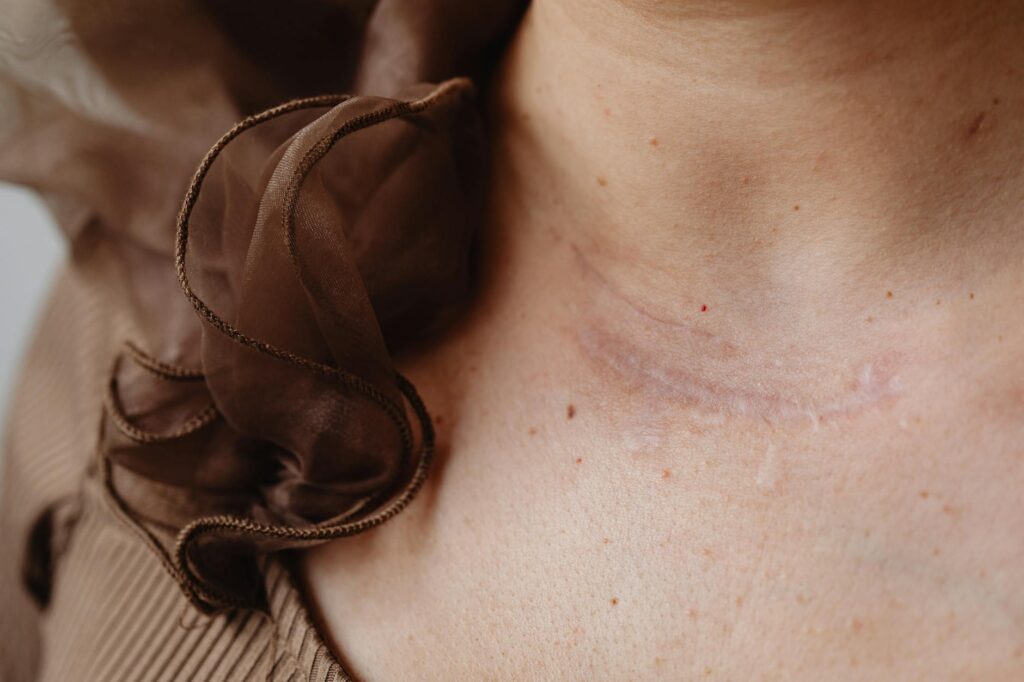
Accutane (isotretinoin) does not reverse atrophic scars that already exist. This is one of the most persistent misconceptions in acne treatment. Isotretinoin is extraordinarily effective at stopping the severe cystic acne that causes atrophic scarring in the first place, but the drug itself does not fill in, resurface, or rebuild the collagen lost in depressed scars. A patient who completes a six-month course of Accutane may find their skin clearer than it has been in years, yet the boxcar, icepick, and rolling scars from previous breakouts will largely remain unchanged. Some patients do report mild improvement in overall skin texture during treatment, likely because the reduction in active inflammation allows existing wounds to heal more completely, but this is not the same as scar revision.
Where Accutane fits into the atrophic scar conversation is prevention and timing. By halting the cycle of deep, inflammatory breakouts, a full course of isotretinoin prevents the formation of new atrophic scars. For someone like a 19-year-old with nodular acne producing new scars every month, starting Accutane early can be the single most important decision for long-term skin appearance. Once the course is finished and the drug has cleared the system, usually six months after the final dose, patients become candidates for scar treatments like fractional laser, subcision, and TCA cross that can actually rebuild lost tissue. This article covers how Accutane interacts with existing scarring, what the research says about outcomes, the critical waiting period before scar procedures, and the treatment combinations that produce real results for atrophic scars.
Table of Contents
- Does Accutane Improve Atrophic Scars or Only Prevent New Ones?
- What Results Can You Realistically Expect From Accutane When You Have Atrophic Scarring
- The Mandatory Waiting Period Between Accutane and Scar Treatment Procedures
- Combining Accutane With Post-Treatment Scar Procedures for Best Atrophic Scar Results
- Why Some Patients Report Accutane Made Their Atrophic Scars Worse
- Low-Dose Accutane Maintenance and Long-Term Atrophic Scar Prevention
- Emerging Research on Isotretinoin and Collagen Remodeling
- Conclusion
- Frequently Asked Questions
Does Accutane Improve Atrophic Scars or Only Prevent New Ones?
The clinical evidence is clear that isotretinoin’s primary role regarding atrophic scarring is preventive rather than corrective. A 2019 study published in the Journal of the American Academy of Dermatology followed 150 patients through a standard course of isotretinoin and found that while 95 percent achieved significant acne clearance, existing atrophic scars showed no statistically meaningful improvement on standardized scar grading scales. The scars that appeared to look better were largely cases where reduced redness and swelling from active lesions made the surrounding skin smoother, creating the visual impression of improvement without actual structural change in the scar tissue itself. There is a narrow exception worth noting. Shallow, recently formed atrophic scars, those less than six months old and still in the remodeling phase of wound healing, occasionally show mild improvement during isotretinoin treatment. This happens because isotretinoin reduces inflammation systemically, giving the body’s natural collagen repair processes a less hostile environment in which to work.
A dermatologist at Mount Sinai described this as the difference between trying to patch a wall while someone keeps punching new holes versus patching it in peace. But deeper scars, particularly icepick scars that extend into the dermis, show essentially zero response to isotretinoin alone. The frustration many patients feel is understandable. They endure months of dry skin, blood tests, and the various side effects of accutane expecting their skin to emerge looking entirely new. When the acne is gone but the scars remain, it can feel like the treatment failed. Setting accurate expectations before starting isotretinoin, specifically that it stops new damage but does not undo old damage, is something dermatologists have gotten better at in recent years but still inconsistently communicate.

What Results Can You Realistically Expect From Accutane When You Have Atrophic Scarring
The realistic outcome for a patient with existing atrophic scars who completes isotretinoin is this: the active acne resolves, no new scars form, minor post-inflammatory erythema fades over the following months, and the atrophic scars themselves remain largely the same in depth and shape. Where patients often see what they interpret as scar improvement, it is usually a combination of reduced hyperpigmentation, decreased skin oiliness creating a smoother surface texture, and the psychological shift of seeing clear skin for the first time in years. Photographs taken under consistent lighting, however, show the depressed scars persist. However, if a patient has mixed scarring, meaning both atrophic scars and active hypertrophic or keloidal scarring from ongoing acne, isotretinoin can indirectly improve the overall picture. By stopping the inflammatory process, existing hypertrophic scars may flatten somewhat over time as the body reabsorbs excess collagen without new inflammatory signals pushing further growth. This can make atrophic scars more prominent by contrast, which some patients perceive as their scars getting worse on Accutane.
They are not getting worse. The surrounding terrain is simply changing, making the depressions more visible. Patients with darker skin tones are particularly susceptible to this perception because post-inflammatory hyperpigmentation often masks scar depth, and as that pigmentation clears during treatment, the true topography of the scarring becomes apparent. A critical limitation to understand is that isotretinoin thins the skin and impairs wound healing during treatment and for a period afterward. This means that even minor injuries during a course of Accutane can result in new scarring. Patients should avoid picking at their skin, aggressive exfoliation, waxing, and any elective procedures involving skin trauma while on the drug. The very medication that prevents scar-causing acne can paradoxically make the skin more vulnerable to scarring from other sources.
The Mandatory Waiting Period Between Accutane and Scar Treatment Procedures
One of the most important clinical guidelines surrounding isotretinoin and atrophic scars is the mandatory waiting period between completing a course and undergoing any resurfacing or scar revision procedure. The traditional recommendation has been to wait at least six months after the last dose of isotretinoin before pursuing ablative procedures like CO2 laser or deep chemical peels. Some conservative practitioners recommend waiting twelve months. This is not arbitrary caution. Isotretinoin suppresses sebaceous gland activity and alters the skin’s ability to re-epithelialize, meaning the surface layer regenerates more slowly and unpredictably after trauma. A well-documented case series from the early 2000s reported several patients who underwent dermabrasion within three months of finishing isotretinoin and developed hypertrophic scarring in the treatment areas, effectively trading atrophic scars for raised, ropey ones.
This sobered the dermatologic community considerably. More recent evidence, particularly a 2021 review in Dermatologic Surgery, has suggested that non-ablative procedures like microneedling and certain non-ablative fractional lasers may be safe at the lower end of that waiting window, perhaps as early as three to four months post-treatment, but this remains debated and depends heavily on individual healing capacity. For patients eager to address their atrophic scars after Accutane, this waiting period can feel agonizing. The practical advice is to use the interim productively. Consistent sunscreen use, gentle retinoid reintroduction once cleared by a dermatologist, and a basic routine that supports barrier repair will optimize skin health for the procedures to come. Some practitioners also use this period to begin injectable fillers in deeper rolling scars, as fillers do not require the same re-epithelialization that ablative methods demand, though even this approach requires individual assessment.
Combining Accutane With Post-Treatment Scar Procedures for Best Atrophic Scar Results
The most effective strategy for atrophic scars is sequential rather than simultaneous: complete a full course of isotretinoin to halt scar-causing acne, observe the waiting period, then pursue targeted scar revision. The specific procedures that work best depend on the type of atrophic scar. Icepick scars respond best to TCA cross, a technique where trichloroacetic acid is applied directly into individual scars to stimulate collagen from the bottom up. Rolling scars, which create a wave-like undulation in the skin, are best treated with subcision, where a needle is inserted beneath the scar to release the fibrous bands tethering it down, often followed by filler or platelet-rich plasma. Boxcar scars, which have defined vertical edges, respond to fractional ablative laser or punch excision depending on their depth. The tradeoff patients face is between aggressive treatment with longer downtime and higher risk versus conservative, multi-session approaches with lower risk per session but more total appointments.
A single session of deep fractional CO2 laser can produce dramatic improvement in shallow boxcar scars but comes with one to two weeks of significant redness, crusting, and risk of hyperpigmentation especially in skin types III and above on the Fitzpatrick scale. By comparison, a series of five to six microneedling sessions spaced monthly may produce comparable cumulative results with minimal downtime per session, but requires six months or more of active treatment. Neither approach is universally superior. The choice depends on scar type and depth, skin type, tolerance for downtime, budget, and how aggressive the patient and provider are comfortable being. Many dermatologists now use combination protocols within a single treatment session, such as subcision followed immediately by microneedling or filler placement. These combination approaches leverage different mechanisms simultaneously, with subcision releasing tethered scars and microneedling stimulating new collagen in the upper dermis. Post-Accutane patients who pursue these multimodal plans generally see 40 to 70 percent improvement in scar appearance over the course of a year, which represents realistic expectation-setting rather than the near-total erasure some clinics promise in marketing materials.
Why Some Patients Report Accutane Made Their Atrophic Scars Worse
A recurring concern in patient forums and dermatology offices is the perception that Accutane worsened existing atrophic scars. While isotretinoin does not physically deepen or widen atrophic scars, there are several mechanisms by which scars can appear more prominent during and after treatment. The most significant is the loss of sebaceous output. Oily skin has a natural plumping effect that partially fills and softens the appearance of depressions. When isotretinoin dramatically reduces oil production, sometimes permanently, the skin lies flatter against the underlying contours, making existing scars more topographically obvious. Patients who had very oily skin before treatment notice this most acutely. The second factor is the initial purge period.
During the first four to eight weeks of isotretinoin, many patients experience a flare of acne as the drug accelerates the turnover of microcomedones already present in the skin. If these purge lesions are severe, particularly in patients on lower doses that prolong this phase, new atrophic scars can form during the early weeks of treatment. This is a genuine risk, not a perception issue, and it is one reason some dermatologists start at very low doses or co-prescribe a short course of oral corticosteroids at the outset for patients with severe inflammatory acne. A warning for patients considering isotretinoin specifically for scar improvement: if your acne is mild or moderate and your primary concern is existing scarring rather than active breakouts, isotretinoin is almost certainly the wrong tool. The drug carries real side effects including dryness, mood changes, musculoskeletal discomfort, and mandatory pregnancy prevention measures. Accepting these risks for a medication that does not treat the actual problem, the scars, represents a poor risk-benefit calculation. In these cases, proceeding directly to scar treatment with a dermatologist or plastic surgeon is the more rational path.

Low-Dose Accutane Maintenance and Long-Term Atrophic Scar Prevention
Some dermatologists prescribe low-dose isotretinoin, typically 10 to 20 milligrams daily or every other day, as long-term maintenance therapy for patients with recurrent acne after a standard course. In the context of atrophic scarring, this approach has a specific protective function. Patients who relapse after their initial course and develop new inflammatory acne risk new scar formation with each flare. A maintenance dose keeps sebaceous activity suppressed enough to prevent clinically significant breakouts while avoiding the full side-effect burden of standard dosing.
A study from Tehran University followed 80 patients on low-dose maintenance for two years and found that none developed new atrophic scars compared to a 22 percent recurrence of scarring acne in the untreated control group. The practical consideration is that patients on even low-dose isotretinoin remain in the treatment window where ablative scar procedures carry elevated risk. Anyone on maintenance isotretinoin who wants to pursue laser or deep resurfacing will need to discontinue the medication and observe the waiting period, which may allow acne to return. This creates a frustrating loop for some patients and requires careful coordination between the treating dermatologist and the procedural specialist.
Emerging Research on Isotretinoin and Collagen Remodeling
Recent research has opened modestly interesting questions about isotretinoin’s effects on dermal collagen beyond its established mechanism of sebaceous suppression. A 2023 study in the British Journal of Dermatology demonstrated that isotretinoin upregulates certain matrix metalloproteinases involved in collagen turnover, which in theory could facilitate scar remodeling. However, the clinical significance of this finding remains unclear, as the degree of collagen remodeling observed in study biopsies was subclinical, meaning it was detectable under a microscope but not visible to the eye or measurable on scar grading scales. Looking ahead, the most promising developments for post-Accutane atrophic scar patients are not in isotretinoin pharmacology but in the scar treatment technologies they can access after finishing their course.
Advances in fractional radiofrequency microneedling, exosome therapy, and precision subcision techniques are narrowing the gap between what patients hope for and what procedures can deliver. The emerging consensus is that the ideal pathway for severe acne with scarring is early, adequate-dose isotretinoin to stop the damage, followed by a tailored multimodal scar treatment plan. Isotretinoin does its job by giving patients a clean canvas. What happens to the scars afterward depends on what they do next.
Conclusion
Accutane remains the most effective intervention for preventing atrophic scars by eliminating the severe inflammatory acne that causes them. It does not, however, reverse atrophic scars that have already formed. Patients who complete a course of isotretinoin should expect clear skin with existing scars intact, and should plan for a minimum six-month waiting period before pursuing scar revision procedures. The combination of isotretinoin followed by targeted treatments like subcision, TCA cross, fractional laser, or microneedling represents the most evidence-supported pathway to meaningful improvement in atrophic scarring.
Managing expectations is the single most important factor in patient satisfaction with this process. A 50 to 70 percent improvement in scar appearance through multimodal treatment is an excellent, realistic outcome that most patients find life-changing, even though it falls short of the flawless skin some hope for. Working with a dermatologist who is experienced in both isotretinoin management and procedural scar treatment ensures continuity of care and optimal timing between the drug and the procedures that follow. The scars did not form overnight, and they will not resolve overnight, but the tools available today are genuinely better than they were a decade ago, and the trajectory of improvement continues.
Frequently Asked Questions
Will Accutane fill in my existing acne scars?
No. Isotretinoin does not rebuild collagen or fill depressed scars. It stops the acne that causes new scars but does not reverse existing atrophic scarring. Any perceived improvement is typically due to reduced inflammation and smoother overall skin texture rather than structural scar repair.
How long after finishing Accutane can I get laser treatment for my scars?
The standard recommendation is at least six months after your last dose for ablative procedures like CO2 laser. Some evidence supports non-ablative treatments as early as three to four months, but this should be decided on a case-by-case basis with your dermatologist. Proceeding too early risks abnormal scarring and poor wound healing.
Can Accutane make my atrophic scars look worse?
Accutane does not physically deepen scars, but it can make them appear more prominent. Reduced oil production means less natural plumping of the skin surface, and clearing of post-inflammatory pigmentation can reveal the true depth of scars that were previously masked by redness or dark spots.
Should I take Accutane if I only have scars and no active acne?
Generally no. If your acne is controlled and your main concern is existing scarring, isotretinoin offers no benefit for the scars and carries unnecessary side effects. You would be better served by proceeding directly to scar treatment procedures with a qualified dermatologist or plastic surgeon.
What type of scar treatment works best after Accutane?
It depends on the scar type. Icepick scars respond best to TCA cross, rolling scars to subcision with filler, and boxcar scars to fractional laser or punch excision. Most patients benefit from a combination approach addressing multiple scar types simultaneously. Expect three to six sessions over six to twelve months for meaningful results.
Does low-dose Accutane prevent new scars from forming after treatment?
Yes, maintenance low-dose isotretinoin has been shown to prevent acne relapse and consequently prevent new atrophic scar formation. However, staying on even low-dose isotretinoin means you must observe the same waiting period before pursuing ablative scar procedures if you decide to stop the medication.