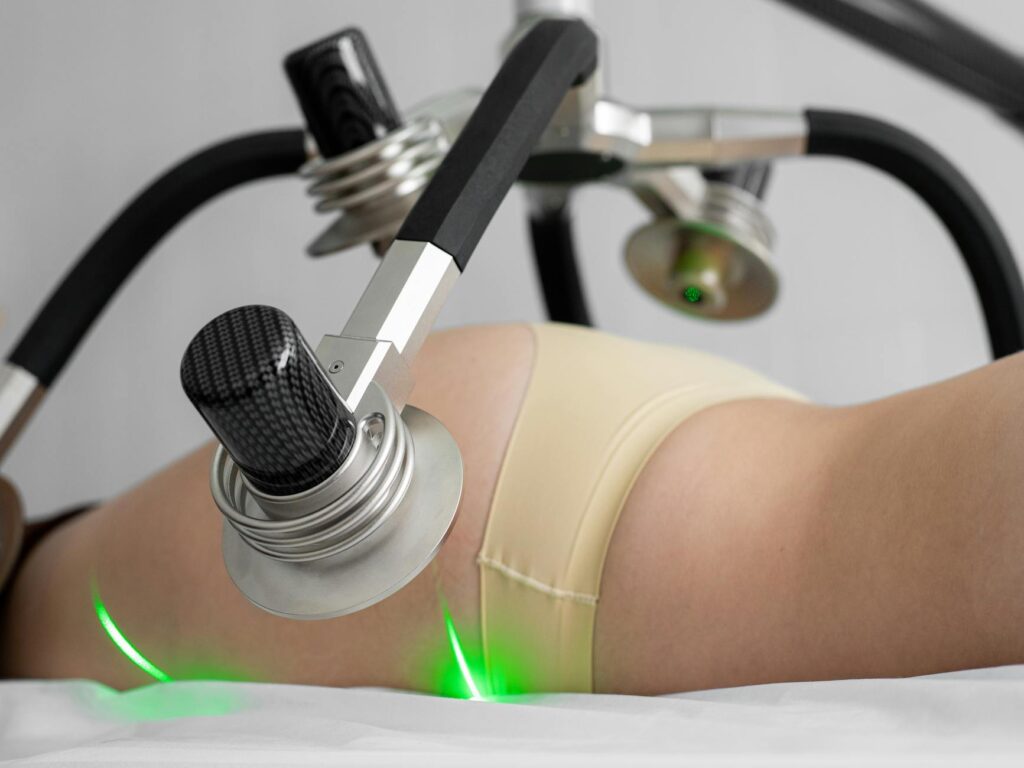
Laser treatments have become one of the most effective ways to fade post-acne redness because they specifically target the vascular component—the visible blood vessels and inflammation—left behind after acne heals. When acne lesions resolve, they often leave behind red or purple marks caused by dilated blood vessels and ongoing inflammation in the skin. Pulsed-dye lasers (PDL), with wavelengths between 585-595 nanometers, work by targeting these blood vessels directly, making them collapse and fade over time. This is fundamentally different from treating active acne breakouts, which is why lasers have become the preferred clinical solution for post-inflammatory redness that doesn’t respond to topical treatments.
Beyond targeting blood vessels, lasers address the deeper inflammatory cascade that keeps acne marks red and visible. Research shows that PDL treatment reduces inflammatory markers like interleukin-8 (IL-8) while increasing transforming growth factor-β (TGF-β), a compound that actively promotes wound healing and collagen production in the scarred tissue. This dual action—both collapsing visible blood vessels and reducing inflammation at the cellular level—is what makes lasers so much more effective than creams or serums for established post-acne redness. This article covers how laser treatments work at both the vascular and cellular level, explores the different types of lasers available, discusses realistic timelines for results, examines recent advances in laser technology, and helps you understand whether laser treatment might be the right option for your specific situation.
Table of Contents
- How Do Laser Treatments Target Post-Acne Redness?
- The Science Behind Laser-Induced Healing
- Different Laser Types and Their Specific Applications
- What to Expect in Terms of Results and Durability
- Who Benefits Most From Laser Treatment for Post-Acne Redness
- Recent Advances in Laser Technology for Acne Scars and Redness
- The Future of Laser Acne Treatment
- Conclusion
How Do Laser Treatments Target Post-Acne Redness?
The reason lasers are specifically chosen for post-acne redness comes down to how light energy interacts with the skin’s vascular system. The red or purple color of post-acne marks comes from hemoglobin in dilated blood vessels near the skin surface. When a pulsed-dye laser emits light at 585-595 nanometers, that wavelength is absorbed preferentially by the hemoglobin in these vessels. The energy converts to heat, which damages the vessel wall, causing the blood vessel to collapse and seal shut.
over the following weeks and months, the body gradually removes these damaged vessels, and the redness fades. This is why post-acne redness responds so dramatically to PDL treatment compared to active acne lesions—you’re targeting the exact structure causing the color. An important limitation to understand: while lasers are excellent for vascular redness, they work best on marks that are still relatively fresh. Post-acne redness that’s been present for several years may involve deeper scarring alongside the vascular component, and in those cases, a dermatologist might combine PDL with other modalities like microneedling or fractional CO2 lasers to address both the blood vessel dilation and any textural changes. For example, a patient with bright red marks from breakouts three months prior would typically see dramatic improvement with PDL alone, but someone with lingering purple marks from acne a year ago might need a combination approach for optimal results.
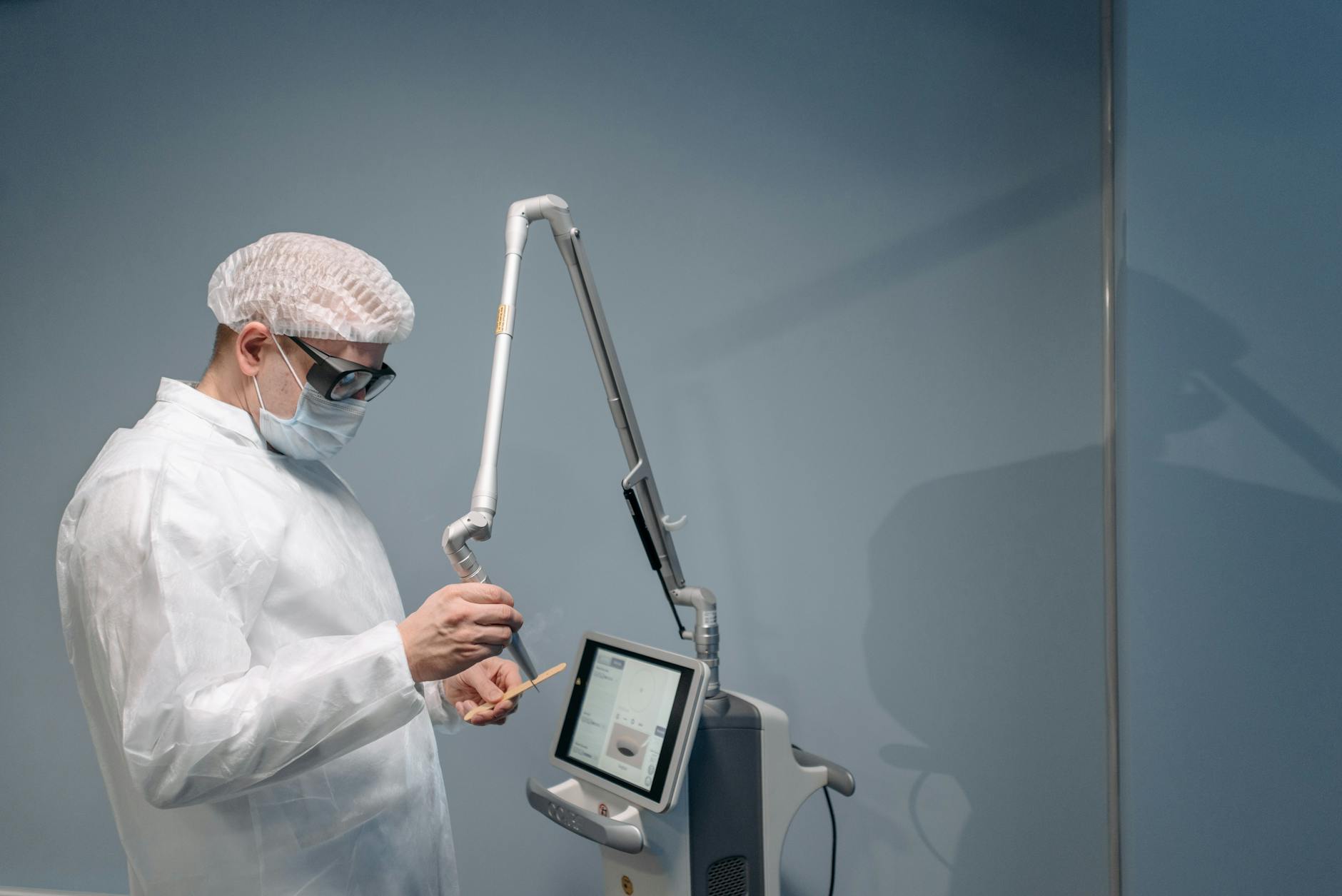
The Science Behind Laser-Induced Healing
Beyond the immediate visual effect of collapsing blood vessels, PDL therapy triggers a deeper healing response in the skin. Studies have documented that pulsed-dye laser treatment reduces proinflammatory compounds like IL-8—which is responsible for prolonging the inflammatory response—while simultaneously increasing TGF-β, a growth factor that signals the skin to stop being inflamed and start repairing itself. This shift in the inflammatory environment is crucial because post-acne redness persists partly due to ongoing inflammation in the skin, not just the visible blood vessels. By dampening this inflammation and promoting healing signals, lasers help the skin complete its recovery rather than stay stuck in a semi-inflammatory state. The bacteria responsible for acne, *Cutibacterium acnes*, produces compounds called porphyrins that actually absorb light in the blue-red range.
PDL targets these porphyrins as well, which means the treatment can also reduce bacterial populations in the skin—though this is more relevant for active acne treatment. For post-acne redness specifically, the anti-inflammatory shift in TGF-β and the vascular targeting are the primary mechanisms at work. However, there’s an important caveat: individual skin responses vary. Some people’s skin shifts out of inflammatory mode quickly after laser treatment, while others experience temporary mild redness or irritation during the healing phase. A dermatologist who has treated your skin type before will have better insight into what your particular healing timeline might look like.
Different Laser Types and Their Specific Applications
While pulsed-dye lasers are the gold standard for post-acne redness, recent advances have expanded the toolkit available. The traditional PDL (585-595 nm) remains the most proven and effective for vascular redness, with decades of safety and efficacy data. However, newer laser technologies have emerged, including 1726-nanometer lasers designed specifically to target sebum and inflammatory acne. These newer systems show promise for patients with inflammatory acne and the redness that follows, with favorable outcomes and minimal long-term complications reported in recent research. The advantage of these emerging systems is that they may work across different skin types with minimal irritation, whereas older PDL systems required careful calibration for darker skin tones.
An important distinction: not all “laser acne treatments” are the same. Some clinics use fractional CO2 or Erbium lasers, which work by creating controlled microscopic injury to promote skin resurfacing and collagen remodeling—these are better suited for textural scars and pitting rather than pure redness. If your concern is specifically the red or purple color of post-acne marks (not the texture or depth of scars), a vascular laser like PDL is the more direct choice. For example, a patient with smooth red marks would benefit most from PDL, while someone with both red color and visible pitting might benefit from a combination of PDL followed by fractional resurfacing. The 2026 standard of care increasingly involves personalized laser mapping, where practitioners tailor wavelengths and intensities precisely to your individual skin type, ensuring optimal results with minimal irritation—a significant advance from the one-size-fits-most approach of earlier years.
What to Expect in Terms of Results and Durability
One of the biggest advantages of laser treatment for post-acne redness is that results tend to be durable. For post-inflammatory redness specifically, PDL produces longer-lasting improvements compared to active acne lesions—in many cases, a series of treatments can fade redness significantly or completely. Most patients require follow-up treatments once or twice per year to maintain results, which is substantially less frequent than other treatments like chemical peels (which might need monthly or quarterly sessions) or topical retinoids (which require daily application indefinitely). This durability is one reason dermatologists consider lasers cost-effective over the long term despite their higher upfront cost. The timeline matters, though.
Most patients see noticeable fading of redness within 2-4 weeks of their first PDL session, with continued improvement over 8-12 weeks as the inflammation subsides and the body reabsorbs damaged blood vessels. However, you typically need multiple sessions (usually 3-5 spaced 6-8 weeks apart) to achieve optimal results rather than a single “magic bullet” treatment. For active acne lesions treated with lasers, results typically last 6-12 months before reactivation, whereas post-acne redness improvements can last much longer. It’s worth noting that during the healing phase after each treatment, you may experience temporary mild redness, slight swelling, or bruising (especially with PDL), which usually resolves within a week. Some patients find this temporary redness frustrating, so timing laser treatments when you have flexibility in your schedule is practical advice.
Who Benefits Most From Laser Treatment for Post-Acne Redness
Research confirms that laser treatments for post-acne redness are effective across diverse skin types, though the approach and settings require customization. The 2026 standard of personalized laser mapping represents a major advancement because earlier PDL systems sometimes caused hypopigmentation (temporary lightening) or hyperpigmentation (temporary darkening) in darker skin tones if not carefully calibrated. Modern systems and dermatologists trained in current protocols can treat all skin types effectively, but it’s important to seek a provider experienced with your specific skin tone. For example, someone with deep skin and post-acne redness will benefit from PDL, but they need a dermatologist who has successfully treated similar skin and knows the precise settings to use.
The ideal candidate for laser treatment is someone with post-acne redness that has been present for at least 3-6 weeks (so it’s clearly persistent) but ideally less than 1-2 years (before it becomes integrated into permanent scarring). People with active ongoing acne breakouts may also benefit, since treating the active lesions with laser can prevent some of the redness from developing in the first place. However, if your main concern is textural scars or deep pitting rather than redness, you should discuss combination approaches with a dermatologist, as PDL alone may not give you the results you’re hoping for. Additionally, people with certain medications (like isotretinoin for severe acne) may have timing restrictions on when they can start laser treatment, so medical history matters.

Recent Advances in Laser Technology for Acne Scars and Redness
The laser landscape has shifted significantly between 2024 and 2026. The most practical advance for patients is personalized laser mapping, where dermatologists use digital imaging and precise calibration to tailor each treatment to your individual skin’s response. Rather than using a one-size-fits-all settings protocol, practitioners now map out exact wavelengths and intensities based on your skin type, the depth of redness, and how your skin responds during treatment. This precision has dramatically reduced side effects like post-inflammatory hyperpigmentation and improved outcomes, particularly for patients who were previously considered “difficult” cases due to darker skin or sensitive skin.
Emerging 1726-nanometer lasers represent a second major shift. Unlike PDL, which targets blood vessels and hemoglobin, these newer systems work by targeting sebum and the sebaceous glands that fuel acne. For inflammatory acne prone skin, this offers a way to reduce not just current redness but future breakouts that would create new marks. Early research shows favorable safety profiles and good efficacy across diverse skin types, though these systems are still being adopted—not every clinic has them yet. If you’re seeking treatment specifically for post-acne redness and don’t have ongoing acne, PDL remains the most proven choice, but as these newer lasers become more available, your dermatologist may discuss combination approaches or newer options based on your specific situation.
The Future of Laser Acne Treatment
As laser technology continues to evolve, the trend is clearly moving toward more precise, personalized treatment and fewer side effects. The shift from population-based protocols to individual skin mapping represents a maturation of the field—it’s no longer acceptable to treat all skin the same way, and technology now allows customization at scale. For patients, this means better outcomes and fewer surprises or adverse effects.
Looking forward, the integration of lasers with other modalities is also accelerating. Rather than seeing lasers as a standalone treatment, dermatologists increasingly view them as part of a toolkit that might include microneedling for texture, chemical peels for skin renewal, or topical agents to support healing. The future likely involves more combination protocols designed specifically for post-acne marks—both vascular and textural—delivered in optimized sequences rather than single-modality approaches. If you’re considering laser treatment now, being clear about whether you’re treating primarily redness (PDL candidate), primarily texture (fractional resurfacing candidate), or both (combination candidate) will help your dermatologist design the most effective plan.
Conclusion
Laser treatments are used for post-acne redness because they directly target the underlying cause—dilated blood vessels and ongoing inflammation—using light energy specifically tuned to collapse those vessels and shift the skin’s inflammatory state toward healing. The vascular targeting combined with the stimulation of anti-inflammatory growth factors like TGF-β creates a powerful effect that topical treatments cannot match. For many people, a series of PDL treatments produces significant or complete fading of post-acne redness within a few months, with results that last well beyond the treatment period.
If you’re struggling with red or purple post-acne marks, a consultation with a dermatologist experienced in laser treatment and your specific skin type is the logical next step. Bring photos of your skin in different lighting, ask about their experience with post-acne redness in your skin tone, and discuss realistic timelines and any temporary side effects you might experience. With modern personalized laser mapping and expanded treatment options, there’s never been a better time to address this concern effectively.