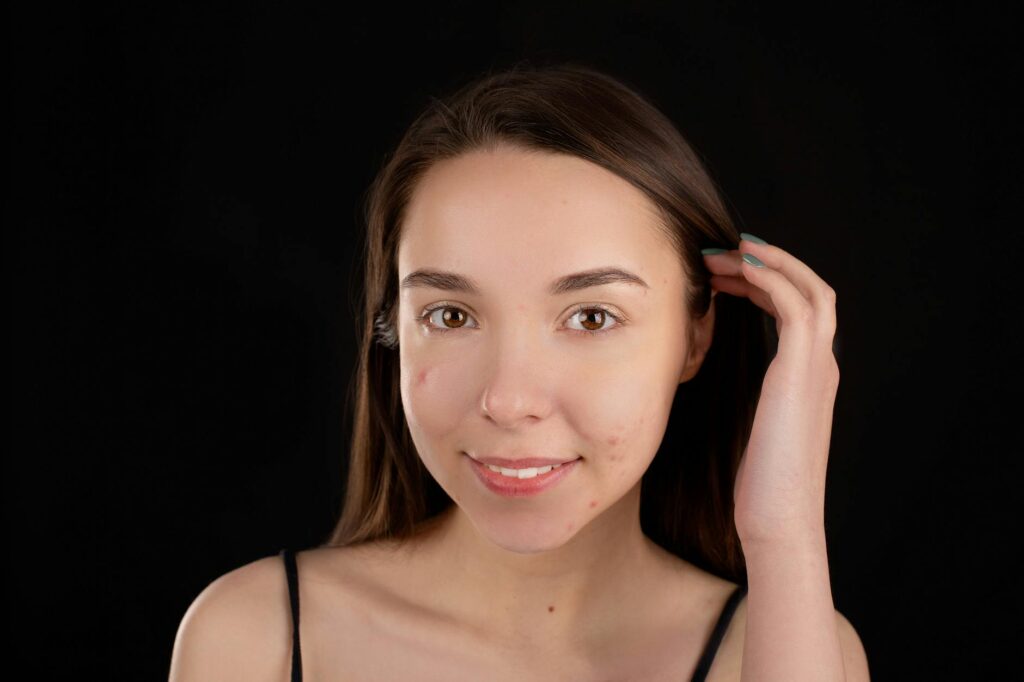
Post-acne red marks typically fade within three to six months on average, though some may take longer depending on how severe your acne was and your individual healing capacity. If you had mild surface-level breakouts, you might see those red marks disappear in as little as three to six weeks with proper care and sun protection.
However, if you dealt with deeper cystic acne or multiple inflammatory lesions, expect the redness to linger for six months to a year or longer before it completely fades on its own. The timeline also varies significantly based on your skin type, genetics, and how well you protect your skin during the healing process. This article breaks down exactly what affects how quickly your acne red marks disappear and what you can do to speed up the process when natural fading isn’t fast enough.
Table of Contents
- Understanding the Two Types of Post-Acne Red Marks and Their Fading Timelines
- How Your Skin Type and Genetics Determine Your Personal Healing Timeline
- The Lifestyle Behaviors That Dramatically Affect How Quickly Red Marks Disappear
- Why Red Marks Aren’t Actually Scars (And Why This Distinction Matters)
- The Six-Month Plateau: Understanding When Natural Healing Stops
- Professional Treatment Options for Red Marks That Won’t Fade Naturally
- Building Your Personal Strategy for Faster Red Mark Fading
- Conclusion
Understanding the Two Types of Post-Acne Red Marks and Their Fading Timelines
post-inflammatory erythema (PIE), commonly called red marks or red spots, is what most people see after their acne clears. These are flat, discolored spots without any textural changes or indentation—essentially, the skin has returned to its normal contour but is still inflamed and pigmented red. PIE typically fades within three to six months for the majority of people, though cases involving deeper inflammation can extend this timeline to over a year. This is different from post-inflammatory hyperpigmentation (PIH), which appears as dark or brownish marks rather than red ones. PIH typically takes six to 24 months to fade, with the timeline heavily dependent on your skin tone and sun exposure habits.
The distinction matters because these two types require different management approaches. PIE is essentially residual inflammation that your body needs time to resolve—the affected skin vessels gradually return to normal color as the inflammation subsides. PIH, on the other hand, involves excess melanin production in response to the acne injury, which takes considerably longer for your skin to naturally reabsorb and redistribute. If you had only superficial acne affecting just the top layers of skin, those marks can vanish in three to six weeks. However, if you experienced deeper cystic or nodular acne that inflamed the dermis, you’re looking at a minimum of six to 12 months for complete natural fading.
How Your Skin Type and Genetics Determine Your Personal Healing Timeline
Your genetic makeup plays an enormous role in how quickly post-acne redness fades, particularly through its influence on collagen production and your skin’s natural inflammatory response. People with fair or light skin tones tend to experience more persistent PIE because the contrast between inflamed tissue and normal skin is more visible, and their skin may have a longer inflammatory phase. Conversely, individuals with darker skin tones more commonly develop PIH rather than prolonged redness, and this hyperpigmentation can take substantially longer to resolve—often 12 to 24 months—depending on sun protection and skin care habits. Age is another genetic factor that significantly impacts your timeline.
Younger people typically heal faster because they have higher collagen levels and more robust cellular turnover, meaning red marks may fade in three to four months. As you age, collagen production naturally decreases, which can extend the fading timeline to six months or longer. This is one reason why preventing acne becomes increasingly important after your twenties—not just to avoid breakouts, but because the aftermath takes longer to resolve. Additionally, some people’s skin simply produces collagen more efficiently due to genetics, meaning their marks fade at the faster end of the spectrum while others in the same age group with the same acne severity experience much longer timelines.
The Lifestyle Behaviors That Dramatically Affect How Quickly Red Marks Disappear
Sun exposure is arguably the single most impactful lifestyle factor affecting your post-acne red mark timeline. UV radiation intensifies inflammation and can reactivate healing inflammation even months after your acne has cleared, essentially resetting your progress. Someone who avoids the sun and diligently uses SPF 30+ sunscreen may watch red marks fade in four months, while someone with the same acne severity who spends hours in the sun weekly could find those same marks still prominent after nine months. This is because sun exposure causes the inflamed blood vessels in PIE to dilate further and stimulates melanin production in PIH, both of which prolong visible discoloration.
Beyond sun exposure, physical trauma to healing skin significantly worsens and prolongs red marks. Picking, squeezing, or aggressively manipulating the skin where acne was present triggers new inflammation and can turn what would have been a three-month fading timeline into a six to nine-month ordeal. Similarly, smoking narrows blood vessels and impairs collagen synthesis, slowing your skin’s natural healing response. The intensity of your original acne inflammation also matters tremendously—someone with occasional surface breakouts might see red marks fade naturally in weeks, while someone who had severe cystic acne that was deeply inflamed will face a much longer timeline because the skin damage was more extensive.

Why Red Marks Aren’t Actually Scars (And Why This Distinction Matters)
This is crucial to understand: post-acne red marks are not true acne scars. True scars involve textural or depth changes to the skin—indentations (atrophic scars) or raised bumps (hypertrophic scars) that you can feel when you run your fingers across the skin. Red marks, by contrast, are completely flat and feel identical to surrounding healthy skin. They’re simply areas where inflammation and discoloration persist while the skin structure has already healed.
This distinction is important because it means red marks will eventually fade completely with time, while true textural scars require professional intervention to improve. The reason this matters for your timeline is that if your acne only left you with red marks—no pitting, no texture changes, no indentations—then you’re dealing with something your body can genuinely resolve on its own within that three to 12-month window. However, if you have areas where the skin is indented or scarred, those will not improve through waiting alone. In those cases, relying only on time means accepting permanent damage, whereas for red marks alone, patience combined with good skin care actually works. Many people initially think they have scars when they really just have lingering red marks that will fade if given proper time and protection.
The Six-Month Plateau: Understanding When Natural Healing Stops
After approximately six months of healing, post-acne red marks reach what dermatologists call the plateau point. At this stage, if your marks haven’t faded significantly, they’re unlikely to improve substantially further without professional treatment intervention. This doesn’t mean they’re permanent—it simply means your skin’s natural inflammatory resolution has peaked, and additional time alone won’t produce meaningful improvement. For some people, this plateau appears after three months; for others, significant fading continues for a full year.
But the general rule is that if marks are still prominent at the six-month mark, relying on time alone is increasingly unlikely to help. This plateau exists because natural healing relies on your body’s inflammatory response gradually subsiding and your skin’s vascular system normalizing. Once that process has largely completed, further improvement requires intervention to either improve skin circulation, reduce residual pigmentation, or stimulate new collagen production. This is why someone might see dramatic improvement in the first three months as inflammation naturally resolves, then hit a frustrating period from months four through six where progress stalls completely, prompting them to seek professional treatment. Understanding this plateau is important for managing expectations—if you’re six months out and still seeing obvious red marks, that’s not a sign you’re doing something wrong; it’s a sign that professional help would be worthwhile.

Professional Treatment Options for Red Marks That Won’t Fade Naturally
When natural fading isn’t delivering the results you want, several evidence-based treatments can accelerate improvement or eliminate marks that have plateaued. Intense Pulsed Light (IPL) therapy is shown to be effective for both red marks and dark marks, working by targeting the blood vessels responsible for redness or the excess melanin causing dark spots. Pulsed dye laser treatment specifically targets the hemoglobin in dilated blood vessels, making it particularly effective for post-inflammatory erythema. A typical course involves multiple sessions spaced weeks apart, and results are often visible within two to four weeks of starting treatment.
Azelaic acid gel at 15% concentration is a topical option that’s been shown to help manage both red marks and dark marks when used consistently over several weeks to months. Unlike more aggressive treatments, azelaic acid works by gently reducing inflammation and supporting skin barrier health, making it suitable for sensitive skin. Chemical peels and additional laser therapies can accelerate the natural fading process, though they work best when combined with sun protection and ideally with a dermatologist’s guidance. The key advantage of these treatments is that they can reduce what might otherwise be a nine-month timeline down to two to four months, or eliminate completely the marks that would never fully fade on their own.
Building Your Personal Strategy for Faster Red Mark Fading
The fastest path to clear skin isn’t choosing either natural healing or professional treatment—it’s combining proven prevention strategies with targeted treatment when needed. Start with aggressive sun protection using SPF 30 or higher sunscreen daily, seeking shade during peak hours, and if possible, using protective clothing. At the same time, adopt a gentle skin care routine that avoids picking, aggressive exfoliation, or harsh products that trigger new inflammation.
If you’re within the first three months of mark appearance, give natural fading time to work while optimizing these supporting factors. If you’re approaching the four to six-month mark and seeing minimal progress, or if you’ve already hit the plateau at six months, consulting a dermatologist about IPL, laser, or azelaic acid treatment can deliver results in weeks rather than months. It’s also worth noting that prevention is always easier than treatment—using consistent acne management to prevent breakouts in the first place eliminates the need to wait through red mark fading altogether. However, if you’re already dealing with post-acne marks, the combination of sun protection, gentle handling of the skin, and professional intervention when natural fading stalls gives you the best chance of achieving clear skin quickly.
Conclusion
Post-acne red marks take an average of three to six months to fade naturally, with timelines extending to a year or longer depending on the severity of your original acne, your skin type, and your lifestyle choices. Key factors that accelerate fading include sun protection, avoiding picking or manipulation, and minimizing lifestyle factors like smoking that impair healing. However, after about six months without significant improvement, natural fading plateaus, and professional treatments like IPL therapy, pulsed dye laser, or azelaic acid become your most effective option.
The most important takeaway is that red marks are not permanent scars—they will fade with time and proper care, or much faster with professional intervention. If you’re currently managing post-acne marks, prioritize sun protection and gentle skin handling immediately, give natural fading a reasonable timeframe to work, and don’t hesitate to consult a dermatologist around the four to six-month mark if you’re seeing minimal progress. The combination of prevention, patience, and professional help when needed is your best strategy for moving past acne to clear skin.