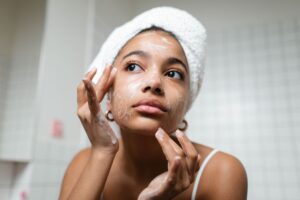
If you have combination skin that's prone to breakouts, choosing the right cleanser can feel like navigating a minefield. Your skin likely experiences both oily and dry patches, making it difficult to find a product that addresses congestion without stripping away essential moisture or triggering irritation.
The debate between gel and cream cleansers is particularly relevant for acne-prone combination skin, as each formulation offers distinct benefits and drawbacks that can significantly impact your complexion. This article explores the science behind gel and cream cleansers, helping you understand which option—or combination of options—works best for your unique skin needs. By the end, you'll have the knowledge to make an informed decision about your cleansing routine and potentially transform your skin's clarity and comfort.
Table of Contents
- What's the Difference Between Gel and Cream Cleansers?
- Why Combination Skin Requires a Strategic Approach
- Gel Cleansers for Acne-Prone Combination Skin
- When Cream Cleansers Make Sense for Combination Skin
- The Double Cleanse Strategy for Acne-Prone Combination Skin
- How to Apply This
- Expert Tips
- Conclusion
- Frequently Asked Questions
What's the Difference Between Gel and Cream Cleansers?
Gel and cream cleansers differ fundamentally in their texture, ingredients, and how they interact with your skin. Gel cleansers have a lightweight, refreshing consistency and are typically formulated with mild surfactants, botanical extracts, or acids like salicylic acid to purify pores and balance sebum.
Cream cleansers, by contrast, feature a rich, emollient texture designed to dissolve impurities while replenishing moisture, often containing nourishing ingredients like ceramides, botanical oils, and humectants. The key distinction lies in their approach to cleansing.
Gel formulations prioritize deep cleansing and oil control, while cream formulations emphasize hydration and barrier support. Recent gel cleansers have been formulated with larger molecular structures that can cleanse the skin without over-stripping natural oils, making them more suitable for oily skin types. Cream-based cleansers typically have a neutral pH, are less irritating to the skin, and do not form a lather, helping to balance oil content and distribution while maintaining hydration.
- Gel cleansers: lightweight texture, mild surfactants or acids, designed for oil control and pore purification
- Cream cleansers: rich emollient texture, ceramides and botanical oils, designed for hydration and barrier support
- pH balance: cream cleansers maintain neutral pH, while gel formulations vary depending on active ingredients
Why Combination Skin Requires a Strategic Approach
Combination skin presents a unique challenge because different areas of your face have conflicting needs. Your T-zone may be oily and congestion-prone, while your cheeks and jawline feel tight or sensitive.
This complexity means a one-size-fits-all cleanser rarely delivers optimal results. For acne-prone combination skin specifically, the goal is finding a product that controls breakouts without compromising the skin barrier or causing irritation in sensitive areas.
Gel cleansers are particularly well-suited for combination skin because they provide effective cleansing without being overly harsh. They work well at removing impurities while remaining relatively gentle for non-sensitive skin, maintaining a mild cleansing experience that doesn't disturb your natural skin oils or pH balance. However, if your combination skin leans toward dryness or sensitivity, a gel cleanser alone may not provide sufficient hydration, potentially leading to compensatory oil production or irritation.
- Combination skin requires balancing oil control in the T-zone with hydration in drier areas
- Gel cleansers offer effective impurity removal without excessive harshness
- Single-cleanser solutions may not address all areas adequately
Gel Cleansers for Acne-Prone Combination Skin
Gel cleansers are an excellent choice for acne-prone combination skin because they deeply cleanse without heavy emollients, help control oil and minimize congestion, and leave skin feeling refreshed and clarified. If you experience breakouts but also struggle with redness or sensitivity, gel is particularly beneficial as it provides a light, soothing cleanse without stripping your skin. This makes gel cleansers ideal for hot weather or after workouts when your face needs a reset without causing additional irritation.
The effectiveness of gel cleansers for acne-prone skin stems from their formulation with mild ingredients that target excess oil and impurities. Many gel cleansers contain salicylic acid or other gentle exfoliating ingredients that help prevent clogged pores—a primary driver of acne formation. For combination skin, gel cleansers work particularly well on oily areas while remaining gentle enough not to over-dry sensitive zones when used correctly.
- Deeply cleanses without heavy emollients, reducing congestion
- Helps control oil and minimize breakouts
- Light, soothing formula suitable for sensitive areas of combination skin

When Cream Cleansers Make Sense for Combination Skin
While cream cleansers are traditionally recommended for dry and sensitive skin, they can play an important role in an acne-prone combination skin routine—particularly during colder months or if your skin becomes dehydrated from other treatments. Cream cleansers are less aggressive to the skin barrier and provide gentle, efficient cleansing without disrupting your skin's protective functions.
If your combination skin experiences redness, tightness, or flakiness alongside breakouts, a cream cleanser may help restore comfort and hydration. The key is using cream cleansers strategically rather than as your sole cleanser.
Many dermatologists and estheticians recommend alternating between gel and cream formulations based on seasonal changes or your skin's current condition. During winter months when your skin becomes drier, switching to a cream cleanser can prevent the dehydration that sometimes triggers increased oil production and breakouts. Cream cleansers help balance oil content and distribution across the skin's surface while maintaining hydration.
- Less aggressive to the skin barrier, supporting protective functions
- Helps retain moisture and reduce irritation
- Ideal for seasonal adjustments or when skin becomes dehydrated
The Double Cleanse Strategy for Acne-Prone Combination Skin
For acne-prone combination skin, the double cleanse method offers a comprehensive approach to removing makeup, environmental debris, and excess oil without compromising your skin barrier. This method involves using two different cleansers sequentially—typically starting with a lighter formula and finishing with a more targeted one.
For combination skin prone to breakouts, you might use a gel cleanser first to remove surface impurities and excess oil, then follow with a gentle cream cleanser to restore hydration and support barrier function. The double cleanse is particularly valuable if you wear makeup regularly, as a single cleanser may not remove all layers effectively.
By using a gel cleanser first, you ensure thorough removal of oil-based impurities and makeup residue. Following with a cream cleanser or a hydrating gel formula helps restore moisture balance and prevents the over-stripping that can trigger compensatory oil production and breakouts. This approach allows you to address both the oily and dry aspects of combination skin in one routine.
- First cleanse: gel formula to remove oil, makeup, and surface impurities
- Second cleanse: cream or hydrating formula to restore moisture and support barrier
- Prevents over-stripping while ensuring thorough cleansing
How to Apply This
- Assess your skin's current condition by noting which areas feel oily, which feel dry, and where breakouts typically occur
- Start with a gel cleanser as your primary cleanser, using it on your entire face with gentle circular motions for 30-60 seconds
- If your skin feels tight or irritated after using the gel cleanser, add a second cleanse with a cream or hydrating gel formula
- Adjust your routine seasonally or as your skin changes, potentially alternating to a cream cleanser during drier months or if dehydration occurs
Expert Tips
- Use a gentle gel cleanser if you experience congestion or breakouts but still want to maintain hydration and barrier integrity
- Massage a cream cleanser into dry skin for 30-60 seconds before rinsing to encourage circulation and enhance product absorption
- Assess your cleansing routine regularly, as skin can change due to hormones, environmental factors, and other variables, meaning what worked previously may need adjustment
- If you notice dryness, irritation, or tightness after cleansing, switch to a cream-based formulation or reduce the frequency of gel cleanser use
Conclusion
For acne-prone combination skin, the choice between gel and cream cleansers isn't necessarily either-or. Gel cleansers excel at controlling oil and minimizing congestion while remaining gentle enough for sensitive areas, making them an ideal primary cleanser for most people with this skin type.
However, incorporating a cream cleanser—either as a second step in your routine or as a seasonal adjustment—can help maintain the hydration and barrier support that prevents the irritation and dehydration that sometimes worsen breakouts. The most effective approach involves understanding your skin's specific needs and being willing to adjust your routine as conditions change. By combining the strengths of both gel and cream formulations through strategic use, you can achieve a cleansing routine that addresses breakouts, manages oil production, maintains hydration, and supports overall skin health.
Frequently Asked Questions
Can I use a gel cleanser if my combination skin feels tight after cleansing?
If your skin feels tight, itchy, or flaky after using a gel cleanser, this indicates over-stripping. Consider switching to a cream cleanser or using the gel cleanser only on oily areas while using a cream formula on drier zones. You might also reduce the frequency of gel cleanser use or look for a gentler gel formula designed for sensitive skin.
Should I use different cleansers for different areas of my face?
Yes, this is a valid approach for combination skin. You can use a gel cleanser on your oily T-zone and a cream cleanser on drier areas like your cheeks. Alternatively, use a gel cleanser on your entire face and follow with a hydrating cream cleanser as a second step to balance moisture across all areas.
How often should I alternate between gel and cream cleansers?
This depends on your skin's response and seasonal changes. Many people benefit from using a gel cleanser during warmer months when skin is naturally oilier, then switching to a cream cleanser during colder months when skin tends to become drier. You can also adjust based on how your skin feels—if it becomes dehydrated or irritated, incorporate more cream cleanser use.
What ingredients should I look for in a gel cleanser for acne-prone skin?
Look for mild surfactants, salicylic acid, botanical extracts, or gentle exfoliating ingredients that help prevent clogged pores without over-stripping your skin. Avoid cleansers containing sodium lauryl sulfate if you have sensitivity, as this ingredient can be drying and irritating. Choose formulas specifically designed to support the skin barrier while cleansing.