
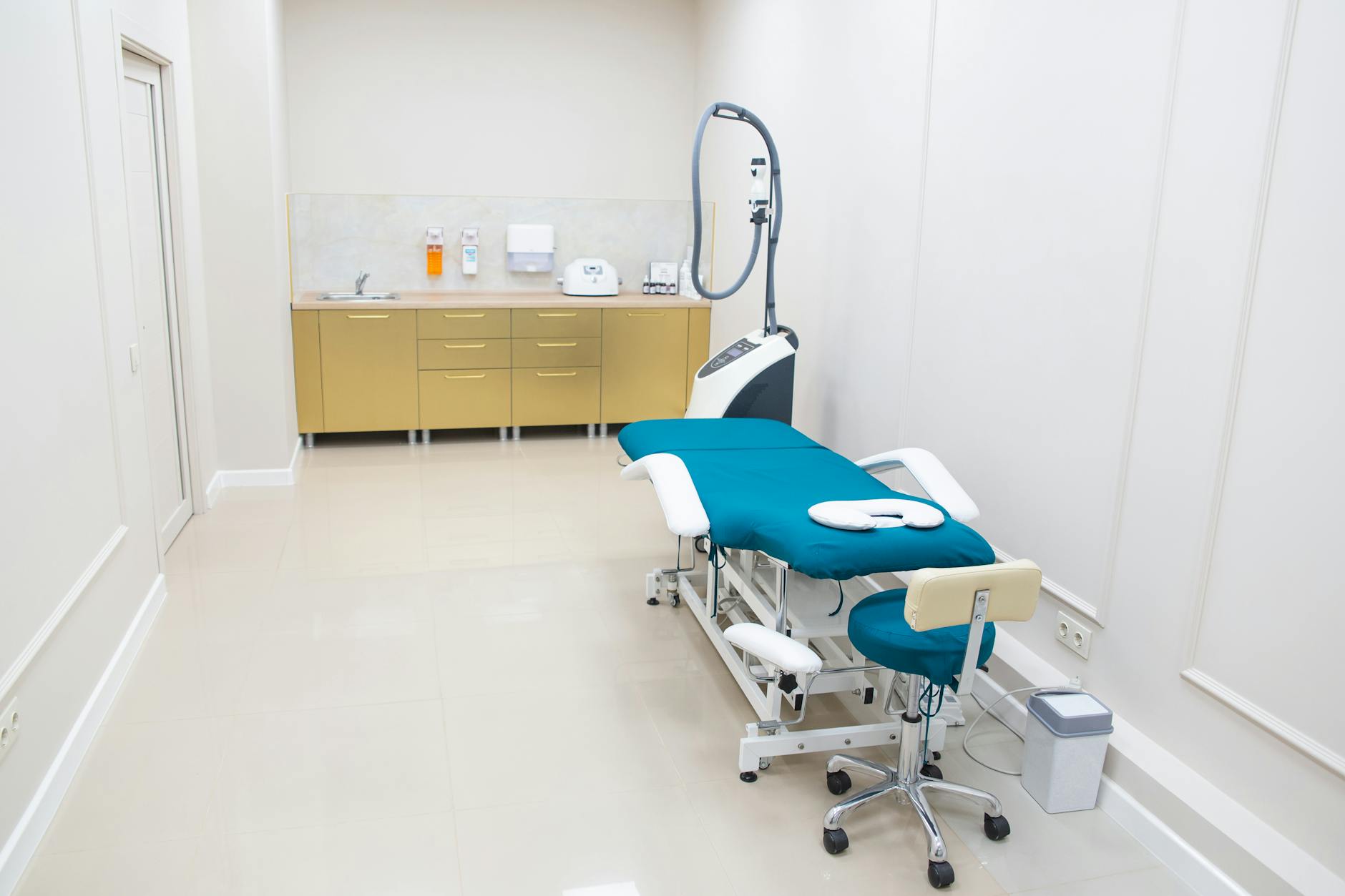
South Korean acne clinics treat breakouts with a combination approach that most American dermatologists simply do not offer. Where a US derm will typically hand you a prescription for tretinoin or a course of oral antibiotics and send you on your way, a Korean clinic will perform professional extractions, fire up a laser, apply a chemical peel, run LED light therapy, and administer anti-inflammatory injections — all in a single visit. That multi-modal protocol, paired with costs that run 30 to 60 percent lower than comparable US treatments, explains why 705,044 foreign nationals sought dermatology treatments in South Korea in 2024 alone, a 117-fold increase from roughly 6,000 in 2009. The differences go beyond just stacking more treatments into one appointment.
Korean dermatology operates on a fundamentally different philosophy — one that prioritizes skin barrier repair and hydration over the drying, stripping approach that dominates American acne care. Formulations lean on niacinamide, green tea, hyaluronic acid, and Centella asiatica rather than high-concentration benzoyl peroxide and salicylic acid. The result is a treatment model that attacks acne aggressively while protecting the skin around it. This article breaks down the specific treatments Korean clinics offer that remain rare or unavailable in the US, the real cost differences with actual numbers, how access and wait times compare, and what you should realistically expect if you are considering traveling to Seoul for your skin.
Table of Contents
- Why Do Korean Acne Clinics Combine Multiple Treatments While US Derms Prescribe One at a Time?
- Treatments Available in Korean Clinics That Most US Dermatologists Do Not Offer
- How Korean Clinics Handle Acne Scars Differently
- The Real Cost Breakdown — Korean Acne Treatment vs. American Dermatology
- Access, Wait Times, and the Volume Advantage Korean Clinics Hold
- Why Korean Dermatology Prioritizes Barrier Repair Over Drying Treatments
- The Future of Korean Dermatology’s Global Influence
- Conclusion
- Frequently Asked Questions
Why Do Korean Acne Clinics Combine Multiple Treatments While US Derms Prescribe One at a Time?
The short answer is structural. American dermatology operates on an insurance-driven model where each visit is billed around a single diagnosis and treatment plan. A dermatologist might prescribe topical tretinoin at your first appointment, then schedule a follow-up in three months to assess progress. If that does not work, you move to oral antibiotics. Then maybe isotretinoin. Each step is a separate visit, a separate copay, and weeks of waiting — the average wait time for a US dermatologist appointment is 33 days, according to BetterCare data. korean clinics skip that sequential ladder.
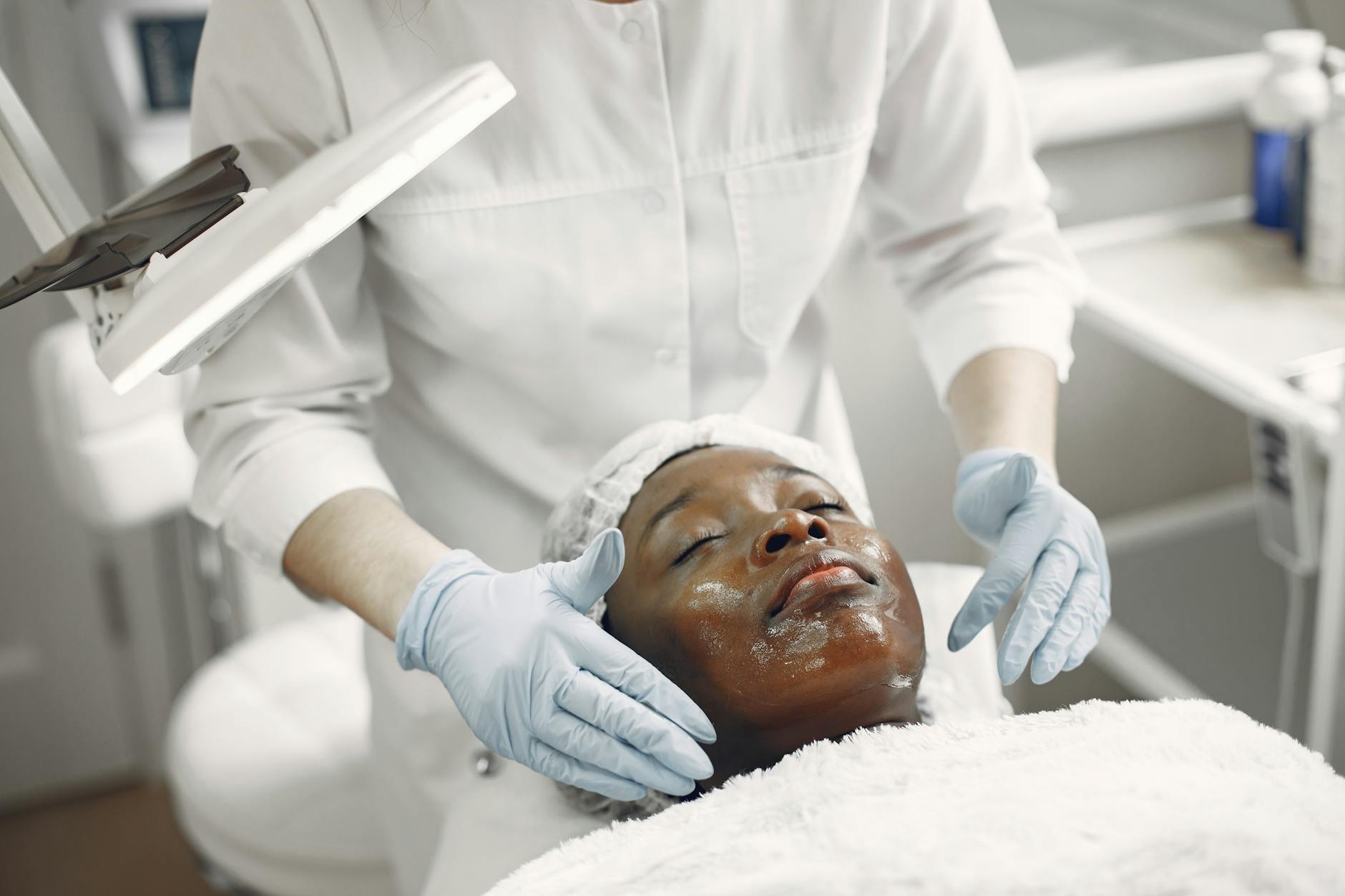
Because most dermatology visits in Korea are paid out of pocket at relatively low cost — consultations run between 10,000 and 40,000 won, roughly $7 to $28 — clinics compete on results and speed rather than insurance reimbursement codes. A standard acne visit at a Seoul clinic might include comedone extraction with sterile tools, followed by a laser toning session to reduce inflammation, a light chemical peel, and a round of LED therapy. Post-treatment, patients receive soothing protocols like cryotherapy or calming masks to minimize irritation. In the US, each of those would likely be a separate appointment — if they were offered at all. This is not to say the Korean approach is universally superior. The multi-modal method works well for moderate inflammatory acne and comedonal acne, but severe cystic acne still often requires systemic medication like isotretinoin regardless of where you are treated. Korean clinics prescribe isotretinoin too, but they structure it differently — follow-up visits every four weeks over four to six months in a supervised program, compared to the more hands-off US model where patients often get a prescription and a check-in months later.

Treatments Available in Korean Clinics That Most US Dermatologists Do Not Offer
Several treatments that are standard menu items at Korean dermatology clinics remain either unavailable or uncommon in American practices. The most popular is the Aqua Peel, which is the single most-sold skin treatment in Korea. It uses a water-based exfoliating gel combined with suction to extract blackheads and excess sebum while simultaneously infusing calming serums into the skin. It is a gentler alternative to traditional microdermabrasion and does not leave the raw, peeling aftermath that keeps American patients hiding indoors for days after a procedure. Photodynamic therapy for acne is another treatment Korean clinics deploy routinely for chronic or severe breakouts. PDT directly targets acne-causing bacteria and reduces inflammation at the source.
While PDT exists in the US, it is primarily used for precancerous skin lesions and is rarely positioned as an acne treatment. Korean clinics also make extensive use of LED light therapy as a standard add-on — blue light to kill P. acnes bacteria, red light to calm inflammation — while in the US, LED treatments are more commonly found at medical spas than at board-certified dermatologists’ offices. However, not every Korean-exclusive treatment has robust long-term clinical data behind it. Rejuran Healer, a biologic skin booster based on polydeoxyribonucleotide (PDRN), is widely used in Korean combination acne scar protocols but is not FDA-approved in the United States. If you are considering traveling to Korea for treatments like Rejuran, understand that you will not have easy access to follow-up care from a provider familiar with the product once you return home. That gap matters if complications arise.
How Korean Clinics Handle Acne Scars Differently
Acne scar treatment is where the Korean advantage becomes especially stark. Korean clinics offer a distinctive technique called Korean Medicine Subcision, which blends traditional acupuncture-based subcision methods with modern dermatological practice. A 2024 multicenter retrospective study published in PubMed found that this approach produced statistically significant improvements in scar severity scores on both the SBSES and QGASC scales. It is a technique with roots in traditional Korean medicine that has been validated through contemporary clinical research — a combination you rarely see in Western dermatology. For laser-based scar treatment, Korean clinics offer fractional laser sessions at 200,000 to 600,000 won per session, roughly $140 to $420. Comparable treatments in major US cities cost significantly more. One documented comparison found that a 15-session scar treatment program totaled $4,578 in Seoul versus $15,000 to $25,000 in cities like New York or Los Angeles — savings of 70 to 80 percent.
That price gap is not because Korean clinics cut corners. It is a function of volume. Korean clinics see far more patients per day, which allows them to invest in the latest equipment while spreading the cost across a larger patient base. The practical limitation is time. A full acne scar program in Korea typically requires three to six sessions spaced weeks apart. If you are flying in from the US, you either need to plan multiple trips or commit to an extended stay. Some clinics offer compressed schedules for international patients, but accelerating treatment intervals can increase the risk of side effects like prolonged redness or hyperpigmentation, especially on darker skin tones.
The Real Cost Breakdown — Korean Acne Treatment vs. American Dermatology
The numbers tell a clear story. A dermatologist consultation in the US runs $150 to $300 without insurance, with the average sitting around $221 according to a Cutis study. Even with insurance, you are looking at a $20 to $50 copay per visit. In Korea, a consultation costs 10,000 to 40,000 won — $7 to $28. That is not a subsidized rate for medical tourists. That is the standard price. Treatment packages reveal an even wider gap. A Korean acne-clearing facial with professional extraction runs 100,000 to 200,000 won, about $70 to $140.
Bundled acne packages that combine extraction, laser therapy, chemical peels, and anti-inflammatory injections cost 160,000 to 390,000 won, roughly $112 to $273. In the US, a single laser session alone can cost $200 to $500, and most insurance plans do not cover cosmetic or elective dermatological procedures. Laser toning sessions in Korea cost 80,000 to 250,000 won ($56 to $175), and comparable US sessions run 30 to 60 percent higher. The tradeoff is obvious: travel costs. A round-trip flight from the US to Seoul runs $800 to $1,500 depending on the season, plus accommodation and meals. For a single treatment, the math does not work. But for patients planning a multi-session scar revision program or a comprehensive acne treatment course, the total cost in Korea — including flights and hotels — can still come in well under the US price for treatment alone. The break-even point tends to be around three to four sessions of laser or combination therapy.
Access, Wait Times, and the Volume Advantage Korean Clinics Hold
One of the most frustrating aspects of American dermatology is simply getting through the door. The average wait time for a US dermatologist appointment is 33 days. In some regions and for new patients, it can stretch to two or three months. Korean clinics, by contrast, typically offer same-day or next-day appointments thanks to high clinic density — Seoul alone has thousands of dermatology practices, many clustered in the Gangnam district where competition for patients is fierce. That competition drives a volume model that benefits patients in ways beyond just shorter wait times. High patient throughput means Korean clinics can justify purchasing the latest devices as soon as they hit the market.
New lasers, RF systems, skin boosters, and lifting technologies frequently debut in Korea before they reach US or European markets. Korean dermatologists accumulate more hands-on experience with these technologies faster, simply because they are treating more patients per week than most American practices. The warning here is that high volume cuts both ways. Some Korean clinics, particularly those catering heavily to medical tourists, operate on tight schedules that can feel rushed. Consultations may be brief, and language barriers can complicate communication about your specific concerns and medical history. Not every clinic in Gangnam is staffed by board-certified dermatologists — some operate with aestheticians performing treatments under loose physician oversight. Doing your research on specific clinics and their credentialing matters more in Korea’s competitive, less-regulated cosmetic dermatology market than it might in the US.
Why Korean Dermatology Prioritizes Barrier Repair Over Drying Treatments
American acne treatment has long been anchored to a philosophy of drying out breakouts. Benzoyl peroxide, salicylic acid, and high-strength retinoids dominate first-line prescriptions. These work, but they often leave skin dehydrated, irritated, and paradoxically more prone to breakouts as the compromised barrier triggers increased oil production. Korean dermatology takes the opposite approach, building treatment protocols around hydration and barrier repair.
Niacinamide to regulate sebum production, hyaluronic acid to retain moisture, green tea for antioxidant protection, and Centella asiatica to calm inflammation — these are not afterthoughts in Korean acne care. They are foundational. This is not a universal fix. Patients with severe, deep cystic acne still need potent medications that Korean barrier-focused topicals alone cannot address. But for the large population of people with mild to moderate acne who cycle through increasingly harsh American products — stripping their skin, developing contact dermatitis, and ending up worse than when they started — the Korean emphasis on treating acne without destroying the skin around it represents a meaningfully different path.
The Future of Korean Dermatology’s Global Influence
South Korea’s cosmetic surgery and procedures market was valued at $2.47 billion in 2024 and is projected to reach $12.14 billion by 2034, growing at a 17.23 percent compound annual growth rate. Foreign patient arrivals hit a record 1.17 million in 2024, nearly double the 610,000 recorded in 2023 — a 93.2 percent year-over-year increase. Dermatology now accounts for 56.6 percent of all foreign medical visits to Korea, up from 9.3 percent fifteen years ago.
These numbers suggest that the Korean model is not a niche trend but an accelerating shift in how the world approaches skin treatment. As more American patients experience Korean protocols firsthand and share results, pressure will build on US dermatologists to adopt combination approaches, offer in-office extractions as standard care, and rethink the drying-first philosophy that has dominated American acne treatment for decades. Some US practices are already incorporating Korean techniques, but the structural barriers — insurance billing constraints, longer appointment spacing, higher overhead — mean the full Korean model is unlikely to transplant easily. The more realistic near-term outcome is a hybrid: American patients using Korean-influenced skincare routines at home while traveling to Seoul for the intensive clinical treatments that remain unavailable or unaffordable domestically.
Conclusion
South Korean acne clinics offer a fundamentally different experience from American dermatology — multi-modal treatments in a single visit, professional extractions as standard care, access to devices and biologics that have not yet reached US markets, and prices that run 30 to 80 percent lower depending on the procedure. The barrier-repair philosophy that underpins Korean treatment protocols stands in sharp contrast to the drying, stripping approach that most US patients have been taught is the only way to fight breakouts. For patients who have cycled through American prescriptions without lasting results, Korean clinics present a legitimate alternative backed by a booming medical tourism industry that treated over 700,000 foreign dermatology patients in 2024. None of this means you should book a flight to Seoul tomorrow without preparation.
Research specific clinics and verify physician credentials. Understand that scar treatment programs require multiple sessions over months. Budget for travel costs and factor them into your cost comparison honestly. And recognize that severe cystic acne still requires systemic medical treatment regardless of which country you are in. But for the millions of acne patients stuck in the US system — waiting 33 days for an appointment, paying $221 for a consultation that ends with a single prescription, and repeating the cycle every few months — the Korean alternative is worth serious consideration.
Frequently Asked Questions
Do I need a referral to see a dermatologist in South Korea?
No. Korean dermatology clinics accept walk-in patients and generally offer same-day or next-day appointments. No referral from a primary care physician is required, even for foreign patients.
Is it safe to get acne treatments in Korea as a foreigner?
South Korea has a well-regulated medical system, and many clinics in Seoul’s Gangnam district cater specifically to international patients with English-speaking staff. However, clinic quality varies. Look for board-certified dermatologists rather than aesthetician-only practices, and check reviews from other international patients before booking.
How long do I need to stay in Korea for a full acne treatment program?
A single combination treatment session can be done in one visit. However, scar revision or intensive acne programs typically require three to six sessions spaced two to four weeks apart. Some clinics offer compressed schedules for international patients, but plan for a minimum stay of one to two weeks for meaningful results.
Will my US insurance cover dermatology treatments in South Korea?
Almost certainly not. Most US insurance plans do not cover elective or cosmetic dermatological treatments abroad. Some international health insurance plans may offer partial reimbursement, but you should expect to pay out of pocket. Even so, the total cost including travel often undercuts US prices for multi-session treatments.
Are Korean acne treatments effective on all skin types?
Most Korean protocols are designed with East Asian skin types in mind, which tend to be more prone to post-inflammatory hyperpigmentation. Many of these treatments translate well to other skin types, but laser settings and chemical peel concentrations may need adjustment. Discuss your specific skin type and concerns during your consultation, and confirm that the clinic has experience treating patients with your skin tone.