

Kojic acid works against dark spots left by acne — known as post-inflammatory hyperpigmentation — by inhibiting tyrosinase, the enzyme responsible for melanin production in skin cells. When acne heals, it often leaves behind flat, discolored marks that range from pink to deep brown depending on skin tone, and kojic acid gradually fades these marks by slowing the pigment-making process at its source. Most people using a kojic acid product in the 1 to 2 percent concentration range start seeing noticeable improvement within four to eight weeks, though stubborn spots that have been around for months may take longer.
What makes kojic acid particularly relevant for post-acne marks, as opposed to general dark spots from sun damage or aging, is that it works on the specific type of excess melanin triggered by the inflammatory cascade of a breakout. Someone dealing with a cluster of dark marks along the jawline from a hormonal acne flare, for instance, can apply a kojic acid serum to that area and expect a measurable lightening over a couple of months. This article covers how the ingredient actually functions at a cellular level, how it compares to other brightening agents, who should and shouldn’t use it, how to build it into an acne-recovery routine, and what the realistic limitations are.
Table of Contents
- How Does Kojic Acid Actually Reduce Dark Spots After Acne?
- What Concentration of Kojic Acid Works Best — and When It Doesn’t
- Combining Kojic Acid with Other Acne-Recovery Ingredients
- Building a Realistic Kojic Acid Routine for Acne-Scarred Skin
- When Kojic Acid Causes Problems Instead of Solving Them
- Kojic Acid Soap Bars — Do They Actually Work?
- Where Kojic Acid Fits in the Evolving Landscape of Hyperpigmentation Treatment
- Conclusion
- Frequently Asked Questions
How Does Kojic Acid Actually Reduce Dark Spots After Acne?
Kojic acid is a byproduct of fungal fermentation — specifically, it’s derived from species like Aspergillus oryzae, which is also used in the production of sake and soy sauce. Its mechanism is straightforward: it chelates copper ions that tyrosinase needs to function. Without available copper, tyrosinase can’t efficiently convert the amino acid tyrosine into melanin. The result is less pigment deposited into keratinocytes, the cells that make up most of the skin’s outer layer. Post-acne dark spots form because inflammation from a breakout triggers melanocytes to overproduce melanin as a protective response, even after the pimple itself is gone.
That excess melanin gets trapped in the upper layers of skin, creating those persistent flat marks. Kojic acid doesn’t remove existing pigment like a chemical peel would — instead, it prevents new melanin from being laid down while the skin’s natural turnover cycle gradually sheds the already-pigmented cells. This is why consistency matters more than concentration. A person using 1 percent kojic acid daily for three months will typically outperform someone using 2 percent sporadically. Compared to a bleaching agent like hydroquinone, which works by a similar tyrosinase-inhibiting mechanism but also has cytotoxic effects on melanocytes themselves, kojic acid is considered gentler and doesn’t carry the same risk of paradoxical darkening (ochronosis) with long-term use. That said, kojic acid is generally slower-acting, so people expecting hydroquinone-speed results will need to adjust their timeline.
What Concentration of Kojic Acid Works Best — and When It Doesn’t
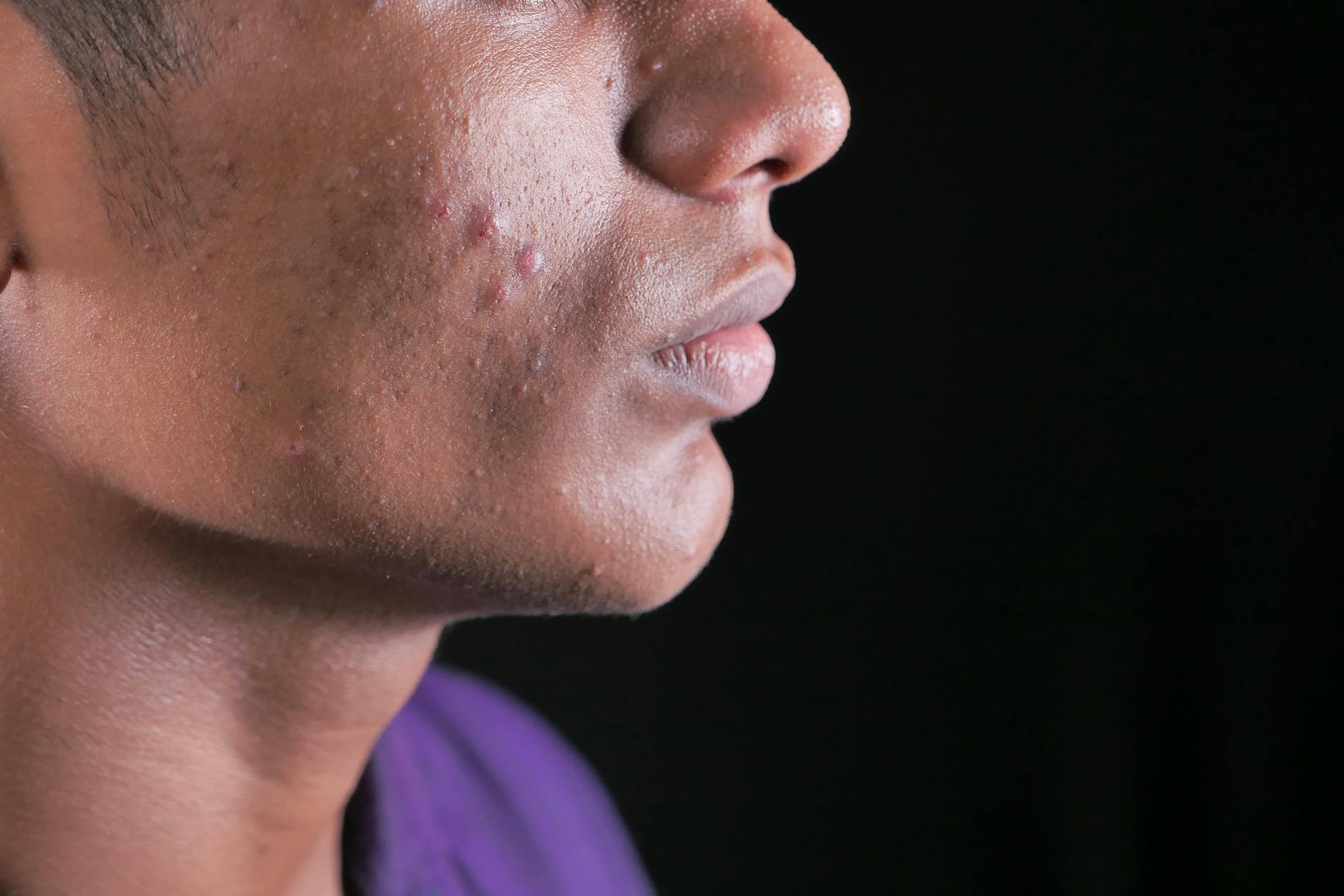
Most over-the-counter products contain kojic acid at concentrations between 1 and 4 percent, with the sweet spot for post-acne hyperpigmentation sitting around 1 to 2 percent for most skin types. At this range, it’s effective enough to show results without provoking the contact dermatitis that higher concentrations sometimes cause. Studies comparing 1 percent kojic acid to 2 percent hydroquinone have shown comparable efficacy over 12-week periods for mild to moderate hyperpigmentation, though hydroquinone tends to work faster in the first four weeks. However, if your dark spots sit deep in the dermis rather than the epidermis — something a dermatologist can assess, and which is more common in darker skin tones — kojic acid alone may not be enough. Dermal hyperpigmentation has a bluish-gray appearance rather than a flat brown, and topical agents like kojic acid primarily affect epidermal melanin.
In these cases, combination therapy or in-office procedures like certain laser treatments may be necessary. Applying more kojic acid won’t compensate for depth; it just increases the likelihood of irritation. Another limitation worth knowing: kojic acid is notoriously unstable. It oxidizes quickly when exposed to air and light, which is why many formulations use kojic acid dipalmitate, a more stable ester form. The tradeoff is that the dipalmitate version converts to active kojic acid more slowly on the skin, making it gentler but also potentially less potent. If you’ve tried a kojic acid product for two months with zero improvement, check whether the formulation uses pure kojic acid or the dipalmitate form, and whether the packaging protects the product from light and air exposure.
Combining Kojic Acid with Other Acne-Recovery Ingredients
Kojic acid rarely works best in isolation for post-acne marks. The most effective approach usually involves layering it with complementary ingredients that target different stages of the pigmentation pathway. Pairing kojic acid with vitamin C, for example, hits tyrosinase from two different angles — kojic acid through copper chelation and vitamin C through direct tyrosinase inhibition and antioxidant protection. A practical combination would be a vitamin C serum in the morning and a kojic acid treatment at night. niacinamide is another strong pairing. While kojic acid reduces melanin production, niacinamide (vitamin B3) prevents the transfer of melanin from melanocytes to surrounding keratinocytes, effectively working downstream.
Together, they address both the manufacturing and distribution of pigment. Several clinical trials have shown that multi-ingredient approaches including kojic acid produce faster and more sustained improvement than any single agent. One combination to approach with caution: kojic acid with strong chemical exfoliants like glycolic acid or retinoids during the same routine step. Both retinoids and AHAs increase skin sensitivity and accelerate cell turnover, which is theoretically helpful for fading dark spots. But layering them directly with kojic acid in the same application can compromise the skin barrier, leading to redness, peeling, and — ironically — new post-inflammatory hyperpigmentation from the irritation itself. If you use a retinoid, apply it and kojic acid on alternating nights until you know your skin can tolerate both.
Building a Realistic Kojic Acid Routine for Acne-Scarred Skin
For someone actively recovering from an acne breakout with fresh dark marks, a practical routine looks something like this: a gentle cleanser, followed by kojic acid serum or cream applied directly to discolored areas, then a basic moisturizer, and always sunscreen during the day. The sunscreen step isn’t optional decoration — UV exposure stimulates melanin production and will directly counteract everything the kojic acid is doing. Broad-spectrum SPF 30 at minimum, reapplied if you’re outdoors for extended periods. The tradeoff between targeted application and all-over application matters here. Applying kojic acid only to dark spots minimizes irritation risk but requires precision.
Applying it across the entire face gives more even-toned results and catches faint marks you might not notice, but increases the chance of dryness or sensitivity on areas that don’t need treatment. For someone with scattered marks across the cheeks and forehead, a thin all-over application makes more sense. For someone with a few isolated spots on an otherwise clear complexion, spot treatment is the better approach. Expect to commit to at least eight weeks before making judgments about whether it’s working. Photographing your skin in the same lighting every two weeks gives you a more objective record than relying on your daily mirror assessment, which is notoriously unreliable for gradual changes. People frequently conclude a product isn’t working at week six when comparison photos show clear progress.
When Kojic Acid Causes Problems Instead of Solving Them
The most common adverse reaction to kojic acid is contact dermatitis — redness, itching, and mild peeling, particularly in people with sensitive or eczema-prone skin. This typically appears within the first week of use and often resolves with reduced frequency of application. Starting with every other day rather than daily use lets you gauge your skin’s tolerance without committing to a full inflammatory response. A less commonly discussed issue is that kojic acid can temporarily make skin more photosensitive, even beyond the general advice to wear sunscreen with any brightening product. If you apply kojic acid in the morning and spend time outdoors without adequate sun protection, you may end up with darker spots than you started with.
This is especially relevant for people living in high-UV environments or those who work outside. The simplest solution is confining kojic acid use to your evening routine. There’s also the question of what happens when you stop. Unlike hydroquinone, which can cause rebound hyperpigmentation after discontinuation, kojic acid generally doesn’t trigger a dramatic reversal. But if the underlying causes of hyperpigmentation are still active — ongoing acne, unprotected sun exposure, hormonal fluctuations — the dark spots will simply return as new ones form. Kojic acid treats the symptom, not the root cause, which is why pairing it with actual acne management and sun protection matters more than the brightening step itself.
Kojic Acid Soap Bars — Do They Actually Work?
Kojic acid soap bars, particularly those originating from Japanese and Filipino skincare lines, have developed a large following online for fading body acne marks on the back, chest, and shoulders. The premise is reasonable: brief contact during a lather-and-rinse wash delivers kojic acid to large skin areas efficiently. In practice, though, the contact time is typically under two minutes, which significantly limits how much active ingredient can penetrate the stratum corneum.
Leave-on products like serums and creams will always outperform wash-off formats for targeted hyperpigmentation treatment. That said, kojic acid soap can serve as a useful supplement for people dealing with widespread post-acne marks on the body, where applying a serum to the entire back twice daily is impractical. The key is managing expectations: these soaps may produce subtle evening of skin tone over several months, but they won’t clear deep or stubborn marks the way a concentrated leave-on product applied to the face would.
Where Kojic Acid Fits in the Evolving Landscape of Hyperpigmentation Treatment
The brightening ingredient market has expanded considerably, with newer entries like tranexamic acid, alpha-arbutin, and thiamidol gaining clinical support for hyperpigmentation. Kojic acid remains relevant because of its established safety profile, its compatibility with other actives, and its accessibility — it’s available without a prescription and appears in affordable formulations across every price point. It may not be the single most potent option available, but its risk-to-benefit ratio makes it a solid foundational ingredient.
Research is also continuing into more stable delivery systems for kojic acid, including encapsulated and slow-release formulations that maintain potency longer and reduce skin irritation. As these next-generation products reach the consumer market, kojic acid’s reputation as a sometimes-finicky ingredient may shift. For now, though, the practical advice is simple: choose a well-packaged product, use it consistently alongside sun protection, and give it a fair timeline before deciding whether to add or switch to something else.
Conclusion
Kojic acid earns its place in post-acne skincare by doing one thing well — reducing melanin production through tyrosinase inhibition — and doing it with a relatively low risk of serious side effects. It works best at 1 to 2 percent concentrations, in stable formulations with opaque packaging, applied consistently as part of a routine that includes sun protection and, ideally, complementary brightening ingredients like vitamin C or niacinamide. The realistic expectation is gradual improvement over two to three months, not overnight transformation.
People who get the best results treat kojic acid as one component of a broader strategy that also addresses active acne and UV exposure. Those who get frustrated typically either quit too early, skip sunscreen, or rely on an unstable product that lost its potency weeks ago. With the right approach, kojic acid is one of the more reliable tools available for clearing the dark marks that breakouts leave behind.
Frequently Asked Questions
How long does it take for kojic acid to fade acne dark spots?
Most people see noticeable improvement within four to eight weeks of consistent daily use at 1 to 2 percent concentration. Older or deeper marks may take three months or longer. Taking comparison photos every two weeks gives a more accurate picture of progress than daily mirror checks.
Can I use kojic acid on active acne or only on old marks?
You can use it while acne is still active, but it won’t treat the acne itself — it only addresses the pigmentation that follows. If active breakouts are irritating your skin, adding another potentially sensitizing ingredient may worsen redness. Get the acne under control first, then focus on the marks.
Is kojic acid safe for dark skin tones?
Yes, and it’s often recommended precisely because darker skin tones are more prone to post-inflammatory hyperpigmentation. Start with a lower concentration and patch test, since darker skin can also be more reactive to irritation, which could trigger additional hyperpigmentation.
Can I use kojic acid with retinol?
You can, but use them at different times — for example, kojic acid in the morning and retinol at night, or on alternating evenings. Layering them simultaneously increases the risk of irritation and barrier damage, which can create new dark spots.
Does kojic acid lighten overall skin tone or just dark spots?
It inhibits melanin production wherever it’s applied, so it can lighten surrounding skin if used broadly. For targeted spot treatment, apply it only to the discolored areas. Any lightening of unaffected skin typically reverses once you stop using the product.
Is kojic acid dipalmitate the same as kojic acid?
Kojic acid dipalmitate is a more stable ester form that converts to active kojic acid on the skin. It’s less irritating and has a longer shelf life, but it’s generally considered less potent than pure kojic acid because the conversion happens gradually. It’s a good option for sensitive skin types.