
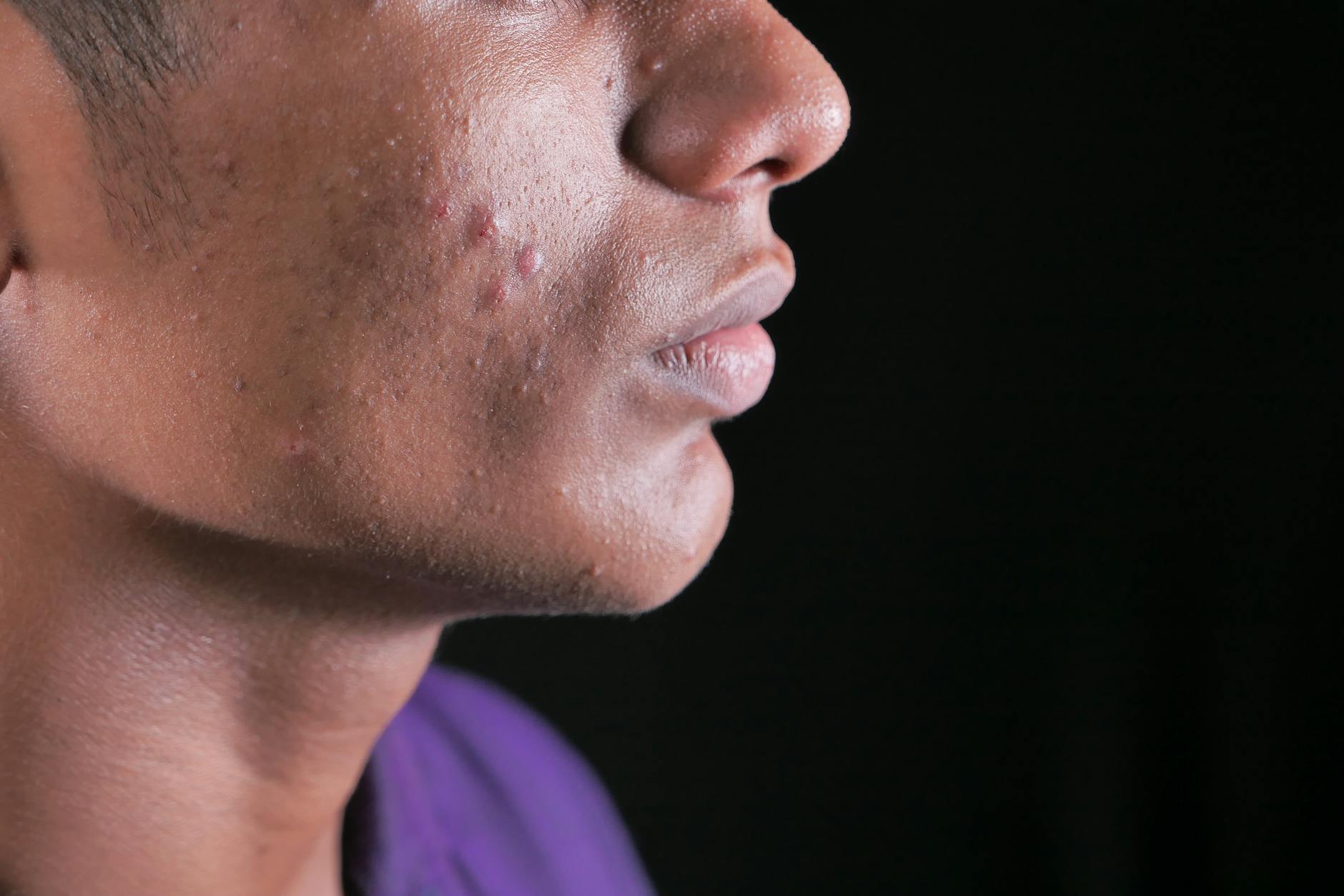
Alpha arbutin fades post-acne dark spots by competitively inhibiting tyrosinase, the enzyme responsible for producing melanin in your skin. When acne heals and leaves behind a flat, discolored mark — known as post-inflammatory hyperpigmentation, or PIH — that darkening is the result of excess melanin deposited during the inflammatory process. Alpha arbutin intervenes at the source of that pigment production, and clinical research shows it can reduce melanin synthesis by up to 76% with consistent use. For someone dealing with a constellation of brown or reddish-brown marks left behind by a breakout along the jawline, for instance, a 2% alpha arbutin serum applied nightly can produce visible fading within 4 to 12 weeks.
What makes alpha arbutin particularly relevant for acne-prone skin is its gentleness relative to other brightening agents. It is a naturally derived glycoside of hydroquinone — sourced from bearberry, blueberry, and cranberry plants — but without the irritation profile that makes hydroquinone problematic for skin that is already sensitized from breakouts. The EU Scientific Committee on Consumer Safety has confirmed it is safe at concentrations up to 2% in face products, and unlike hydroquinone, it does not cause ochronosis, a permanent darkening condition associated with long-term use of harsher depigmenting agents. This article covers how alpha arbutin actually works at the cellular level, what the clinical evidence says about its efficacy, how it compares to hydroquinone and other alternatives, how to use it in practice, what its limitations are, and what recent research suggests about its broader skin benefits.
Table of Contents
- How Does Alpha Arbutin Target Post-Acne Dark Spots at the Cellular Level?
- What the Clinical Evidence Actually Shows About Efficacy
- Alpha Arbutin Versus Hydroquinone for Acne Scars
- How to Use Alpha Arbutin in a Post-Acne Skincare Routine
- Limitations and Common Mistakes With Alpha Arbutin
- Alpha Arbutin’s Anti-Inflammatory and Antioxidant Benefits for Acne-Prone Skin
- Where the Research Is Heading
- Conclusion
- Frequently Asked Questions
How Does Alpha Arbutin Target Post-Acne Dark Spots at the Cellular Level?
Post-acne dark spots form because inflammation triggers melanocytes to overproduce melanin, which then gets deposited in the surrounding skin cells. The key enzyme driving this process is tyrosinase, and alpha arbutin works by binding directly to the L-tyrosine binding site on that enzyme. This is a competitive inhibition — alpha arbutin essentially blocks the raw material from reaching the enzyme’s active site, which suppresses melanogenesis without shutting down the gene expression of tyrosinase itself. The distinction matters because it means alpha arbutin dials down pigment production rather than killing or permanently altering melanocytes, which is why it carries a much lower risk of unwanted pigment changes compared to more aggressive treatments. To put the potency in perspective, alpha arbutin inhibits tyrosinase roughly 10 times more effectively than its isomer, beta-arbutin, with IC50 values of 0.48 mM versus 4.8 mM respectively.
At a 0.5 mM concentration, arbutin reduced tyrosinase activity to 60% of untreated cells in lab studies. This is not the nuclear option — it is a measured, sustained suppression of excess pigment production. That is actually a feature, not a bug, because the goal with PIH is not to eliminate melanin production entirely but to slow it enough that the skin’s natural turnover can clear the excess pigment that has already been deposited. For comparison, hydroquinone — the historical gold standard for hyperpigmentation — works by a different and more aggressive mechanism that includes direct melanocyte toxicity. That is why hydroquinone produces faster results in some cases, but also why it carries the risk of rebound hyperpigmentation and ochronosis, especially with extended use. Alpha arbutin trades some speed for a significantly better safety margin, which matters enormously when you are treating PIH on skin that is still acne-prone and potentially inflamed.

What the Clinical Evidence Actually Shows About Efficacy
The most compelling recent evidence comes from a 2025 split-face randomized pilot study by Tantanasrigul and colleagues, which compared a topical formulation of 5% alpha arbutin combined with 2% kojic acid against a triple combination cream containing hydroquinone for melasma treatment over 12 weeks. The alpha arbutin group achieved comparable efficacy to the hydroquinone-containing cream and actually earned a higher overall clinical evaluation score. This built on prior research that had already confirmed 5% arbutin plus 2% kojic acid was comparable to 4% hydroquinone in decreasing melasma severity. While melasma and post-acne PIH are different conditions, both involve excess melanin deposition, and the tyrosinase inhibition pathway is relevant to both. For post-acne dark spots specifically, visible improvement is typically seen within 4 to 12 weeks of consistent application, with concentrations in the 2 to 4% range producing significant reduction in dark spot intensity over 8 to 12 weeks.
The timeline is worth being honest about: if you have deep, dark PIH marks from severe cystic acne, you should not expect dramatic results in two weeks. The skin’s natural turnover cycle is roughly 28 days, and alpha arbutin is working on new melanin production while your skin simultaneously clears old pigment. Stacking those cycles is what produces the visible fade. However, if your PIH is on darker skin tones — Fitzpatrick types IV through VI — the timeline may extend further because there is more melanin in play and the marks tend to be more persistent. This does not mean alpha arbutin is ineffective for darker skin; it means expectations need to be calibrated. One genuine advantage for darker skin tones is that alpha arbutin has significantly less melanocytotoxicity than hydroquinone, making it a safer long-term option for skin that is more susceptible to pigment disruption from aggressive treatments.
Alpha Arbutin Versus Hydroquinone for Acne Scars
The comparison with hydroquinone is unavoidable because hydroquinone has been the benchmark depigmenting agent for decades. The practical tradeoffs are straightforward. Hydroquinone at 4% typically produces faster initial results — often visible within 4 to 8 weeks — but it comes with a list of caveats. It can cause irritation, it requires breaks in use to avoid ochronosis, and it is banned or restricted in over-the-counter products in several countries. For acne-prone skin that is already dealing with inflammation, adding an irritant to the routine is counterproductive.
The 2025 Tantanasrigul study revealed another important finding: the hydroquinone-containing triple combination cream group showed higher recurrence severity at week 16, while the alpha arbutin group did not. This is critical for anyone with acne-prone skin. PIH from acne is often a recurring problem — new breakouts create new marks — so a treatment that does not cause rebound darkening when you stop using it has a significant practical advantage over one that does. That said, for severe, stubborn hyperpigmentation that has not responded to gentler approaches, prescription hydroquinone under dermatologist supervision remains a reasonable option. Alpha arbutin is not always sufficient on its own for deep PIH, and combining it with other actives like vitamin C, niacinamide, or azelaic acid often produces better results than using it as a standalone. The point is not that alpha arbutin is categorically superior to hydroquinone, but that for the specific context of acne-prone skin dealing with recurring PIH, the risk-benefit calculation generally favors alpha arbutin as a first-line approach.

How to Use Alpha Arbutin in a Post-Acne Skincare Routine
Most commercial alpha arbutin serums are formulated at 2% concentration, which aligns with the EU safety ceiling for face products and is the most widely available option. The Ordinary’s Alpha Arbutin 2% + HA is the product most people encounter first, and it is a reasonable starting point — lightweight, minimal additional ingredients, and affordable enough to use consistently for the months required to see results. Clinical studies have tested concentrations up to 5%, but those formulations are less commonly available over the counter and are typically combined with other actives like kojic acid. For application, alpha arbutin goes on after cleansing and any water-based toners, but before heavier serums, moisturizers, and sunscreen. It is water-soluble and works well layered with other acne-friendly actives.
A common and effective combination is alpha arbutin in the morning under sunscreen, paired with a retinoid at night — the arbutin suppresses new melanin production while the retinoid accelerates skin cell turnover to clear deposited pigment faster. If you are using an active acne treatment like benzoyl peroxide or salicylic acid, alpha arbutin can generally be layered in the same routine without conflict, though applying them at different times of day reduces the chance of irritation. The tradeoff between a standalone alpha arbutin serum and a multi-active formula is worth considering. Standalone serums give you control over concentration and layering, but combination products — like those pairing alpha arbutin with niacinamide or vitamin C — can simplify routines and sometimes enhance results through complementary mechanisms. The 2025 study combined alpha arbutin with kojic acid for a reason: kojic acid also inhibits tyrosinase, and the combination outperformed expectations. Just be cautious about combining too many actives at once on acne-prone skin, where barrier integrity is often already compromised.
Limitations and Common Mistakes With Alpha Arbutin
The most common mistake people make with alpha arbutin is expecting it to work on acne scars rather than acne marks. PIH — flat, discolored spots — responds to tyrosinase inhibition because the problem is excess pigment. Atrophic or ice-pick scars, which are textural depressions in the skin, are a completely different issue involving collagen loss, and alpha arbutin does nothing for them. If your concern is both discoloration and texture, you need separate approaches for each problem. Another limitation is sun exposure. Alpha arbutin suppresses new melanin production, but UV exposure triggers it. Using alpha arbutin without consistent, adequate sunscreen is like bailing water out of a boat while someone pours more in.
This is not a minor caveat — it is the single biggest reason people report that alpha arbutin “doesn’t work.” A broad-spectrum SPF 30 or higher, reapplied during the day, is not optional when treating PIH with any brightening agent. Even indoor UV exposure through windows can be enough to maintain hyperpigmentation in susceptible skin. Stability is another concern. Alpha arbutin can degrade in certain formulations, particularly when exposed to heat or extreme pH levels. If your serum has changed color significantly or has been stored in a hot bathroom for months, it may have lost potency. Store it in a cool, dark place, and replace it according to the product’s recommended period after opening. This is a practical issue that rarely gets mentioned in product marketing but affects real-world results.
Alpha Arbutin’s Anti-Inflammatory and Antioxidant Benefits for Acne-Prone Skin
Beyond fading existing dark spots, a 2024 study found that alpha arbutin reduced inflammatory markers in UV-exposed skin while simultaneously increasing type I collagen expression. This is a meaningful finding for acne-prone skin because it suggests alpha arbutin may help prevent new PIH from forming, not just treat marks that are already there. If inflammation is the trigger for post-acne hyperpigmentation, an ingredient that both suppresses melanin production and reduces inflammatory signaling could break the cycle at two points instead of one.
Alpha arbutin also exhibits antioxidant properties, providing a layer of protection against oxidative stress — another contributor to melanin overproduction. This dual mechanism is why some dermatologists now recommend alpha arbutin not just as a spot treatment but as a maintenance ingredient for acne-prone skin that is susceptible to PIH. Think of it less as a corrective and more as a preventive that also happens to fade existing marks.
Where the Research Is Heading
The 2025 Tantanasrigul study is significant not just for its results but for what it signals about the direction of hyperpigmentation treatment. The trend in dermatological research is moving away from hydroquinone as a default and toward combination therapies using safer tyrosinase inhibitors like alpha arbutin alongside complementary actives. Future studies are likely to explore optimal concentration ratios, longer-term outcomes beyond 16 weeks, and formulations specifically targeting post-acne PIH rather than melasma, which has historically received more research attention.
For consumers, the practical implication is that alpha arbutin formulations are likely to become more sophisticated and more effective over the next several years. The current generation of 2% serums is already a solid option for mild to moderate PIH, but the clinical evidence supporting higher concentrations in combination with actives like kojic acid suggests that more targeted products are on the horizon. In the meantime, the existing evidence is strong enough to make alpha arbutin a well-supported choice for anyone dealing with the aftermath of acne breakouts on their skin.
Conclusion
Alpha arbutin earns its place in a post-acne skincare routine through a straightforward mechanism — competitive tyrosinase inhibition that suppresses excess melanin production — backed by clinical evidence showing it can rival hydroquinone in efficacy while carrying a fraction of the side effect risk. The research supports concentrations of 2% for daily use, with visible improvement in PIH typically appearing within 4 to 12 weeks, and the 2025 clinical data showing no rebound darkening gives it a meaningful advantage for skin that is still actively breaking out and creating new marks.
The keys to making it work are consistency, realistic timelines, and non-negotiable sunscreen use. Alpha arbutin is not a miracle product and it will not erase deep scarring, but for the flat, discolored marks that acne leaves behind, it is one of the best-supported and gentlest options available. Pair it with complementary actives, protect your skin from UV, and give it the 8 to 12 weeks it needs to do its job.
Frequently Asked Questions
Can alpha arbutin be used on active acne, or only on marks left after breakouts?
Alpha arbutin is safe to use on skin with active acne. It does not treat acne itself — it will not reduce pimples or prevent new breakouts — but it will not aggravate them either. Using it during active breakouts means it can begin working on PIH as soon as it starts forming, rather than waiting until breakouts have fully resolved.
Is alpha arbutin safe for all skin tones?
Yes. Because it suppresses melanin production without causing melanocyte toxicity, it carries a low risk of unwanted lightening or depigmentation. The EU Scientific Committee on Consumer Safety has confirmed it safe at up to 2% in face products and 0.5% in body lotions. It is particularly valued for darker skin tones that are more susceptible to side effects from hydroquinone.
Can I use alpha arbutin with retinoids or vitamin C?
Alpha arbutin is compatible with both. A common approach is alpha arbutin in the morning under sunscreen and a retinoid at night. It can also be layered with vitamin C, though applying them at different times of day may reduce any theoretical interaction. Niacinamide is another effective pairing, as it also influences melanin transfer in skin.
How long before I see results on post-acne dark spots?
Most people notice visible fading within 4 to 12 weeks. Concentrations of 2 to 4% can significantly reduce dark spot intensity over 8 to 12 weeks of consistent use. Deeper or older marks may take longer, and results depend heavily on concurrent sunscreen use.
Does alpha arbutin release hydroquinone on the skin?
Alpha arbutin is chemically a glycoside of hydroquinone, and there has been some concern about hydroquinone release during use. However, the amounts released at approved concentrations are minimal, and the EU safety committee has evaluated this risk and maintained that alpha arbutin at up to 2% is safe for consumer use. It does not carry the same risk profile as applying hydroquinone directly.