
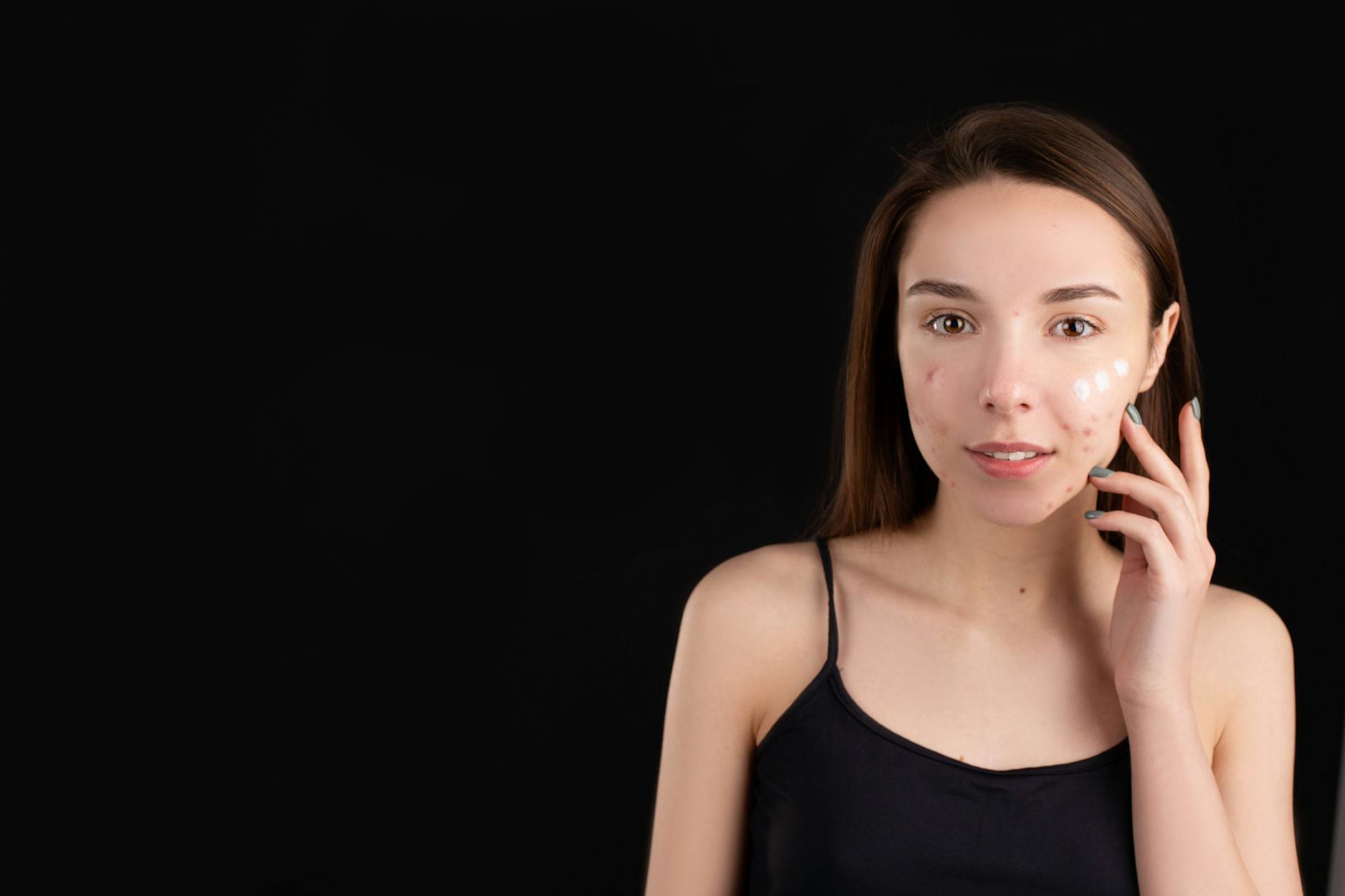
Fungal acne looks like regular breakouts because it produces small, uniform bumps that cluster in the same oily zones where ordinary pimples show up — but it is caused by an entirely different organism, responds to entirely different treatments, and will actually get worse if you throw standard acne products at it. The condition, formally called Malassezia folliculitis, results from an overgrowth of Malassezia yeast inside hair follicles rather than the bacterial clogging process behind acne vulgaris. A 2025 review in the Journal of Fungi described it as “an underdiagnosed mimicker of acneiform eruptions,” noting that its look-alike appearance leads to frequent misdiagnosis and inappropriate antibiotic use that makes the problem worse. Consider someone who has been on oral tetracycline for months with no improvement — or whose breakouts have actually spread.
That pattern alone should raise a red flag. Antibiotics used for regular acne disrupt the skin’s microbial balance and can allow yeast to proliferate further, turning a mild fungal issue into a persistent one. The distinction matters because the right diagnosis changes everything: most patients see relief within one to two weeks once they switch to antifungal treatment. This article covers the biological reasons these two conditions look so similar, the specific symptoms that set them apart, how misdiagnosis happens, and what actually works to clear fungal acne.
Table of Contents
- What Makes Fungal Acne Look Identical to Regular Breakouts?
- The Biological Difference Hiding Beneath the Surface
- Symptoms That Distinguish Fungal Acne from Bacterial Breakouts
- How Misdiagnosis Leads to Worsening Breakouts
- What Actually Treats Fungal Acne — and What Does Not
- Risk Factors That Tip the Balance Toward Fungal Overgrowth
- Why Fungal Acne Is Getting More Attention Now
- Conclusion
- Frequently Asked Questions
What Makes Fungal Acne Look Identical to Regular Breakouts?
The visual overlap comes down to anatomy. Both conditions involve inflamed hair follicles that produce red or skin-toned papules and pustules, so at a glance they can be indistinguishable. fungal acne typically presents as monomorphic — meaning uniform in size — follicular bumps roughly 1 to 2 millimeters in diameter. Regular acne, by contrast, tends to produce a mix of lesion types: blackheads, whiteheads, deeper cysts, and papules of varying sizes. But when someone has mild bacterial acne with mostly small papules, the two conditions can look nearly identical even to trained clinicians.
Location adds to the confusion. Fungal acne clusters in seborrheic areas — the upper back, chest, shoulders, and forehead along the hairline — which are also common sites for hormonal and body acne. Someone breaking out across their chest and shoulders may reasonably assume it is ordinary acne, especially if they have a history of breakouts. The critical visual clue that separates the two is the absence of comedones. Fungal acne does not produce blackheads or whiteheads, which are hallmarks of true acne vulgaris. If the bumps are all the same size and there is not a single blackhead or whitehead among them, that uniformity is itself a diagnostic signal.
The Biological Difference Hiding Beneath the Surface
Acne vulgaris is a bacterial and inflammatory process. Pores clog with sebum and dead skin cells, Cutibacterium acnes bacteria colonize the blocked follicle, and the immune system responds with inflammation. Fungal acne skips that entire sequence. Malassezia yeast — a lipophilic organism that feeds on certain skin lipids like fatty acids found in coconut oil, olive oil, and some cosmetic esters — is already present on the skin of roughly 90 percent of healthy people without causing any problems. It becomes pathogenic only when conditions allow it to overgrow inside the follicle.
This distinction has practical consequences beyond treatment choice. Many popular skincare products contain the very oils and esters that Malassezia feeds on. Someone trying to treat what they believe is dry-skin acne by layering on a coconut oil cleanser or a rich moisturizer with oleic acid may be directly fueling the yeast overgrowth. However, not every oil is problematic — the concern is specifically with certain fatty acid chain lengths and esters. Squalane oil, for instance, is generally considered safe for fungal acne because Malassezia cannot metabolize it. The biology of the organism, not broad product categories, dictates what is safe.
Symptoms That Distinguish Fungal Acne from Bacterial Breakouts
The single most reliable symptom-level difference is itching. Approximately 70 percent of fungal acne patients report pruritus — an itchy, sometimes prickling sensation across the affected area. Regular acne is typically tender or painful, especially with deeper lesions, but it rarely itches. If a breakout on the chest or forehead is persistently itchy rather than sore, that sensation alone should prompt consideration of a fungal cause. Distribution pattern offers another clue. While both conditions can appear on the face, fungal acne gravitates toward the trunk and areas with high sebaceous activity: upper back, shoulders, and the forehead near the hairline.
Regular acne more commonly dominates the lower face, jawline, and T-zone. A specific scenario worth noting involves people who work out frequently or live in hot, humid climates. Post-exercise breakouts that appear on the chest and upper back within days — uniform, itchy, and clustered — are a classic fungal acne presentation. The warm, moist environment created by sweaty workout clothes is an ideal growth medium for Malassezia. Diagnosis can be harder in darker skin tones. A 2025 review noted that post-inflammatory hyperpigmentation in skin of color can obscure the erythema (redness) that clinicians typically look for, leading to misclassification as eczema, keratosis pilaris, or ordinary acne. Cross-polarized or UV dermoscopy can help distinguish the condition in these cases, but those tools are not always available in a standard office visit.
How Misdiagnosis Leads to Worsening Breakouts
The most damaging consequence of confusing fungal acne with bacterial acne is the treatment response. When a clinician prescribes oral tetracyclines — a mainstay of moderate-to-severe acne treatment — for what is actually Malassezia folliculitis, the antibiotics suppress competing bacteria on the skin and give the yeast even more room to proliferate. The breakout worsens, the patient returns for a stronger antibiotic or a longer course, and the cycle deepens. Research cited by Dermatology Times found that nearly 5 percent of acne patients were found to also have Pityrosporum folliculitis at some point during their treatment course, suggesting the two conditions coexist more often than many practitioners realize.
The tradeoff in diagnosis is speed versus certainty. A potassium hydroxide (KOH) prep, Wood’s lamp examination (which shows a fluorescent yellow-green glow under UV light), dermoscopy, or skin biopsy with PAS staining can all confirm the presence of Malassezia. But not every clinic has these tools readily available, and not every breakout warrants a biopsy. The European Academy of Dermatology and Venereology (EADV) consensus guidelines acknowledge this reality and support initiating antifungal treatment based on clinical evaluation alone when microscopic analysis is unavailable. In other words, if the presentation is suspicious enough — monomorphic bumps, no comedones, itching, trunk-dominant — a trial of antifungal therapy is considered a reasonable diagnostic and therapeutic step.
What Actually Treats Fungal Acne — and What Does Not
The treatment protocol for fungal acne looks nothing like an acne vulgaris regimen. EADV consensus guidelines recommend that immunocompetent patients start with topical azoles (such as ketoconazole cream) applied once or twice daily for two to four weeks, along with options like selenium sulfide, ciclopirox, or zinc pyrithione at 1 percent concentration. For immunocompromised patients — including those with HIV, organ transplant recipients, or people with hematologic malignancies — oral itraconazole (100 to 200 milligrams per day for one to four weeks) or fluconazole (100 to 200 milligrams per day for two to three weeks) is recommended. The response rates are encouraging. In studied cohorts, 100 percent of patients improved when treated with oral fluconazole, ketoconazole 2 percent shampoo or cream, or sulfur wash. Most patients begin to see relief within one to two weeks, with clearer skin by the two-to-four-week mark.
However, there is an important limitation: recurrence is common, especially in people whose risk factors — hot climate, immunosuppression, ongoing steroid use — persist. Maintenance therapy, such as periodic use of an antifungal wash, may be necessary long-term. A one-time course of ketoconazole will not permanently resolve the issue if the underlying conditions that allowed yeast overgrowth remain unchanged. The standard acne toolkit can also interfere. Benzoyl peroxide, a staple of bacterial acne treatment, does have some activity against yeast but is not considered a primary fungal acne treatment. Salicylic acid can help by clearing follicular debris but does not directly address the yeast. Retinoids may be used alongside antifungals in cases where both fungal and bacterial acne coexist, but alone they do not treat the fungal component.

Risk Factors That Tip the Balance Toward Fungal Overgrowth
Certain situations make fungal acne far more likely, and recognizing them can prevent months of misdirected treatment. Hot and humid climates top the list, along with excessive sweating — which is why athletes and outdoor workers in tropical regions see higher rates. Antibiotic use, particularly prolonged courses of tetracyclines prescribed for acne itself, is a well-documented risk factor.
Oral corticosteroids and immunosuppressive medications also shift the skin’s microbial balance in favor of yeast. A practical example: a college student prescribed doxycycline for moderate acne who then notices new clusters of itchy, uniform bumps spreading across the upper back after several weeks on the medication. The new breakout is not the original acne getting worse — it is a secondary fungal infection enabled by the antibiotic. Recognizing this pattern early prevents the instinct to increase the antibiotic dose, which would only accelerate the problem.
Why Fungal Acne Is Getting More Attention Now
The growing awareness of Malassezia folliculitis reflects a broader shift in dermatology toward understanding the skin microbiome rather than treating all breakouts as a single condition. The 2025 MDPI review’s characterization of fungal acne as an “underdiagnosed mimicker” signals that the field is taking misdiagnosis rates seriously.
Advances in dermoscopy — including cross-polarized and UV techniques — are making noninvasive diagnosis more accessible, particularly for patients with darker skin tones where traditional visual assessment falls short. As clinicians become more attuned to the distinction and as patients become better informed about the possibility of fungal involvement, the lag between onset and correct treatment should shorten. The condition is not new and not rare — it has simply been hiding in plain sight, misread as the more familiar diagnosis.
Conclusion
Fungal acne and bacterial acne look alike because they both inflame hair follicles and produce small bumps in oily skin zones. But the resemblance is superficial. Fungal acne is caused by Malassezia yeast, not bacteria; it itches instead of aching; it presents in uniform clusters without blackheads or whiteheads; and it worsens with the antibiotics commonly prescribed for regular acne. These differences are not academic — they determine whether treatment helps or actively makes the condition worse.
If you suspect fungal acne, the most productive step is a conversation with a dermatologist who can evaluate the clinical presentation and, ideally, confirm with a KOH prep or Wood’s lamp. If those tools are not available, a short trial of topical antifungal therapy is a well-supported diagnostic approach. The good news is that once correctly identified, fungal acne responds quickly — most patients improve within two weeks. The hard part is not the treatment. It is getting to the right diagnosis in the first place.
Frequently Asked Questions
Can I have both fungal acne and regular acne at the same time?
Yes. Research has found that nearly 5 percent of acne patients also had Pityrosporum folliculitis during their treatment course. The two conditions can coexist, which complicates treatment because addressing only one will leave the other untreated. A dermatologist may combine antifungal therapy with standard acne treatments like retinoids in these cases.
Will dandruff shampoo work on fungal acne?
Dandruff shampoos containing ketoconazole 2 percent, selenium sulfide, or zinc pyrithione 1 percent are among the treatments recommended by EADV consensus guidelines. Applying the shampoo as a short-contact wash on affected body areas — leaving it on for several minutes before rinsing — is a common and accessible approach. However, not all dandruff shampoos contain these active ingredients, so check the label.
How do I know if my breakout is fungal or bacterial without seeing a doctor?
No self-diagnosis method is definitive, but several clues point toward fungal acne: the bumps are all roughly the same small size (1 to 2 millimeters), they itch rather than hurt, they cluster on the chest, back, shoulders, or forehead rather than the lower face, and there are no blackheads or whiteheads present. If standard acne treatments have failed for weeks or months, a fungal cause is worth investigating.
Does diet affect fungal acne the way it can affect regular acne?
The direct dietary connection to fungal acne is not well established in the same way it is debated for bacterial acne. Malassezia feeds on lipids on the skin surface, not on dietary sugars or fats. The more relevant factors are external: sweating, humidity, occlusive clothing, and the specific oils in your skincare products. Coconut oil and olive oil contain fatty acids that Malassezia thrives on, while squalane oil is generally considered safe.
Can fungal acne leave scars?
Fungal acne is less likely to cause deep scarring than severe cystic acne because the lesions are typically superficial. However, in skin of color, post-inflammatory hyperpigmentation is a common concern and can persist for weeks or months after the bumps resolve. Picking or scratching the itchy bumps increases the risk of both scarring and hyperpigmentation.