

Perimenopausal acne in women is primarily caused by shifting hormone levels — specifically, declining estrogen paired with relatively stable or even rising androgens like testosterone. This imbalance triggers increased sebum production, clogged pores, and inflammatory breakouts that tend to cluster along the jawline, chin, and lower cheeks. A woman who sailed through her twenties with clear skin may suddenly find herself dealing with deep, cystic breakouts at 43, and the culprit is almost always this hormonal seesaw rather than anything she changed in her skincare routine.
What makes perimenopausal acne particularly frustrating is that it doesn’t behave like teenage acne. The breakouts are often deeper, more painful, and slower to heal. Skin is simultaneously drier in some areas and oilier in others, making treatment a balancing act. This article covers the specific hormonal mechanisms behind perimenopausal breakouts, how stress and cortisol compound the problem, the role of insulin resistance and diet, which treatments actually work for this age group, common mistakes women make when treating midlife acne, the connection between gut health and skin, and what dermatological research suggests about managing acne through the menopausal transition.
Table of Contents
- Why Do Hormone Changes During Perimenopause Trigger Acne in Women?
- How Cortisol and Chronic Stress Worsen Perimenopausal Breakouts
- The Role of Insulin Resistance and Diet in Midlife Acne
- Which Treatments Actually Work for Perimenopausal Acne
- Common Mistakes Women Make When Treating Midlife Acne
- The Gut-Skin Connection During Perimenopause
- What’s Ahead for Managing Acne Through the Menopausal Transition
- Conclusion
- Frequently Asked Questions
Why Do Hormone Changes During Perimenopause Trigger Acne in Women?
During a woman’s reproductive years, estrogen and progesterone work in a rough balance with androgens. Estrogen, in particular, has a suppressive effect on sebaceous gland activity — it essentially keeps oil production in check. As perimenopause begins, typically between ages 40 and 55, estrogen levels start to fluctuate unpredictably and trend downward overall. Progesterone declines even earlier, sometimes years before estrogen does. Meanwhile, androgens like testosterone and DHEA-S don’t drop at the same rate, and in some women, adrenal androgen production actually increases during this transition. The result is a relative androgen excess — not necessarily high testosterone by lab standards, but high relative to the declining estrogen that used to counterbalance it. This relative androgen dominance stimulates the sebaceous glands to produce more sebum.
It also increases the activity of an enzyme called 5-alpha reductase, which converts testosterone to dihydrotestosterone (DHT) in the skin. DHT is far more potent at driving oil production and is considered the primary androgen responsible for acne. A woman might have testosterone levels within the normal reference range on bloodwork and still break out aggressively if her skin’s local conversion to DHT is elevated. This is why some dermatologists describe perimenopausal acne as a “receptor sensitivity” issue rather than a straightforward hormone excess. Compare this to puberty-driven acne, where rising androgens are the main story and estrogen is still climbing. In perimenopause, the problem isn’t that androgens are skyrocketing — it’s that their counterweight has been pulled away. This distinction matters because treatments designed for teenage acne, which focus heavily on drying out oily skin, can actually backfire on perimenopausal skin by stripping moisture from already-thinning, collagen-depleted tissue.

How Cortisol and Chronic Stress Worsen Perimenopausal Breakouts
Stress is not just a vague lifestyle factor when it comes to midlife acne — it has a direct biochemical pathway. Cortisol, the body’s primary stress hormone, stimulates sebaceous glands independently of androgens. It also promotes inflammation throughout the body, including in the skin. Women in perimenopause are often managing careers, aging parents, teenagers, sleep disruption, and the emotional weight of hormonal mood changes all at once. Chronically elevated cortisol compounds the androgen-driven oil production already underway, creating a double hit on the skin. There is also a feedback loop at work.
The adrenal glands, which produce cortisol, also produce DHEA-S, an androgen precursor. When the adrenals are chronically taxed, DHEA-S output can increase, adding to the androgen load that’s already tilted by declining ovarian estrogen. This is one reason why some women notice their worst breakouts not during their period, but during or after high-stress periods at work or after a stretch of poor sleep. However, if a woman’s acne is purely stress-driven rather than hormonally mediated, the breakouts tend to be more scattered across the face rather than concentrated along the jawline. Stress acne also often appears as smaller pustules and papules rather than the deep, nodular lesions typical of hormonal acne. This distinction matters for treatment — purely stress-related flares may respond well to topical treatments and stress management alone, while hormonal acne usually requires systemic or hormonal intervention.
The Role of Insulin Resistance and Diet in Midlife Acne
Insulin resistance increases naturally with age and is particularly common during perimenopause, when shifting hormones alter how the body processes glucose. Elevated insulin levels stimulate the ovaries and adrenal glands to produce more androgens and also increase the bioavailability of testosterone by suppressing sex hormone-binding globulin (SHBG). SHBG is a protein that binds testosterone in the blood, keeping it inactive. When SHBG drops, more free testosterone circulates and reaches the skin. This mechanism is similar to what drives acne in polycystic ovary syndrome (PCOS), and in fact, some researchers have suggested that perimenopause can unmask or mimic PCOS-like metabolic features in women who never had the condition before. High-glycemic diets — heavy in refined carbohydrates, sugar, and processed foods — worsen this cycle by spiking insulin repeatedly.
Dairy, particularly skim milk, has also been linked to acne in observational studies, possibly because of the insulin-like growth factor 1 (IGF-1) it contains. A 47-year-old patient who switched from a standard American diet to a lower-glycemic, Mediterranean-style pattern might notice meaningful improvement in breakout frequency within two to three months, though diet alone rarely clears hormonally driven acne entirely. The limitation here is clear: dietary changes are supportive, not curative, for perimenopausal acne. A woman eating an impeccable diet can still break out badly if her hormonal shift is significant. Conversely, dietary improvements may reduce breakout severity by 20 to 40 percent in many cases, which is worth pursuing but shouldn’t be presented as a standalone solution. Blood sugar management through diet, exercise, and sometimes metformin (prescribed off-label) works best as one layer in a multi-pronged strategy.
Which Treatments Actually Work for Perimenopausal Acne
The treatment landscape for perimenopausal acne is different from what works for younger patients, and understanding the tradeoffs is essential. Spironolactone, an anti-androgen medication originally developed for blood pressure, is considered a first-line treatment by many dermatologists. It blocks androgen receptors in the skin and reduces sebum production. Most women see results within two to three months at doses between 50 and 200 mg daily. The tradeoff is that spironolactone can cause dizziness, breast tenderness, and irregular periods (which may be hard to distinguish from perimenopausal irregularity), and it requires periodic potassium monitoring. Topical retinoids, particularly prescription-strength tretinoin or adapalene, remain effective at any age and have the added benefit of addressing fine lines and skin texture changes that coincide with perimenopause.
However, perimenopausal skin is thinner and more reactive than younger skin, so starting at a low concentration (0.025% tretinoin) and building up slowly is critical. Many women who tolerated retinoids well in their thirties find their skin far more irritable in their mid-forties. Pairing retinoids with a solid barrier-repair moisturizer is non-negotiable at this stage. Hormonal replacement therapy (HRT) can also help acne indirectly by restoring estrogen levels, but the effect depends on the type of progestogen used. Some synthetic progestins, like levonorgestrel, have androgenic activity and can actually worsen acne, while micronized progesterone is generally neutral or mildly beneficial. Women considering HRT for perimenopausal symptoms should discuss the acne implications with their prescriber, because the wrong formulation can make breakouts worse rather than better.
Common Mistakes Women Make When Treating Midlife Acne
The most frequent mistake is treating perimenopausal acne with the same aggressive, drying approach used for oily teenage skin. Benzoyl peroxide washes, alcohol-based toners, and harsh scrubs strip the skin barrier, which is already compromised by declining estrogen. The result is skin that’s simultaneously irritated and still breaking out — a condition dermatologists call “sensitized acne-prone skin” that’s notoriously difficult to manage once established. Stripping the barrier also triggers a rebound increase in oil production, which makes breakouts worse over time. Another common error is ignoring the hormonal component entirely and relying only on topical products.
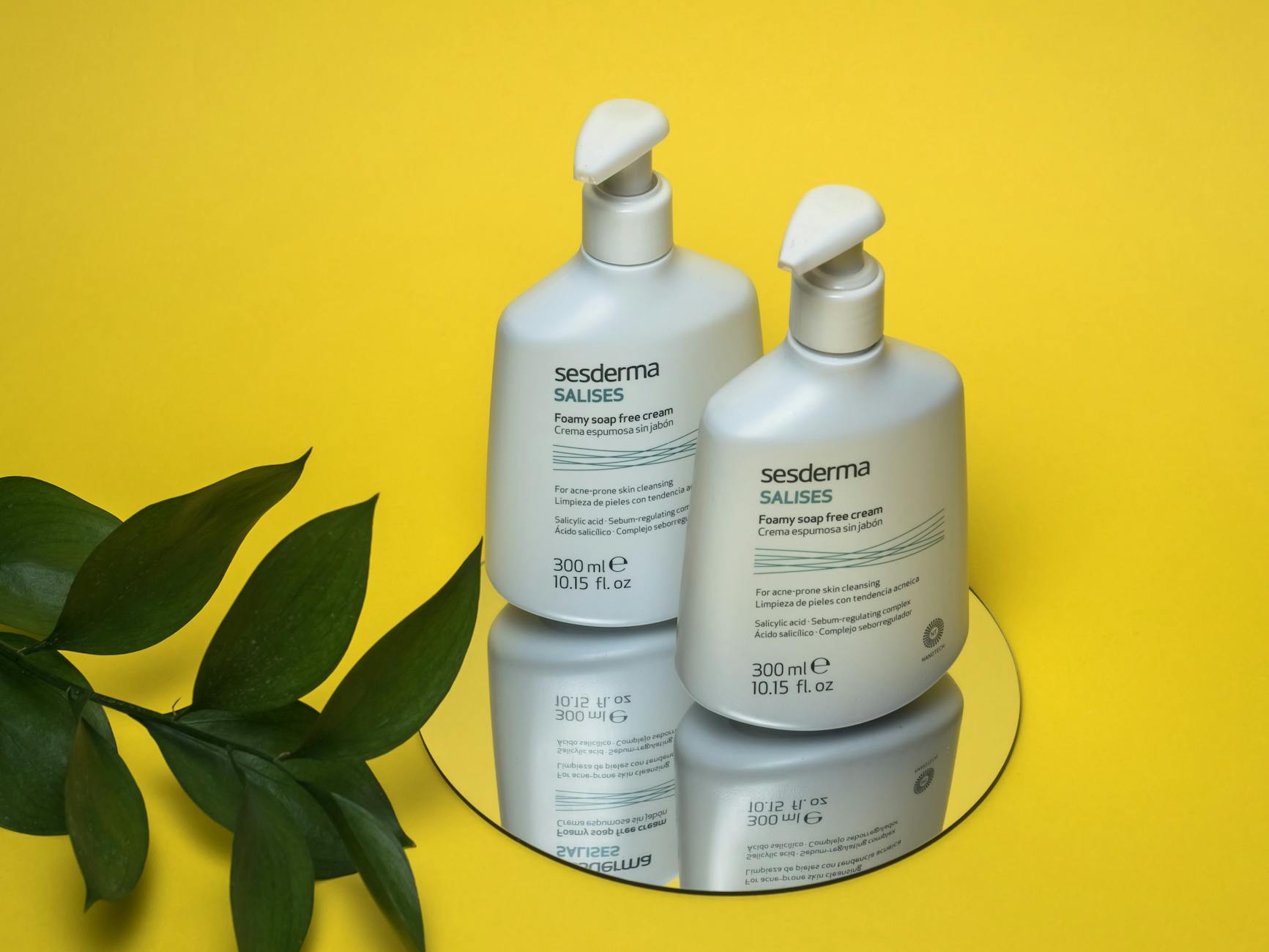
Over-the-counter acne treatments like salicylic acid cleansers and benzoyl peroxide spot treatments can help with surface-level breakouts, but they cannot address the androgen-driven sebum overproduction happening at the hormonal level. A woman who has been cycling through drugstore acne products for six months without improvement almost certainly needs a systemic approach — whether that’s spironolactone, a specific oral contraceptive (for women still menstruating), or dietary and lifestyle modifications targeting insulin and cortisol. A third pitfall is discontinuing treatment too soon. Hormonal acne treatments like spironolactone typically take 8 to 12 weeks to show meaningful results. Many women give up at the four-week mark, conclude the medication isn’t working, and move on to the next thing. Patience is particularly important because perimenopausal hormone levels fluctuate month to month, so a single bad month doesn’t mean the treatment has failed.
The Gut-Skin Connection During Perimenopause
Emerging research on the gut-skin axis suggests that intestinal health influences systemic inflammation and hormone metabolism in ways that directly affect acne. The estrobolome — a collection of gut bacteria that metabolize estrogen — plays a role in determining how much active estrogen circulates in the body. When gut microbiome diversity declines, which can happen due to stress, antibiotic use, or poor diet, estrogen clearance may be altered, potentially worsening the hormonal imbalance that drives perimenopausal acne.
A woman who develops acne shortly after a course of antibiotics for a sinus infection, for example, may be experiencing a gut-mediated hormonal disruption on top of her existing perimenopausal shift. Probiotic supplementation and fermented foods have shown modest benefits in small studies on inflammatory acne, though the evidence is far from definitive. This is an area where the science is still catching up to the clinical observations, and no specific probiotic strain has been proven to reliably improve acne. It’s reasonable to support gut health through diverse fiber intake and fermented foods, but it would be premature to treat it as a primary acne intervention.
What’s Ahead for Managing Acne Through the Menopausal Transition
The good news is that for most women, acne tends to improve after menopause is complete and hormone levels stabilize at their new baseline. The turbulence of perimenopause — the erratic fluctuations — is often worse for the skin than the eventual low-estrogen steady state of postmenopause. That said, some women continue to experience breakouts into their sixties, particularly if they have ongoing adrenal androgen production or insulin resistance.
Research into topical anti-androgens, selective androgen receptor modulators, and microbiome-targeted therapies may eventually offer more precise treatments with fewer systemic side effects. For now, the most effective approach remains a combination of hormonal management, gentle but active topical care, and metabolic health optimization. Women entering perimenopause who are proactive about these three pillars tend to weather the acne surge far better than those who wait until breakouts are severe before seeking help.
Conclusion
Perimenopausal acne is driven by a specific and well-understood hormonal mechanism: declining estrogen and progesterone shift the balance toward androgens, which stimulate oil production and inflammation in the skin. This process is compounded by cortisol from chronic stress, rising insulin resistance, and sometimes gut microbiome disruption.
The breakouts are typically deep, concentrated along the lower face, and resistant to the surface-level treatments that work for younger skin. Effective management requires addressing the hormonal root cause through options like spironolactone or carefully chosen HRT, supporting the skin barrier with gentle retinoids and adequate hydration, and tackling metabolic factors through diet and stress management. Women who understand that this is a hormonal transition — not a hygiene failure or skincare mistake — are better positioned to seek the right help early and avoid the frustrating cycle of aggressive over-treatment that makes perimenopausal skin worse.
Frequently Asked Questions
At what age does perimenopausal acne typically start?
Most women enter perimenopause between ages 40 and 55, with acne often appearing in the early to mid-forties. However, some women notice hormonal skin changes as early as their late thirties, particularly if they have a history of hormone-sensitive acne or PCOS.
Can perimenopausal acne occur even if I had clear skin my whole life?
Yes. Many women who never experienced acne as teenagers develop it for the first time during perimenopause. The hormonal shift creates a new imbalance that the skin has never had to contend with before, regardless of past skin history.
Is perimenopausal acne the same as hormonal acne?
Perimenopausal acne is a subset of hormonal acne. All perimenopausal acne is hormonally driven, but not all hormonal acne is related to perimenopause. The term “hormonal acne” also covers breakouts from PCOS, post-pill hormone changes, and menstrual cycle fluctuations.
Will birth control pills help with perimenopausal acne?
Certain combined oral contraceptives can help by increasing SHBG and suppressing androgens. However, they are generally not recommended for women over 35 who smoke, or for those with certain cardiovascular risk factors. The decision should be made with a prescriber who understands both the dermatological and cardiovascular implications.
How long does perimenopausal acne last?
Perimenopause itself lasts an average of four to eight years. Acne may not persist for the entire duration — many women find that breakouts peak during the most hormonally volatile years and gradually improve as they approach menopause. Consistent treatment can significantly shorten the active breakout period.
Should I see a dermatologist or a gynecologist for perimenopausal acne?
Ideally, both. A dermatologist can prescribe topical and oral acne treatments like spironolactone, while a gynecologist or endocrinologist can evaluate your overall hormonal picture and discuss options like HRT. The best outcomes happen when skin treatment and hormone management are coordinated.