Why Skin Texture Looks Worse in Certain Lighting
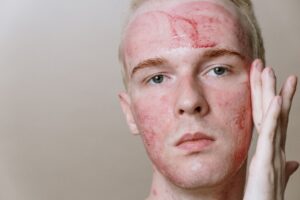
Have you ever noticed your skin looks smooth and even in one light but bumpy or rough in another? This happens because lighting highlights tiny flaws on the skin’s surface that are always there but not always visible. Different lights cast shadows, emphasize uneven areas, and change how colors appear, making texture issues stand out more.
Skin texture refers to the feel and look of your skin’s surface, like pores, fine lines, roughness, or small bumps. Under soft, diffused light, such as on a cloudy day or from a bathroom vanity bulb, these details blend together. The light scatters evenly, so shadows are minimal and skin appears flatter and smoother. But switch to harsh overhead lights, like fluorescent bulbs in an office, or direct sunlight, and everything changes. Strong light creates sharp shadows in pores and dips, making them look deeper and more noticeable. Side lighting, such as from a window at an angle, does the same by grazing the skin and accentuating every ridge and valley.
One big reason is how light interacts with skin imperfections. Rough texture from sun damage, for example, includes leathery patches or loss of elasticity. UV rays break down collagen over time, leaving skin less plump and more prone to showing texture under bright or angled light. Darker spots or hyperpigmentation, often caused by sun exposure or inflammation, can also worsen the effect. These patches absorb light differently than smooth areas, creating contrast that makes the whole surface look uneven.
Even subtle issues like dryness or enlarged pores pop more in certain lights. Dry skin scatters light poorly, appearing dull or flaky under cool-toned LEDs, while warm lights might hide it better. Pollution and stress add to this by slowing skin renewal, leading to a buildup of dead cells that roughens the texture and catches light unevenly.
Your skin tone plays a role too. Lighter skin shows redness or sallowness more in yellow-toned lights, while darker tones reveal hyperpigmentation patches clearly under blueish fluorescents. Vein issues or poor circulation can cause rusty discoloration that looks textured and worse in direct beams.
The good news is this is often just an optical trick, not a sudden change in your skin. Natural light varies by time of day, and indoor bulbs mimic different conditions, like cool daylight or warm sunset glows. To check your skin more accurately, try even lighting from multiple angles or use a ring light, which minimizes shadows.
Sources
https://sachiskin.com/blogs/skin-education/understanding-hyperpigmentation-part-1-types-and-causes-for-effective-skin-care
https://www.womenshealthmag.com/beauty/a34731756/sallow-skin-causes/
https://www.talawellness.com/how-to-get-rid-of-sun-damage-on-face
https://www.truejewelcosmeticcenter.com/education/what-causes-uneven-skin-tone/
https://www.malkaspa.com/texture—brightning—best-for-texture–discoloration–and-radiance
https://www.metroveincenters.com/blog/hyperpigmentation-your-skin-and-vein-disease
https://drqueeniechan.com.au/conditions/uneven-skin-tone/
https://worldofasaya.com/blogs/hyperpigmentation/essential-checklist-identifying-skin-discoloration-causes