
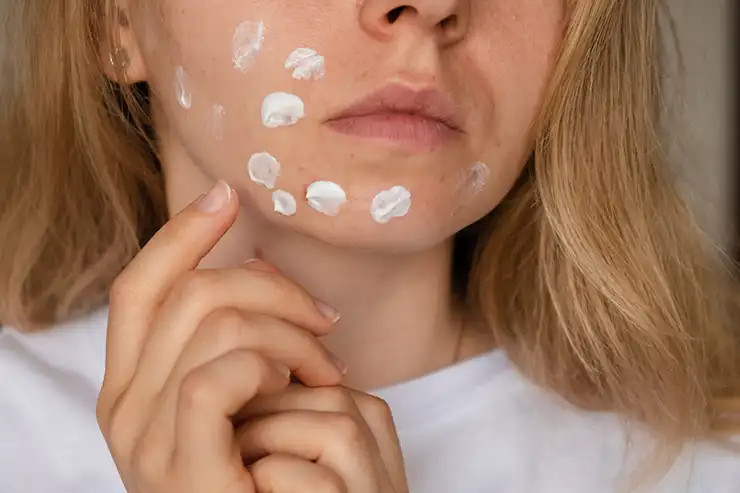
How Diet Influences Acne Inflammation
Acne starts when pores get clogged with oil, dead skin, and bacteria, leading to red, swollen pimples. What you eat plays a big role in how much inflammation happens in your skin during breakouts.
Foods with a high glycemic index, like sugary snacks, white bread, and refined grains, cause your blood sugar to spike quickly. This spike makes your body release more insulin and a hormone called IGF-1. These hormones boost the production of androgens, which are male hormones that everyone has. Androgens tell your skin glands to make extra oil and trigger inflammation, worsening acne.[1]
Dairy products, especially milk and whey protein, act the same way. They raise insulin levels and add to hormone changes that inflame the skin. Sweets like sodas, pastries, and chocolate also contribute by keeping blood sugar high and fueling breakouts.[1][2]
Alcohol and saturated fats from fried foods add to the problem too. They increase overall inflammation in the body, making acne spots more red and painful. The typical Western diet full of these items links directly to more acne cases.[1]
On the flip side, a low glycemic index diet helps. Choose whole grains, vegetables, and fruits that release sugar slowly. This keeps insulin steady and cuts down on hormone-driven oil and swelling.[1]
Probiotics from yogurt or supplements support a healthy gut. A balanced gut microbiome lowers body-wide inflammation, which can mean fewer acne flares.[1]
Certain natural compounds fight inflammation directly. Resveratrol, found in grapes and berries, blocks pathways like MAPK and NF-kB that bacteria in acne activate. Studies show it reduces swelling and key inflammatory signals in skin.[3]
Vitamin D from sunlight or foods like fatty fish also helps. It controls oil production and boosts skin defenses against bacteria, easing inflammation.[3]
Cut back on high sugar foods, dairy, and processed items to see less redness and fewer pimples over time. Pair diet changes with gentle skincare for the best results.
Sources
https://www.skindepth.com.au/blogs/news/diet-in-acne-the-glycemic-index
https://www.tuftsmedicine.org/about-us/news/acne-over-30
https://pmc.ncbi.nlm.nih.gov/articles/PMC12735603/