# Could Acne Become a One-Time Treatment Condition?
Acne has long been a chronic condition that many people manage throughout their lives, often requiring ongoing treatment and maintenance. However, emerging research and new treatment approaches suggest that the future of acne care might look very different. Scientists are developing methods that could potentially address acne at its root causes rather than just managing symptoms, which raises an intriguing question: could acne eventually become something you treat once and resolve permanently?
The traditional approach to acne treatment has focused on controlling bacteria and reducing inflammation. Dermatologists typically prescribe topical creams, oral medications, or in severe cases, isotretinoin, a powerful drug that can provide long-term remission. However, these treatments often require ongoing use or repeated courses to maintain clear skin. The shift happening now involves understanding acne from a completely different angle.
Recent scientific discoveries have revealed that acne is not simply a bacterial problem. The condition involves a complex interplay of factors including hormones, inflammation, the skin’s microbiome, and the skin barrier itself. Researchers have found that medicinal plants like curcumin can effectively inhibit the growth of Propionibacterium acnes, the bacteria associated with acne. More importantly, thirteen medicinal plant treatments have now received scientific approval through clinical trials for treating acne, either alone or combined with other therapies. This expansion of treatment options suggests that we are moving toward more targeted, effective interventions.
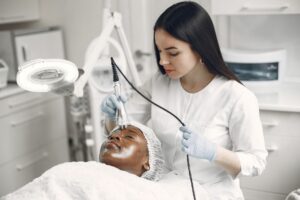
One of the most promising developments involves regenerative medicine approaches. Scientists are exploring treatments that work at the cellular level to repair and restore skin function rather than simply suppressing symptoms. These include exosomes, which are tiny vesicles derived from stem cells, and PDRN, a compound derived from salmon DNA. These regenerative treatments aim to boost collagen production and heal skin damage more effectively than traditional approaches. The key difference is that these methods focus on restoring the skin’s natural healing capacity and function.
The skin microbiome has emerged as another crucial factor in acne development. The skin hosts billions of bacteria, fungi, and other microorganisms that play a vital role in maintaining a healthy barrier against irritants. When this microbiome becomes disrupted, it can lead to acne, eczema, and premature aging. New treatments called postbiotics, which are byproducts of beneficial bacteria, can help restore balance to this ecosystem without introducing live bacteria that might overwhelm sensitive skin. By rebalancing the microbiome, these treatments address one of the root causes of acne rather than just treating the symptoms.
The concept of treating acne as a one-time condition depends on whether future treatments can permanently restore the skin’s natural balance and function. If regenerative treatments can successfully repair damaged skin tissue, restore a healthy microbiome, and strengthen the skin barrier, then theoretically, acne could become a condition that requires treatment once or for a limited period, after which the skin maintains its health on its own. This would represent a fundamental shift from the current model of ongoing management.
However, several factors complicate this vision. Acne is heavily influenced by hormones, particularly during puberty and in some cases throughout adulthood. Hormonal fluctuations can trigger acne even in people with previously clear skin. Additionally, lifestyle factors like stress, diet, and environmental pollution continue to affect skin health. A truly permanent cure would need to address these ongoing influences or at least make the skin resilient enough to withstand them without developing acne.
The most realistic scenario for the near future is that acne treatment will become more effective and require less frequent intervention. Rather than daily topical treatments or monthly dermatology visits, people might receive a course of regenerative treatment that provides long-lasting results. Some individuals might achieve near-permanent remission, while others might need occasional touch-up treatments. This would still represent a major improvement over current treatment patterns.
The convergence of multiple advances makes this possibility increasingly plausible. Better understanding of the microbiome, development of regenerative medicine techniques, discovery of plant-based compounds with proven efficacy, and growing knowledge of how hormones and inflammation interact in acne all point toward more effective interventions. As these approaches mature and become more accessible, the experience of living with acne could transform dramatically.
For people currently struggling with acne, this research offers hope that future treatments will be more effective and require less ongoing effort. The shift from managing a chronic condition to treating it once represents not just a medical advance but a significant quality-of-life improvement. While we are not quite at the point where acne can be permanently cured with a single treatment, the trajectory of research suggests that day may not be far away.
Sources
https://onlinelibrary.wiley.com/doi/pdf/10.1111/jocd.70628
https://pmc.ncbi.nlm.nih.gov/articles/PMC12729506/
https://clinicaltrials.gov/study/NCT07296536
https://www.cosmopolitan.com/style-beauty/beauty/a69757862/2026-skincare-trend-predictions/
https://www.dotandkey.com/blogs/skin-care/2026-skincare-trends
https://www.refinery29.com/en-us/dermatologist-skincare-advice-2026