
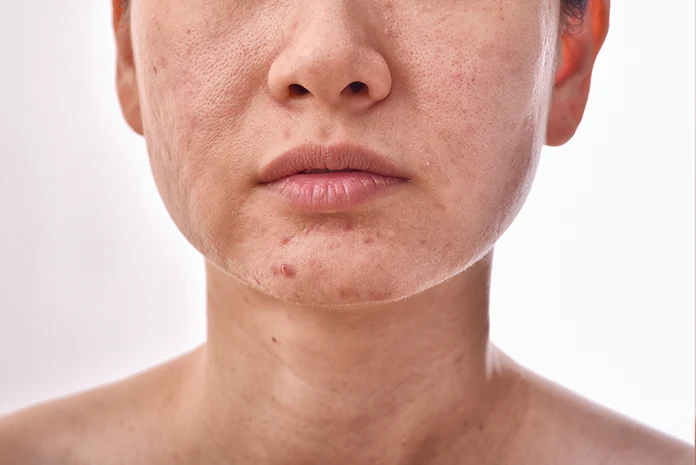
Acne often starts in the teenage years, but for many people, it sticks around or even flares up later in life. While it might seem easier to treat when you’re young, acne can get tougher to handle as you age because of deeper changes in your body and skin.
Teen acne usually comes from raging hormones during puberty. These hormones make oil glands in your skin produce more sebum, which clogs pores and leads to pimples. Simple creams with benzoyl peroxide or salicylic acid often work well at this stage because the main issue is just too much oil on the surface.[1]
As you enter your 20s and 30s, things shift. Adult acne tends to show up on the lower face, like around the chin and jawline. It is not just about teen hormones anymore. Instead, hormonal ups and downs from stress, birth control, pregnancy, or conditions like PCOS play a bigger role. These cause ongoing inflammation deep in the skin, making pimples more stubborn and prone to scarring.[2]
Skin changes with age add to the problem. By your 30s, your skin makes less collagen and oil naturally, but what oil it does produce can be thicker and more likely to clog pores. The skin barrier weakens too, letting bacteria and irritants cause longer-lasting breakouts. Over-the-counter treatments that cleared teen acne might not touch these adult versions because they do not address the root causes.[2]
Lifestyle factors pile on as you get older. Stress raises cortisol levels, which ramps up oil production and blocks healing. Poor gut health or digestive issues can link to worse acne, though some studies show digestive problems might protect against severe cases in certain ways. Being overweight raises risks too, and sleep problems or negative emotions make it harder for skin to recover.[1]
Hormonal imbalances get trickier with age. In women, perimenopause or thyroid issues can trigger acne that resists standard treatments. Men might see it from changing testosterone levels. These internal signals mean acne in adults points to body-wide issues, not just dirty pores or bad skincare.[2]
Treating older acne often needs a doctor’s input. Topical retinoids or antibiotics help teens, but adults may require oral pills like spironolactone for hormones or isotretinoin for severe cases. Lifestyle tweaks matter more too, like better sleep, stress management, and a gut-friendly diet. Ignoring these makes acne drag on.[1][2]
Family history can make some people more prone to lasting acne, and male sex links to tougher cases even later in life.[1]
Sources
https://pmc.ncbi.nlm.nih.gov/articles/PMC12688717/
https://timesofindia.indiatimes.com/life-style/health-fitness/health-news/skin-in-your-30s-as-a-health-report-card-pigmentation-acne-hair-fall-and-what-they-hint-at-inside/articleshow/125938226.cms
https://onlinelibrary.wiley.com/doi/10.1111/jocd.70525?af=R
https://blogs.the-hospitalist.org/topics/acne