
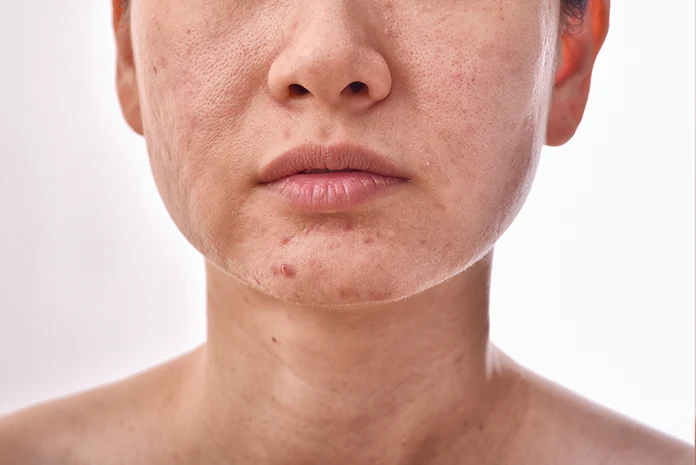
Why Acne Scars Look Worse in Sunlight
Acne scars often stand out more after time in the sun because ultraviolet rays trigger changes in your skin that highlight and worsen them. These rays from sunlight penetrate the skin and affect both the color and texture of scars in ways that make them harder to ignore.
When acne breaks out, it inflames the deeper layers of skin, damaging collagen and elastin, the proteins that keep skin firm and smooth. As the skin heals, it produces new collagen, but the result can leave behind pits, raised areas, or flat dark spots called post-inflammatory hyperpigmentation. These are the scars people notice on their face or body.[1]
Sunlight changes everything for these scars. UV rays boost melanin production, the pigment that gives skin its color. In scarred areas, this extra melanin piles up, turning red or brown marks much darker. A faint scar that blended in during winter might look bold and uneven after a sunny day.[1][3][6]
The damage goes deeper than color. UV radiation breaks down collagen around the scar, slowing natural healing and making the skin thinner or rougher. This can turn a shallow pit into a more obvious depression or make raised scars stand out against surrounding skin.[1][3][5]
Scars are extra sensitive to sun because they already have uneven collagen and more blood vessels from past inflammation. Sun hits these spots harder, darkening them faster than normal skin. People with darker skin tones see this effect even more since their melanocytes, the cells making pigment, react strongly to UV.[2][4]
Without protection, repeated sun exposure keeps scars prominent longer. The rays not only darken them right away but also stop the fading process that happens over months. This is why scars from summer acne often linger into the next year.[7]
Protecting scars starts with daily broad-spectrum sunscreen, even on cloudy days. Look for SPF 30 or higher, and reapply every two hours outside. Mineral sunscreens with zinc oxide work well for acne-prone skin. Covering up with hats or clothing helps too, especially while scars heal.[1][3]
Sun makes acne scars worse by darkening pigment, breaking collagen, and delaying repair, turning subtle marks into noticeable ones.
Sources
https://www.kins-clinic.com/blogs/what-are-the-main-acne-scar-types-a-skin-friendly-guide-with-treatment-options
https://vitahl.com/sun-damage-pigmentation
https://health.clevelandclinic.org/how-to-prevent-scarring
https://drgurgen.com/sun-spots/
https://www.london-dermatology-centre.co.uk/blog/adult-acne-scarring/
https://glojasaesthetic.com/skin-blog/reasons-acne-scars-persist/
https://www.amoils.com/pages/acne-scars-pictures
https://www.mesoestetic.com/blog/acne-scars/