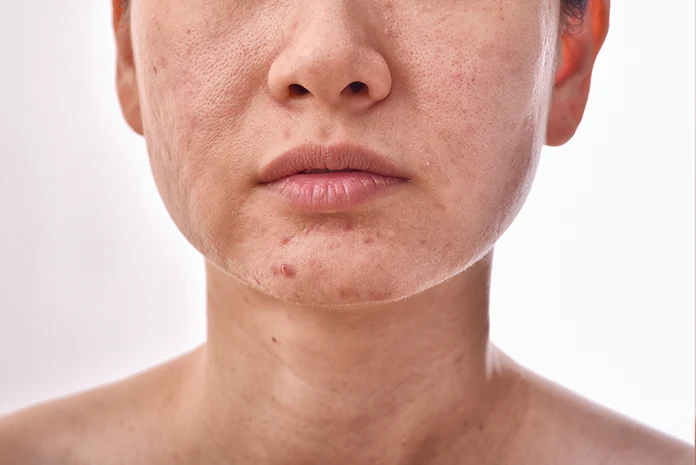
How Disrupted Skin Flora Leads to Breakouts
Your skin is home to trillions of tiny microbes, like bacteria and fungi, that form a protective layer called the skin flora or microbiome. This community keeps your skin healthy by fighting off bad germs, controlling oil, and maintaining a strong barrier against irritants. When this balance gets thrown off, it creates an opening for problems like pimples and cysts.
Think of your skin flora as a neighborhood where good bacteria keep everything in check. Harsh cleansers, over-washing, or too many active skincare products strip away these helpful microbes. Without them, harmful bacteria like Cutibacterium acnes, often shortened to C. acnes, can take over clogged pores. This bacteria breaks down oils into irritating fatty acids, sparking redness and swelling.[1][4]
Over-cleansing is a common culprit. Washing too often removes natural oils and beneficial bacteria that regulate inflammation and oil production. Your skin reacts by making even more oil to compensate, which clogs pores faster and feeds the bad bacteria. Touching your face or picking at spots adds micro-injuries, letting more germs in and worsening the cycle.[2]
Stress plays a role too. It raises cortisol levels, which boost oil production and disrupt the microbiome further. Diets high in sugar or dairy can spike hormones that do the same, while gut issues send inflammation signals to your skin, unbalancing the flora indirectly.[2][3][6][8]
In acne-prone skin, the shift is clear. Healthy skin has diverse microbes, but disrupted flora favors C. acnes strains that produce enzymes. These enzymes damage the skin barrier, form protective biofilms, and trigger immune responses. White blood cells rush in, causing pus-filled bumps or deep nodules as contents spill into deeper layers.[1]
Fungi can join the party if bacteria are wiped out by antibiotics or strong products. This leads to yeast overgrowth in a weakened microbiome. The result is itchy, uniform small bumps mistaken for regular acne.[5]
Excess sebum from hormones narrows hair follicles with dead skin buildup, creating a perfect trap for imbalanced flora. What starts as a quiet disruption ends in painful breakouts because the skin’s defenses are down.[1][4]
Gentle care helps restore balance. Stick to mild cleansers, avoid over-exfoliating, and give treatments time to work without constant changes. Supporting your gut with fiber and probiotics may ease skin-wide inflammation too.[2][6]
Sources
https://pmc.ncbi.nlm.nih.gov/articles/PMC12735603/
https://wizderm.in/surprising-reasons-for-acne/
https://www.westchestercosmeticdermatology.com/blog/adult-acne-why-it-happens-and-how-to-treat-it/
https://naturalimageskincenter.com/common-misconceptions-about-bacterial-acne-how-to-identify-it-correctly/
https://drderrickphillips.com/video/fungal-acne-treatment-guide/
https://www.ueschiro.com/ues-chiro-skin
https://drsambunting.com/en-us/blogs/sam-bunting/how-to-fix-adult-acne
https://www.skin-gut-axis.com/post/acne-why-the-skin-and-the-gut-are-inseparable