# What Causes Breakouts During Menstrual Cycles
Many women experience frustrating skin changes right before or during their period. Understanding why this happens can help you manage breakouts more effectively and feel less alone in dealing with this common issue.
## The Hormone Connection
The primary reason for period-related breakouts is hormonal fluctuation. During your menstrual cycle, your body goes through dramatic shifts in estrogen, progesterone, and androgens (male hormones). These hormonal changes directly affect your skin’s oil production and inflammation levels.
When hormone levels drop during the late luteal phase and early follicular phase of your cycle – which corresponds to the premenstrual and menstrual periods – your skin becomes more prone to breakouts. Research shows that women experience an average of 5 to 6 additional acne lesions during these phases compared to other times of the month.
## How Hormones Trigger Acne
Elevated androgen levels stimulate your skin’s sebaceous glands to produce excess sebum, or oil. This oil buildup combines with dead skin cells to clog your pores, creating an ideal environment for acne-causing bacteria to thrive. The hormonal changes also trigger inflammation in your skin, making pimples appear redder, more swollen, and slower to heal than typical breakouts.
The decline in estrogen and progesterone during this phase plays a significant role. Estrogen normally helps your skin maintain its natural defenses and stimulates collagen production. When these hormone levels drop, your skin becomes more vulnerable to breakouts.
## Where Breakouts Appear
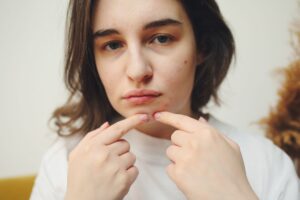
Hormonal acne typically appears in specific locations on your face and body. The jawline, chin, and lower cheeks are the most common areas for period-related breakouts. You might also experience acne on your forehead, cheeks, back, and chest. These areas have higher concentrations of oil glands that respond to hormonal changes.
## Contributing Factors Beyond Hormones
While hormones are the main culprit, other factors can make period breakouts worse. Stress increases cortisol production, which indirectly stimulates oil secretion in your skin. A diet high in sugar and dairy can disrupt your skin’s natural processes and lead to clogged pores. Poor sleep quality and lack of rest also contribute to hormonal imbalances that worsen acne.
Environmental factors matter too. Non-breathable clothing can trap sweat and bacteria against your skin, especially on your back and chest. Inadequate cleansing or using harsh skincare products can damage your skin barrier, causing your skin to produce even more oil to compensate.
## How Long Do Period Breakouts Last
The duration of hormonal acne varies from person to person. For some women, breakouts appear sporadically around their menstrual cycle and resolve relatively quickly once hormone levels stabilize. Others experience more persistent outbreaks that last longer, particularly if they have underlying hormonal conditions like polycystic ovary syndrome (PCOS).
Age also plays a role. Younger adults typically experience shorter episodes of hormonal acne compared to women in their late 30s and beyond. Your lifestyle choices, stress levels, and sleep quality influence how long breakouts persist.
## When to Seek Help
If your breakouts consistently cluster around your jawline, chin, or mouth area and flare up before, during, or after your menstrual cycle, hormonal acne is likely the cause. These breakouts are often painful, cyst-like, and slower to heal than regular pimples. If you notice a pattern, keeping a log of your breakouts and discussing it with a dermatologist can help you develop a personalized treatment plan.
Understanding that period breakouts are a normal biological response to hormonal changes can help you approach skincare with more patience and self-compassion during these times.
## Sources
https://www.psmedical.com.hk/en/blog/acne-health/hormonal-acne-areas-during-period/
https://www.eurekalert.org/news-releases/1110488
https://www.tuftsmedicine.org/about-us/news/acne-over-30
https://www.drbatras.com/hormonal-acne-what-causes-it-and-how-to-treat-it
https://www.draliabadi.com/menopause/perimenopause-and-acne/