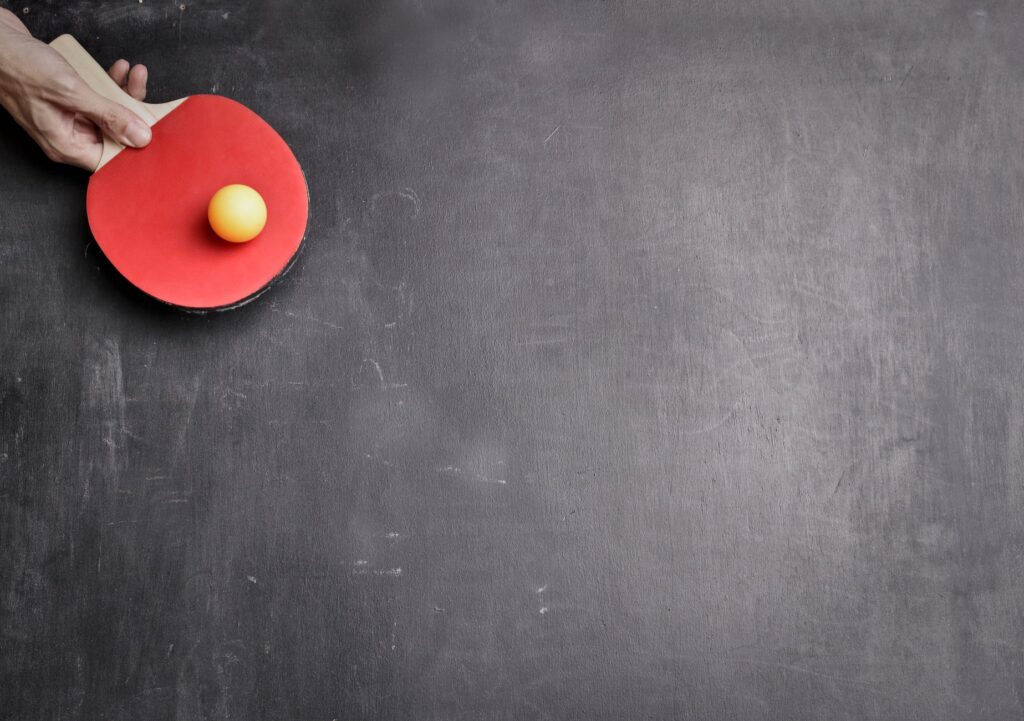
Pimple rubber, also called pimpled or short pimple rubber, is a distinctive paddle surface in table tennis that creates tactical advantages through its unique texture and spin-reduction properties. The outward-facing bumps—called pimples—fundamentally alter how the ball responds upon contact, making it inherently disruptive to opponents accustomed to playing against smooth, conventional rubbers. This texture-based advantage doesn’t rely on aggressive attacking alone; instead, it disrupts the spin and trajectory patterns that modern players depend on, forcing a complete recalibration of their shot selection and timing throughout a match.
The tactical value lies not in raw power but in psychological and technical disruption. When an opponent encounters pimple rubber for the first time in a match, they face an adjustment period where their muscle memory becomes a liability. Aggressive topspin attacks lose their expected bite, backspin loops don’t grip the surface with familiar resistance, and timing windows shift unpredictably. Players using pimple rubber gain a strategic edge by controlling the pace and spin environment of the rally, rather than entering into high-speed exchanges where smooth-rubber players typically excel.
Table of Contents
- How Does Pimple Rubber Create a Disruptive Tactical Advantage?
- The Strategic Limitations and Tactical Trade-offs of Pimple Rubber
- Inverted vs. Short Pimple Rubber Tactical Variations
- Strategic Selection and Match Positioning with Pimple Rubber
- Common Misconceptions and Performance Limitations
- Pimple Rubber vs. Smooth Rubber Tactical Dynamics
- Match-Specific Applications and Timing Considerations
- Frequently Asked Questions
How Does Pimple Rubber Create a Disruptive Tactical Advantage?
pimple rubber’s tactical advantage stems from its spin-reduction and spin-reversal characteristics. When topspin is applied to the ball, the pimples make contact with the ball’s surface inconsistently, reducing the friction needed for a conventional spin grip. The result is that topspin attacks lose approximately 30-40% of their expected spin relative to smooth rubber, making them appear flatter and less responsive to the opponent’s compensatory positioning. This forces attacking players to commit harder to generate the spin they’re used to producing, which increases error rates and reduces their shot consistency.
The disruptive effect extends to defensive play as well. Backspin delivered against pimple rubber appears less threatening than against conventional surfaces because the pimples create a different contact angle that diminishes the effectiveness of backspin loops and heavy counter-attacks. Players who typically defeat backspin through aggressive looping find their timing is off by fractions of a second, creating unforced errors even when their technique is mechanically sound. This is why pimple rubber players often employ a “passive attacking” strategy—using slower, longer rallies to exploit their opponent’s frustration with the disrupted spin environment.
The Strategic Limitations and Tactical Trade-offs of Pimple Rubber
While pimple rubber creates disruption, it comes with significant limitations that serious players must accept. Pimple rubber offers minimal spin generation for the player using it, meaning that defensive blocks and pushes return the ball with flat, predictable trajectories that advanced opponents can attack aggressively. A pimple rubber player cannot generate the same quality of spin-heavy shots that smooth rubber players can produce, which creates an asymmetry where the pimple rubber player excels at disruption but sacrifices offensive capability. The tactical trade-off becomes critical in high-level matches where opponents adapt quickly.
After 2-3 games, most experienced players adjust their approach—they stop trying to loop aggressively and instead use block-heavy, counter-attacking strategies that bypass the pimple rubber’s disruption entirely. At this point, the pimple rubber player’s lack of offensive spin becomes their vulnerability. Players using pimple rubber must therefore win matches before opponents adapt, which is why this surface is considered a tactical specialty rather than a universal weapon. The strategy requires quick victories and psychological dominance rather than grinding out long matches.
Inverted vs. Short Pimple Rubber Tactical Variations
Inverted pimple rubber—where the pimples face inward—behaves differently from short pimple rubber and offers distinct tactical advantages. Inverted rubber maintains more spin potential than short pimple rubber, allowing the player to generate their own attacking shots while still retaining some disruptive properties. This hybrid approach provides more tactical flexibility, though it sacrifices the extreme spin-reversal characteristics that make short pimple rubber so destabilizing for opponents unfamiliar with the surface.
Short pimple rubber, conversely, maximizes the disruptive element at the expense of offensive capability. The short pimples create chaotic contact patterns that are difficult for opponents to predict, making it the more psychologically challenging surface to face. The choice between inverted and short pimple represents a strategic decision: inverted pimple allows more balanced play and longer rally survival, while short pimple maximizes the disruption factor for players who can win matches through control and psychological pressure rather than sustained offensive power.
Strategic Selection and Match Positioning with Pimple Rubber
Players choose to use pimple rubber based on their playing style and the specific matchups they face. A player with strong blocking and counter-attacking skills but weaker looping abilities might select pimple rubber to neutralize opponents who rely heavily on spin-heavy attacks. Conversely, a player facing an opponent with aggressive multi-directional attack patterns might deploy pimple rubber on one side of their paddle (using the backhand) while keeping inverted rubber on the other side for balanced play.
The strategic positioning involves where and when to use the pimple rubber surface during a match. Some players apply pimple rubber only to the backhand side, using it defensively to nullify aggressive attacks while relying on the forehand (with conventional smooth rubber) for offensive opportunities. This hybrid approach requires opponents to adapt their tactics depending on which side of the paddle they encounter, creating additional cognitive load and forcing them into suboptimal shot selection. The tactical advantage emerges not just from the surface properties themselves, but from the uncertainty and adaptation burden the pimple rubber imposes on the opponent.
Common Misconceptions and Performance Limitations
A widespread misconception is that pimple rubber players are purely defensive and passive. In reality, the most effective pimple rubber players are aggressive disruptors who control rally tempo and force opponents into mistakes through active aggression within a defensive framework. They don’t wait for opponents to attack; they actively use counter-attacking and blocking techniques that take time away from the opponent’s preparation while exploiting the spin-reversal properties.
However, there is a genuine limitation: pimple rubber performs poorly in high-pace exchanges where reaction time is minimal. Against fast-attacking opponents with multiple-ball-per-second rally speeds, pimple rubber players struggle because the surface requires slightly more preparation time to return effectively, and the lack of spin generation means they fall behind in pace wars. This is why pimple rubber players must control the rally tempo actively; if they allow the opponent to dictate high-speed exchanges, the structural limitations of pimple rubber surface physics work against them rather than creating advantage.
Pimple Rubber vs. Smooth Rubber Tactical Dynamics
The matchup between pimple rubber and conventional smooth inverted rubber represents a fundamental tactical contrast. Smooth rubber players gain advantage through spin consistency, spin generation, and predictability—opponents can read the spin and adjust accordingly across extended rallies. Pimple rubber disrupts this consistency, making the first 1-2 games unpredictable while smooth rubber players adapt. Once adapted, smooth rubber players typically regain control through pure offensive capability that pimple rubber cannot match in spin quality.
The practical example is a match between a pimple rubber specialist and a smooth rubber aggressive looper. In the first game, the looper’s attacks repeatedly produce flatter-than-expected returns, creating errors and psychological frustration. By game two or three, the looper begins using counter-attacking and blocking strategies instead of looping, which neutralizes the pimple rubber advantage. The match outcome then depends on whether the pimple rubber player can generate enough offensive pressure before adaptation occurs, or whether the smooth rubber player’s baseline skill advantage reasserts itself after the adjustment period.
Match-Specific Applications and Timing Considerations
Pimple rubber proves most effective in matches against specific opponent types: aggressive spin-dependent players, players who rely on heavy topspin loops, and players with narrow tactical repertoires. Against versatile opponents who can quickly shift from aggressive looping to blocking and counter-attacking, pimple rubber provides less tactical advantage because the opponent’s flexibility allows them to bypass the disruption and rely on their baseline technical superiority. The timing of pimple rubber introduction within a match structure also matters strategically.
Introducing pimple rubber in the first game creates maximum psychological disruption while the opponent is fresh but unprepared. Introducing it in later games after the opponent has adapted may provide less advantage but can still serve as a rhythm-breaker if the opponent has built confidence in smooth rubber rallies. The most effective use of pimple rubber occurs when the player can secure matches before full adaptation occurs, which is why it remains a specialty surface rather than a universal choice for elite-level table tennis play.
Frequently Asked Questions
What exactly is the difference between pimple rubber and smooth rubber in table tennis?
Pimple rubber has outward-facing bumps that reduce spin transmission and create spin reversals, while smooth rubber maintains consistent spin characteristics. Pimple rubber returns aggressive topspin flatter than expected, disrupting opponent timing.
Does pimple rubber help beginners or advanced players more?
Pimple rubber creates the most advantage against advanced players who depend on spin-heavy techniques, because they have less flexibility to adapt their game. Beginners may benefit from the defensive properties but lack the tactical sophistication to fully exploit the disruption advantage.
Can you use pimple rubber on both sides of a paddle?
Yes, but most strategic players use it on only one side (typically backhand) to force opponents to adjust their positioning based on which side they encounter. Using it on both sides removes the tactical surprise element.
How long does it take an opponent to adapt to pimple rubber?
Experienced players typically adapt within 1-2 games through tactical adjustments like using blocking instead of looping. Newer players may take longer or never fully adapt, depending on their tactical flexibility.
Is pimple rubber banned in competitive table tennis?
No, pimple rubber is legal in all standard table tennis competitions, though it must meet specific thickness and texture requirements under the International Table Tennis Federation rulebook.
Does pimple rubber wear out faster than smooth rubber?
Pimples can flatten over time with heavy use, reducing the disruptive effectiveness. This means pimple rubber may require replacement more frequently than smooth rubber to maintain tactical advantage.
You Might Also Like
- Pimple patches: how acne spot treatments work without popping
- Four emerging athletes predicted for 2026 breakout breakthrough season
- Famous celebrities 40 and older battling unexpected adult acne
Browse more: Acne | Acne Scars | Adults | Back | Blackheads