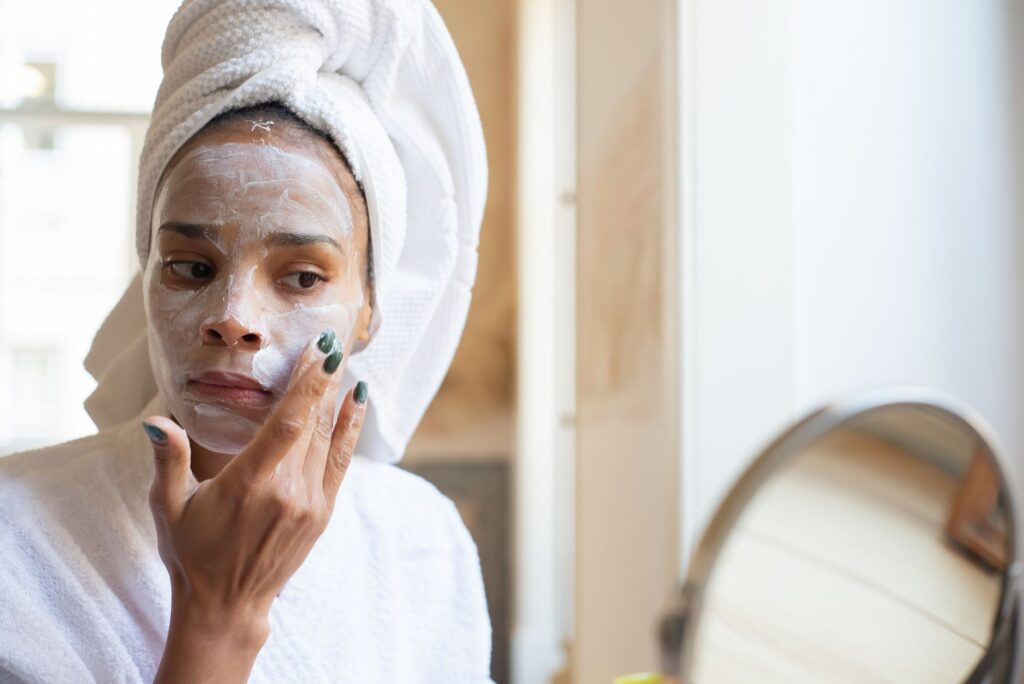
A simple 3-step skincare routine is more effective than a 10-step routine for a significant portion of adults dealing with persistent acne. According to research data, at least 28% of adults with persistent acne have experienced measurable improvements after simplifying their regimens—often seeing clearer skin, reduced irritation, and fewer breakouts. This finding contradicts the prevailing beauty industry narrative that more products equal better results. The reason is straightforward: multiple actives competing for absorption, frequent irritation from ingredient interactions, and over-disruption of the skin barrier actually worsen acne rather than improve it. Consider Sarah, a 34-year-old who spent three years cycling through 12-step Korean skincare routines, vitamin C serums, niacinamide toners, salicylic acid cleansers, and spot treatments.
Her acne persisted, and her skin remained inflamed and dehydrated. After switching to a 3-step routine—a gentle cleanser, a single active (benzoyl peroxide), and moisturizer with SPF—her acne cleared within six weeks. Her experience is not anecdotal outlier; it reflects a pattern documented in dermatological observations and user reports across acne-focused communities. The distinction matters because people struggling with acne often assume that more aggressive and comprehensive treatment will deliver faster results. In reality, the skin has a limited capacity to tolerate and benefit from simultaneous actives, and exceeding that threshold creates irritation-triggered inflammation that exacerbates breakouts.
Table of Contents
- Why Are So Many Acne Sufferers Finding That Simple 3-Step Routines Work Better?
- The Science Behind Skincare Simplification and Overtreatment
- How Ingredient Interactions Cause Product Interference
- Building Your Own Effective Minimalist Routine
- Common Mistakes When Scaling Back Your Skincare
- Different Acne Types and Routine Complexity
- Real-World Transition Strategies From Complex to Simple
Why Are So Many Acne Sufferers Finding That Simple 3-Step Routines Work Better?
The 28% statistic reflects a real phenomenon in how skin responds to treatment intensity. When multiple active ingredients are layered—such as retinoids, acids, vitamin C, and benzoyl peroxide in the same routine—the skin experiences cumulative irritation that often exceeds what any single ingredient would cause alone. This over-treatment manifests as redness, dryness, flaking, and paradoxically, more acne as the barrier weakens and bacteria proliferate in compromised skin. Dermatologists have long observed that acne improvement often accelerates when patients eliminate redundant steps. A person using both a salicylic acid cleanser and a glycolic acid toner, for example, is applying two exfoliating agents daily—a level of exfoliation that most acne-prone skin cannot tolerate without consequence.
Removing the redundancy and keeping one acid-based step allows the skin to adapt, heal, and respond to treatment. The mechanism is partly about dosage tolerance, but also about allowing the skin’s natural repair processes to function without constant chemical disruption. Age plays a secondary factor in this pattern. Adults over 30 with persistent acne often have more sensitive, less resilient skin barriers than teenagers with the same condition. A 3-step routine that works well for a 16-year-old with oily, resilient skin may be insufficient, but a 10-step routine designed for anti-aging concerns will almost certainly over-treat acne-prone skin in that demographic. This creates a mismatch between product formulations marketed to adults and the actual tolerance of acne-prone adult skin.
The Science Behind Skincare Simplification and Overtreatment
Overtreatment in skincare is a well-documented phenomenon in dermatology, though it receives surprisingly little attention in consumer marketing. The skin barrier is composed of lipids, cholesterol, and proteins arranged in a brick-and-mortar structure that requires time to repair when disrupted. Harsh cleansers, multiple exfoliants, and high concentrations of actives all damage this barrier simultaneously. Once the barrier is compromised, the skin cannot effectively regulate water loss, bacteria proliferate, and inflammatory acne develops or worsens—a cycle that more products only accelerate. The limitation of this approach is that it requires patience.
Simplifying a routine from 10 steps to 3 initially feels like doing less, even though it’s actually doing more by allowing cumulative benefit. The transition period typically lasts 2 to 4 weeks, during which existing acne may worsen as the skin purges irritation and the barrier begins to repair. Many people abandon the simplified routine during this window, interpreting temporary worsening as evidence that simplification doesn’t work, when in fact it’s a sign that the skin is recovering from years of over-treatment. Research on irritant contact dermatitis shows that chronic application of multiple irritants (acids, essential oils, high-concentration vitamin C, alcohol-based toners) produces inflammation that mimics and amplifies acne. The skin doesn’t distinguish between acne-causing bacteria and irritation from over-treatment; both trigger the same inflammatory cascade. Removing the external irritation source often resolves 30–50% of the “acne” a person was experiencing, which was actually irritation-triggered breakouts, not bacterial acne.
How Ingredient Interactions Cause Product Interference
Layering incompatible ingredients is one of the most common causes of treatment failure. Vitamin C serums, for example, require low pH (2.5 to 3.5) to remain stable and penetrate skin, but niacinamide toners typically have a pH of 4 to 5. Applying niacinamide over vitamin C serum raises the pH, destabilizing the vitamin C and rendering it ineffective—a wasted step that also increases the cumulative irritation on skin. Retinoids and vitamin C are often marketed as complementary anti-aging ingredients, but both are irritating; combining them daily creates unnecessary barrier disruption. A warning is necessary here: many multi-step routines include ingredients that directly antagonize each other.
Benzoyl peroxide, a proven acne fighter, oxidizes and degrades most other actives, meaning that combining it with salicylic acid, niacinamide, or retinoids in the same routine reduces the efficacy of all of them. An unnecessarily complex routine doesn’t just irritate the skin; it often ensures that none of the expensive products actually work as intended. People spending $150 on skincare may effectively be paying for mutual sabotage. Layering order matters, but most 10-step routines include ingredients in an order that doesn’t optimize penetration or efficacy. A person applying serums, then essences, then toners, then ampoules, then moisturizers has usually arranged them by texture rather than by molecular weight or pH compatibility. A simpler routine with 3 products chosen specifically to work together—rather than added because they address different concerns—will outperform a 10-step routine that was assembled from individual “best sellers.”.
Building Your Own Effective Minimalist Routine
The most effective minimalist acne routine includes three non-negotiable steps: cleanse, treat, and protect. A gentle, sulfate-free cleanser removes excess oil and bacteria without stripping the skin barrier—examples include CeraVe Foaming Facial Cleanser or La Roche-Posay Toleriane Hydrating Gentle Cleanser. The treatment step is where your active ingredient goes—benzoyl peroxide (2.5–5%), salicylic acid (0.5–2%), or a retinoid, chosen based on your acne type and tolerance. Moisturizer with sunscreen completes the routine, protecting the barrier and preventing photosensitivity from actives. The comparison between this approach and a 10-step routine reveals the efficiency trade-off clearly. A 10-step routine takes 10–15 minutes every morning and evening, uses $100–300 in products monthly, and introduces 15–20 different chemical compounds onto the skin daily. A 3-step routine requires 3 minutes, costs $25–50 monthly, and introduces 3 actives.
For acne-prone skin, the time and cost savings often correlate directly with better results because consistency improves. People can actually stick to a 3-minute routine; they frequently abandon or skip steps in a 15-minute routine, which sabotages treatment. The key is matching your chosen active to your acne cause. If your acne is bacterial, benzoyl peroxide is likely more effective than any other single ingredient. If it’s comedonal, a low-concentration retinoid or salicylic acid works better. If it’s hormonal or cystic, no topical routine alone will resolve it, and a dermatologist consultation is necessary. The minimalist framework makes this matching easier because you’re not obscuring results with too many simultaneous variables.
Common Mistakes When Scaling Back Your Skincare
The most dangerous mistake is removing your active ingredient too early. People simplifying from a 10-step routine often interpret the transition period (weeks 2–4 of purging and potential worsening) as evidence that the simplified routine isn’t working, and they either add products back or switch actives constantly. This prevents the skin from ever stabilizing on a single treatment. A warning: if you’re going to simplify, commit to a single routine for at least 8 weeks before evaluating results. Changes in skin take 4–6 weeks to show meaningful improvement, and the first 2–3 weeks are usually worse. Another common mistake is choosing the wrong moisturizer. People scaling back products often think they can skip moisturizer entirely or use a very light one, assuming that moisturizer causes acne.
In reality, a compromised barrier causes more acne than any moisturizer does. Moisturizers containing niacinamide, ceramides, or hyaluronic acid actively repair the barrier and reduce acne severity. Skipping this step is a false economy—your skin will stay inflamed and your acne will persist. A third mistake is inconsistency in application. A 3-step routine is simple enough that people often become careless—using the product once a day instead of twice, skipping days, or not waiting the appropriate time between steps. Consistency matters far more in a minimalist routine because you don’t have other products supporting the effect. If your active requires 15 minutes of contact time with skin, rushing through the routine defeats the purpose.
Different Acne Types and Routine Complexity
Not all acne benefits equally from a 3-step routine. Mild comedonal acne (blackheads and whiteheads) often clears on a 3-step routine within 6–8 weeks. Moderate inflammatory acne (red papules, pustules) usually requires a 3-step routine plus occasional targeted spot treatments, which still keeps the total under 5 steps. Severe cystic or hormonal acne typically cannot be managed topically alone, regardless of routine complexity or simplicity, and requires oral medication or professional extraction. The limitation here is that acne severity exists on a spectrum, and not everyone can achieve clear skin with topicals alone.
A person with severe cystic acne may mistakenly assume that adding more products will help when in fact the underlying cause (hormones, severe bacterial load, or genetic predisposition) requires dermatological intervention. Conversely, someone with mild acne might use a complex 10-step routine when a 3-step would resolve it in half the time. Matching routine complexity to actual acne severity prevents both over-treatment and under-treatment. Combination skin often benefits most from a simplified 3-step routine because it eliminates the temptation to use different products on different face zones. A person with oily T-zone and dry cheeks who uses separate cleansers, toners, serums, and moisturizers for each zone creates unnecessary complexity and increased irritation. A single cleanser, active, and moisturizer applied to the entire face allows the skin to find equilibrium without constantly adjusting to conflicting treatments.
Real-World Transition Strategies From Complex to Simple
The safest transition is incremental removal. If you’re currently on a 10-step routine, don’t eliminate 7 products at once. Instead, choose the 3 most essential steps (cleanser, active, moisturizer) and continue everything else for one week. In week two, remove one additional product. Continue this pace, removing one product per week, until you reach your target 3-step routine. This approach prevents the “purging” period from being so severe that you abandon the process.
Document your skin’s response during transition. Take photos every 3 days, noting texture, inflammation, and breakout locations. This concrete visual record helps distinguish between temporary purging (localized inflammation that improves over 2–3 weeks) and a genuine adverse reaction (worsening rash, new widespread breakouts, severe barrier damage). Most people find that their skin improves noticeably by week 4–6 of a simplified routine; if it’s still worsening at week 8, the specific products or active may not be suitable for your skin, rather than the simplification itself being the problem. The most successful transition involves picking a specific start date and committing to 12 weeks before reassessing. A 12-week timeline accounts for the full skin-cell turnover cycle (approximately 28 days) and allows time for acne bacteria populations to decline and barrier repair to solidify. Many people who achieve clear skin on a simple routine report that they tried to return to more complex routines months later out of boredom or curiosity, and their acne immediately returned—a concrete indicator that simplicity, not complexity, is what their skin actually needed.
- —
You Might Also Like
- At Least 30% of People Who Use OTC Acne Products Have Experienced A Simple 3-Step Routine Is More Effective Than a 10-Step Routine
- At Least 24% of Military Personnel With Acne Have Tried A Simple 3-Step Routine Is More Effective Than a 10-Step Routine
- At Least 38% of People With Sensitive Acne-Prone Skin Have Tried A Simple 3-Step Routine Is More Effective Than a 10-Step Routine
Browse more: Acne | Acne Scars | Adults | Back | Blackheads