Retinol does not treat perioral dermatitis—in fact, it’s one of the most common triggers dermatologists recommend patients avoid. This counterintuitive truth surprises most people seeking skincare solutions for the red, bumpy rash that develops around the mouth and nose. If you’ve been using retinol products hoping to clear perioral dermatitis, or if your dermatologist recommended you stop using your favorite anti-aging moisturizer, this is why.
The condition responds to completely different treatments than other skin concerns, and understanding this distinction can mean the difference between months of frustration and rapid resolution. The real mystery surrounding perioral dermatitis isn’t what treats it—it’s why so many patients continue using irritating ingredients, including retinol, when the most effective approach is removing them entirely. A 45-year-old patient using a prescription retinol cream for fine lines may develop perioral dermatitis within weeks, then compound the problem by continuing the retinol, thinking it’s just a temporary adjustment phase. The dermatologist’s first recommendation isn’t a new prescription; it’s complete product elimination.
Table of Contents
- Why Retinol and Perioral Dermatitis Don’t Mix
- The Steroid Trap and Why Treatment Isn’t About Topical Products
- The Zero-Therapy Approach: Sometimes Less Really Is More
- Why Retinol Confusion Persists Despite Clear Guidelines
- Treatment Expectations and the Importance of Medication Compliance
- Distinguishing Perioral Dermatitis from Acne and Rosacea
- Prevention and Managing Skincare After Treatment
- Conclusion
Why Retinol and Perioral Dermatitis Don’t Mix
retinol is classified as an active ingredient that irritates the skin—exactly the opposite of what perioral dermatitis requires. Medical literature and dermatological guidelines explicitly list retinol-containing products among the irritant skincare ingredients that contribute to perioral dermatitis development. When the skin barrier around the mouth and nose becomes compromised, retinol intensifies inflammation rather than reducing it. The mechanism is straightforward: perioral dermatitis involves an impaired skin barrier and inflammatory response, and retinol, which works by triggering cellular turnover and mild irritation to improve skin texture and reduce fine lines, exacerbates both problems. The confusion often stems from retinol’s legitimate success with acne and aging skin in other facial areas.
A patient experiencing success with retinol on their cheeks might assume it will help the rash forming around their mouth. Instead, what happens is worsening inflammation, increased redness, and persistent flaking. Unlike acne, where retinol’s ability to increase cell turnover and unclog pores provides benefit, perioral dermatitis needs calming and barrier repair—the opposite of what retinol provides. This is why dermatologists uniformly recommend stopping all antiaging moisturizers containing retinol the moment perioral dermatitis appears. The good news is that mild cases sometimes resolve completely within weeks just from removing these irritants, without any additional treatment.

The Steroid Trap and Why Treatment Isn’t About Topical Products
Many patients make another critical error: using topical hydrocortisone or other steroid creams to calm the inflammation. Over-the-counter hydrocortisone seems logical—steroids reduce inflammation, and perioral dermatitis is an inflammatory condition. However, topical steroids provide only temporary improvement, and once discontinued, the condition flares back worse than before. This creates a cycle where patients become dependent on steroids, experiencing rebound inflammation each time they try to stop. This isn’t a minor side effect; it’s a fundamental property of steroid use on the face that dermatologists must warn against.
Instead of topical solutions, the real treatment involves systemic oral antibiotics. doxycycline, a tetracycline antibiotic, is the standard first-line treatment and produces quick response in most patients. The irony is that perioral dermatitis doesn’t always involve bacteria in the traditional sense—the antibiotics likely work through anti-inflammatory mechanisms rather than by killing infection. For pregnant women and children under eight years, erythromycin becomes the preferred option since doxycycline poses risks to developing teeth and bones. Treatment typically requires 6-12 weeks of oral medication, sometimes combined with gentle topical antibiotics or non-steroidal creams. This timeline frustrates patients accustomed to topical skincare producing visible results within days, but the systemic nature of the condition demands systemic treatment.
The Zero-Therapy Approach: Sometimes Less Really Is More
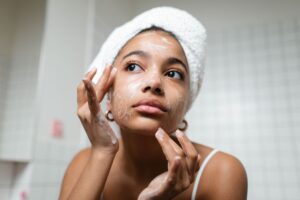
Dermatologists sometimes recommend the “zero-therapy approach” for mild perioral dermatitis cases—complete removal of all facial cosmetics and topical products, including cleansers, moisturizers, makeup, and especially actives like retinol. This radical simplification produces surprising results: complete resolution of mild cases without any medication. A patient using five skincare products might clear their perioral dermatitis within three weeks by using only lukewarm water to wash their face. This approach works because perioral dermatitis often develops from cumulative irritation. A patient might not identify any single culprit—they’re using gentle products they’ve tolerated for years.
But the combination of retinol, vitamin C serum, moisturizer, and makeup creates an environment where the barrier breaks down. The mouth and nose area has thinner, more delicate skin than the rest of the face, making it more vulnerable to irritant accumulation. The zero-therapy approach isn’t comfortable psychologically—patients worry they’re worsening their aging skin by stopping anti-aging products. But the temporary pause (typically two to four weeks) resolves the condition and allows the barrier to repair. Once perioral dermatitis clears, patients can carefully reintroduce gentle moisturizers, but retinol and other actives must remain off-limits or at minimum used only on areas where perioral dermatitis doesn’t occur.

Why Retinol Confusion Persists Despite Clear Guidelines
The persistence of retinol recommendations for perioral dermatitis stems partly from conflicting information online and partly from patient confusion with other skin conditions. Retinol genuinely helps with acne, photoaging, and texture concerns—patients read about its benefits and apply that knowledge incorrectly to perioral dermatitis. Additionally, many skincare blogs and retailers emphasize retinol as an essential anti-aging ingredient without mention of specific contraindications for perioral dermatitis.
When a patient develops the condition while using retinol, they may not connect the two or may assume they need a “better” formulation of retinol rather than complete avoidance. Dermatological evidence is unambiguous: perioral dermatitis requires the complete opposite skincare approach than retinol-based regimens provide. The condition responds to minimization, not augmentation of active ingredients. This represents a fundamental difference in treatment philosophy.
Treatment Expectations and the Importance of Medication Compliance
Patients beginning doxycycline or another oral antibiotic for perioral dermatitis should expect visible improvement within one to two weeks, though complete clearance takes longer. The redness fades, the bumps flatten, and the itching or burning sensation resolves. However, stopping medication early is a common mistake that allows the condition to resurge.
The full 6-12 week course addresses the underlying inflammation, not just surface symptoms. During treatment, patients must maintain strict avoidance of triggering products. Returning to retinol or other actives before the condition fully resolves risks reinflaming the area and extending the timeline. Some patients develop perioral dermatitis recurrently and may require longer-term low-dose antibiotic use, but this remains a decision made with their dermatologist based on individual response.

Distinguishing Perioral Dermatitis from Acne and Rosacea
Perioral dermatitis often gets misidentified as acne or rosacea, leading patients to pursue inappropriate treatments. True perioral dermatitis presents as small papules and pustules clustered around the mouth and nose, often with a “red ring” pattern, and often with notable sparing of the vermillion border (the actual lip). Acne involves comedones (blackheads and whiteheads), while perioral dermatitis does not.
The distinction matters because acne benefits from retinol, while perioral dermatitis worsens with it. Misdiagnosis can occur even at the patient level—someone with mild perioral dermatitis might see the bumps and assume acne, then apply acne treatments including retinol, inadvertently worsening the condition. Professional diagnosis prevents this costly error.
Prevention and Managing Skincare After Treatment
Once perioral dermatitis clears, the challenge becomes maintaining that clearance while addressing legitimate aging and skincare concerns in other facial areas. Many dermatologists recommend applying retinol only to areas that never develop perioral dermatitis—the cheeks, forehead, and chin—while avoiding the perioral region entirely. This compromise allows patients to benefit from retinol’s anti-aging effects without triggering recurrence.
Prevention of perioral dermatitis recurrence involves identifying and avoiding personal triggers. For many patients, this means permanently avoiding rich actives around the mouth and nose, using only gentle, fragrance-free cleansers and moisturizers in that zone, and being cautious with new skincare products. Some dermatologists recommend occasional low-dose oral antibiotics as maintenance therapy for patients with frequent recurrences, though most patients remain clear once the initial episode resolves with appropriate treatment.
Conclusion
The biggest thing most patients don’t know about retinol and perioral dermatitis is that retinol doesn’t treat it—it triggers it. If you’ve developed perioral dermatitis, the most important first step isn’t finding the right prescription or product; it’s stopping all irritating ingredients, including retinol, and consulting your dermatologist about oral antibiotics. The condition responds rapidly to appropriate treatment, and many mild cases resolve simply from removing triggers.
If you suspect perioral dermatitis, don’t attempt to treat it with the same skincare principles that work elsewhere on your face. Schedule an appointment with your dermatologist, commit to the zero-therapy or minimal-therapy approach, and follow through with prescribed oral antibiotics for the full recommended duration. Your skin will clear far more effectively than it would from any topical product—and you’ll finally understand what most patients miss: sometimes the best treatment is doing less, not more.