What most patients don’t know about isotretinoin and fungal acne is that isotretinoin was never designed to treat fungal acne in the first place. The medication is FDA-approved exclusively for severe bacterial acne vulgaris caused by Propionibacterium acnes. Despite occasional online forums and even some patient discussions suggesting isotretinoin works against fungal acne (particularly Malassezia infections like pityriasis versicolor), the actual clinical evidence is extremely limited—consisting mainly of isolated case reports rather than rigorous clinical trials. A 2006 case documented one 14-year-old patient whose pityriasis versicolor resolved after five months of isotretinoin 40 mg twice daily, but this single success story does not establish a standard treatment protocol.
When dermatologists discuss isotretinoin treating acne, they’re referring to its powerful effect against bacterial acne. The drug works by counteracting four specific pathophysiological factors: it shrinks sebaceous glands, normalizes follicular cell turnover, reduces Propionibacterium acnes bacterial colonies, and suppresses inflammation. Fungal acne presents an entirely different problem—a lipophilic (fat-loving) yeast infection of the skin that follows different biological rules. Understanding this distinction could save patients from pursuing the wrong treatment for months.
Table of Contents
- How Isotretinoin Works Against Bacterial Acne vs. Fungal Acne
- The Evidence Problem: Why “Proven” Treatments for Fungal Acne Often Aren’t
- Retinoids Don’t Work the Same Way on Fungal Acne as Bacterial Acne
- The Online Misinformation Problem and Patient Expectations
- Proven Treatments That Actually Work for Fungal Acne
- When Might a Dermatologist Actually Consider Isotretinoin for a Fungal Condition?
- The iPledge Program and Realistic Expectations for Isotretinoin
- Conclusion
How Isotretinoin Works Against Bacterial Acne vs. Fungal Acne
Isotretinoin’s mechanism of action is precise and well-documented for bacterial acne. The medication is a potent vitamin A derivative that fundamentally changes skin biology by reducing sebaceous gland size and sebum production—often by 90% or more. It also prevents the buildup of dead skin cells inside hair follicles (abnormal follicular desquamation), which removes the ideal environment for Propionibacterium acnes to proliferate. This combination creates what many dermatologists describe as a near-permanent reduction in acne-causing bacteria. Some patients experience near-complete clearing for years after completing a course of isotretinoin.
fungal acne caused by Malassezia operates on different principles entirely. This yeast thrives in oily skin conditions, but it’s not susceptible to isotretinoin’s primary mechanisms. The only theoretical advantage isotretinoin offers against Malassezia is an indirect one: by reducing cutaneous lipid (fat) content, the drug makes the skin less hospitable to a fungus that actually depends on lipids to survive. However, this is not a direct antifungal action, and it’s not strong enough to replace proven antifungal medications. A patient taking isotretinoin for bacterial acne might incidentally see improvement in Malassezia-related symptoms, but this would be a secondary effect, not the primary therapeutic goal.

The Evidence Problem: Why “Proven” Treatments for Fungal Acne Often Aren’t
Research into isotretinoin’s use for pityriasis versicolor shows a striking gap in clinical evidence. According to a recent systematic review, evidence for oral isotretinoin treating chronic pityriasis versicolor is “extremely lacking in robust and consistent studies.” What exists is primarily case reports—single patients or small series, not randomized controlled trials comparing isotretinoin to standard treatments. This matters because case reports can reflect exceptional patient response, unique disease presentations, or even placebo effects rather than reliably reproducible outcomes. The 2006 case of the 14-year-old who cleared is notable precisely because it’s unusual enough to merit publication.
This evidence gap becomes even more significant when you compare isotretinoin to established antifungal treatments. Oral antifungals—ketoconazole, fluconazole, and itraconazole—have decades of clinical data showing they effectively treat Malassezia infections, with cure rates consistently documented across multiple studies. These medications directly target the fungal cell wall and have a clear pharmacological action against Malassezia. A dermatologist recommending isotretinoin for fungal acne would be making an off-label choice, meaning using the drug for a purpose the FDA hasn’t approved. Some patients might improve, but the treatment is not evidence-based in the way standard antifungals are.
Retinoids Don’t Work the Same Way on Fungal Acne as Bacterial Acne
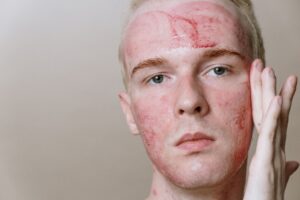
One reason patients become confused about isotretinoin and fungal acne is that dermatologists frequently prescribe topical retinoids for various skin conditions, including some acne-like presentations. However, topical retinoids are completely ineffective for Malassezia folliculitis—a condition that’s sometimes misdiagnosed as acne because it appears as small pustules on the chest, back, or shoulders. The reason is straightforward: Malassezia folliculitis doesn’t create comedones (blackheads or whiteheads), so retinoids’ primary mechanism—normalizing follicular cell turnover and preventing blockages—doesn’t apply. Using a retinoid on Malassezia folliculitis might even worsen it by irritating the skin and making it more oily.
This distinction is critical because many patients self-diagnose “fungal acne” when they actually have Malassezia folliculitis, and they assume stronger retinoids (like isotretinoin) will work better than weaker ones. In reality, the class of drug is wrong for the condition. It’s like using a stronger dose of penicillin to treat a viral infection—adding more of an ineffective medication doesn’t improve outcomes. A proper diagnosis from a dermatologist, often confirmed by KOH (potassium hydroxide) preparation or skin culture, is essential before considering any treatment.
The Online Misinformation Problem and Patient Expectations
Social media and acne forums have created a mythology around isotretinoin as a cure-all for any acne-like condition. Patients report their positive experiences with isotretinoin for “fungal acne,” and these anecdotes spread through online communities faster than published research can correct them. Additionally, some aesthetic clinics or less rigorous online dermatology services may oversimplify the distinction between bacterial and fungal acne, leading to inappropriate prescriptions. A patient might read multiple success stories online, convince themselves they have fungal acne (often based on seeing pustules that don’t respond to standard acne treatments), and then request isotretinoin from their provider.
The reality is that isotretinoin is an extraordinarily powerful medication with significant side effects and strict regulatory requirements—not a default option for unclear skin conditions. Before any dermatologist would prescribe isotretinoin, they should confirm bacterial acne through clinical assessment and potentially bacterial culture. For cases where fungal infection is suspected, a KOH preparation (a simple office test that identifies Malassezia) should guide treatment toward antifungals instead. Patients who’ve already spent money on isotretinoin for an unconfirmed fungal condition have wasted resources and exposed themselves to unnecessary risks.
Proven Treatments That Actually Work for Fungal Acne
If you have Malassezia infection, oral antifungal medications are the established first-line treatment. Ketoconazole 200 mg daily, fluconazole 150 mg weekly, and itraconazole 200 mg daily all demonstrate documented efficacy against Malassezia in clinical trials. Treatment typically lasts 2-4 weeks, and cure rates are high—usually 80-90% depending on the study. These medications work through direct antifungal mechanisms: they disrupt the fungal cell membrane and are specifically designed to kill or inhibit Malassezia species.
Topical antifungals are also effective for localized Malassezia infections. Ketoconazole cream or shampoo, econazole cream, and miconazole preparations have all been used successfully, sometimes in combination with oral therapy for faster resolution. For pityriasis versicolor specifically, topical selenium sulfide or zinc pyrithione shampoos applied to affected skin can also be effective. These topical options have minimal systemic side effects compared to oral medications or isotretinoin. Many dermatologists reserve oral antifungals for extensive infections, recurrent cases, or when topical treatments fail, whereas isotretinoin would never be a first-line choice because the evidence simply isn’t there.

When Might a Dermatologist Actually Consider Isotretinoin for a Fungal Condition?
There are exceptionally rare scenarios where a dermatologist might consider isotretinoin for a Malassezia infection, but these would involve careful reasoning and informed patient consent. The theoretical argument would apply to chronic, recurrent pityriasis versicolor that has failed multiple rounds of standard antifungal treatment—and even then, isotretinoin would be an experimental off-label option, not a proven therapy. A patient in this situation would need to understand they’re essentially participating in an off-label trial, with uncertain outcomes and all the standard isotretinoin risks.
It’s also possible (though rare) that a patient might need isotretinoin for severe bacterial acne and simultaneously develop a Malassezia infection—perhaps triggered by the same oily skin conditions or as a secondary problem. In that case, the isotretinoin’s lipid-reducing effects might offer incidental benefit to the fungal condition while the primary treatment addresses bacterial acne. However, a dermatologist would likely add an oral antifungal to the regimen rather than relying on isotretinoin’s theoretical indirect effect. The combination approach would be more predictable and evidence-based.
The iPledge Program and Realistic Expectations for Isotretinoin
Before any discussion of treatment can proceed, it’s important to understand that isotretinoin prescribing has become significantly more regulated. As of 2026, the iPledge program requires monthly blood tests, regular pregnancy tests (for people of childbearing potential), and mandatory enrollment before dispensing. The medication carries serious risks: severe birth defects if used during pregnancy, potential liver enzyme elevation, lipid panel changes, and depression or mood changes in some patients. These requirements exist because isotretinoin’s benefits must substantially outweigh its risks.
This regulatory framework reinforces why isotretinoin wouldn’t be prescribed for fungal acne casually or experimentally. The burden of the iPledge program alone—monthly appointments, blood work, prescription refills contingent on test results—is only justified for severe, evidence-based indications like moderate-to-severe bacterial acne. Using isotretinoin for an off-label fungal condition would require an exceptional clinical situation and clear informed consent that the treatment is experimental with limited supporting evidence. Current 2026 European dermatology guidelines (EuroGuiDerm) position isotretinoin as the first-line systemic choice for moderate-to-severe inflammatory acne—reinforcing its primary indication.
Conclusion
The truthful answer to “how does isotretinoin treat fungal acne” is that it doesn’t—not in any evidence-based, standard-of-care way. Isotretinoin is a bacterial acne medication that works through specific mechanisms targeting Propionibacterium acnes and sebaceous gland function. While isolated case reports suggest it might help some patients with Malassezia infections indirectly through lipid reduction, this is not a proven treatment pathway, and robust clinical trials supporting this use simply don’t exist.
Patients who pursue isotretinoin based on the premise that it treats fungal acne are likely wasting time, money, and subjecting themselves to unnecessary medication risks. If you suspect you have fungal acne or Malassezia folliculitis, the evidence-based path is clear: see a dermatologist for proper diagnosis (including KOH preparation if indicated), and if fungal infection is confirmed, start with oral or topical antifungals proven effective against Malassezia. If you have bacterial acne and your dermatologist recommends isotretinoin, understand that the medication is indicated for the bacterial component—any benefit to concurrent fungal problems would be secondary. The distinction between bacterial and fungal acne isn’t just academic; it determines which medications will actually help you, and which will waste your time and resources.