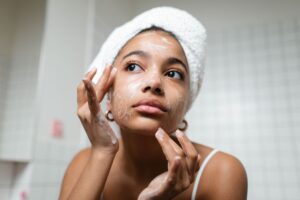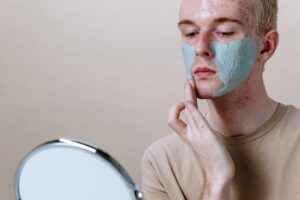
Acne excoriée is a skin condition that goes beyond typical acne—it’s a compulsive skin picking disorder where patients repeatedly manipulate and damage their acne lesions until they bleed, scab, and scar. The condition arises when someone has both active acne and an obsessive-compulsive drive to pick at, squeeze, or scratch those blemishes, often without conscious awareness they’re doing it. For someone struggling with acne excoriée, the problem isn’t just the acne itself; it’s that they’ve created a secondary layer of damage through their own hands, transforming treatable breakouts into painful erosions and permanent scarring. This is exactly why treating acne excoriée requires both a dermatologist and a mental health professional working in tandem.
The condition has two distinct components—the organic acne lesions that need medical treatment to reduce, and the obsessive-compulsive or anxiety-driven picking behavior that needs therapeutic intervention to stop. One doctor alone cannot fully address both. A dermatologist can prescribe medications to clear the acne substrate, but without addressing the psychological compulsion, the patient will continue to pick at their skin regardless of whether acne is present. Conversely, a therapist can help manage the underlying anxiety and compulsive patterns, but without reducing the actual acne lesions, there’s still a physical trigger present. Success requires coordination and communication between both specialists.
Table of Contents
- What Is Acne Excoriée and Why Is It More Than Just Picking?
- The Dual-Problem Approach: Why Dermatology Alone Cannot Solve Acne Excoriée
- The Dermatological Role: Eliminating the Substrate for Picking
- The Mental Health Treatment Strategy: Addressing the Compulsion
- The Critical Barrier: Lack of Insight and Unconscious Picking
- The Emotional and Social Impact of Visible Damage
- Prognosis and Long-Term Management: Why Acne Excoriée Can Be Resolved
- Conclusion
What Is Acne Excoriée and Why Is It More Than Just Picking?
acne excoriée is officially classified as a skin picking disorder (SPD), but it’s more accurately understood as a condition that sits within obsessive-compulsive and related disorders. The distinguishing feature is the combination of two elements: there are genuine acne lesions present, but there’s also an obsessive or compulsive element driving the patient to manipulate those lesions repeatedly, often unconsciously. The person may pick while watching television, working at a desk, or even while sleeping, and they may not fully realize the damage they’re causing until they see blood, pus, or open sores. What makes acne excoriée distinct from casual skin picking is the frequency, intensity, and the resulting tissue damage. Most people with acne might occasionally squeeze a pimple, but someone with acne excoriée will engage in picking behavior multiple times daily, creating erosions, bleeding wounds, and scabs that then take weeks to heal.
The picking is driven by an internal compulsion rather than a rational decision. The patient understands at some level that picking makes things worse, yet they feel unable to stop. This is the hallmark of an obsessive-compulsive pattern—the behavior persists despite the person’s awareness that it’s harmful. Stress, anxiety, and skin irritation are frequent comorbidities that fuel acne excoriée. Someone under high pressure at work might unconsciously turn to skin picking as a self-soothing behavior, not realizing that the temporary relief the picking provides is reinforcing the cycle. The irritation from the picking itself can trigger more acne, which then becomes a new target for picking, creating a self-perpetuating loop that worsens the skin and deepens the psychological compulsion.

The Dual-Problem Approach: Why Dermatology Alone Cannot Solve Acne Excoriée
A common mistake is treating acne excoriée as if it were ordinary acne. A dermatologist might prescribe strong retinoids, oral antibiotics, or isotretinoin (Accutane) to aggressively clear the skin, assuming that removing the acne will eliminate the picking. In many cases, this approach fails. Even after the acne has been cleared by medication, the patient continues to pick—sometimes at residual sebaceous material, sometimes at their own skin, sometimes seemingly at nothing visible at all. The compulsion persists after the substrate is gone, revealing that the root problem isn’t the acne, it’s the behavior. Conversely, a therapist treating the anxiety or obsessive-compulsive aspects without dermatological support also faces limitations. Therapy can help rewire the behavioral response to picking triggers and reduce anxiety, but if acne lesions are still present and visibly inflamed, the patient has a real, tangible target to pick at.
The lesion acts as a constant reminder and trigger. Even the most effective cognitive-behavioral therapy (CBT) becomes harder to implement when there’s an actual pimple sitting on the patient’s face, begging to be squeezed. Reducing the number of acne lesions through dermatological treatment removes one major trigger, making the therapeutic work more effective. The two-pronged approach works because it attacks the problem from both directions simultaneously. The dermatologist reduces the organic acne load by prescribing medications that decrease sebum production, kill acne-causing bacteria, and speed skin cell turnover. This removes the physical substrate—the actual lesions the patient wants to pick. Meanwhile, the therapist helps the patient develop awareness of their picking triggers, teaches them alternative coping mechanisms for anxiety, and uses evidence-based techniques like habit reversal training to interrupt the automatic picking response. When coordinated, these approaches reinforce each other rather than working at cross-purposes.
The Dermatological Role: Eliminating the Substrate for Picking
The dermatologist’s primary goal in treating acne excoriée is to aggressively reduce the number of acne lesions. This doesn’t mean waiting for a gradual improvement—it means choosing treatments potent enough to significantly decrease the picking substrate within a reasonable timeframe. The logic is straightforward: fewer pimples means fewer targets to pick at, which reduces the opportunity for the compulsive behavior to activate. Medications typically prescribed include topical retinoids (such as tretinoin or adapalene), which increase skin cell turnover and prevent comedone formation; oral antibiotics like doxycycline or minocycline, which reduce acne-causing bacteria; hormonal treatments like birth control pills or spironolactone for those whose acne is hormone-driven; and in more severe cases, isotretinoin, which can achieve long-term or permanent remission of acne. The choice depends on the severity of the acne and the patient’s medical history. For someone with moderate to severe acne excoriée, a combination approach—perhaps a retinoid plus an oral antibiotic—is often more effective than monotherapy.
One important limitation is that dermatological treatment takes time. Oral antibiotics may require 6 to 8 weeks before noticeable improvement appears. Retinoids can take 12 weeks or longer. During this waiting period, the acne is still present, and the patient is still picking. This is why it’s critical that dermatological and psychological treatment overlap and proceed in parallel, not sequentially. The patient shouldn’t wait for clear skin before starting therapy; therapy should start immediately while the dermatologist works on clearing the skin.

The Mental Health Treatment Strategy: Addressing the Compulsion
While the dermatologist is working to reduce acne lesions, the mental health professional addresses the psychological component. The primary therapeutic approach is cognitive-behavioral therapy (CBT), specifically tailored to skin picking. CBT helps the patient identify triggers for picking—whether those triggers are emotional (stress, anxiety, boredom) or situational (sitting at a desk, watching television)—and develop alternative behaviors to replace the picking. For example, if a patient picks when anxious, the therapist might teach them grounding techniques, progressive muscle relaxation, or breathing exercises to manage anxiety without resorting to skin damage. Habit reversal training (HRT) is another evidence-based technique used specifically for picking disorders. HRT involves teaching the patient to become aware of the urge to pick, identify the situations or emotions that trigger it, and perform a competing response—a behavior that’s physically incompatible with picking.
Examples include clenching the fists, sitting on the hands, wearing gloves, or applying a bitter or unpleasant-tasting substance to the fingers. The goal is to interrupt the automatic picking response before it happens. In some cases, medication is also prescribed to address underlying anxiety or obsessive-compulsive features. SSRIs (selective serotonin reuptake inhibitors) like fluoxetine or sertraline have shown effectiveness in reducing the urge to pick. In other cases, low-dose atypical antipsychotics may be used if OCD-like features are prominent. These medications don’t replace therapy; they work alongside it by reducing the intensity of the compulsive urge, which gives the patient more mental bandwidth to engage with behavioral techniques. The combination of behavioral therapy plus medication is typically more effective than either approach alone for OCD spectrum disorders.
The Critical Barrier: Lack of Insight and Unconscious Picking
One of the most challenging aspects of acne excoriée is that the picking often happens without conscious awareness. A patient might spend an hour picking at their skin while watching a movie, not realizing it until they look in the mirror and see bleeding sores. This unconscious picking is particularly problematic because traditional awareness-based therapies rely on the patient noticing the urge to pick and consciously choosing to do something else instead. If they’re not aware they’re picking, they can’t apply the coping strategy. For unconscious picking, physical barriers become essential. Dermatologists and therapists often recommend covering the face or the affected area with bandages, specialized picking prevention patches, or gloves, especially during high-risk times like evening hours. Some patients find that wearing makeup or a high-SPF sunscreen provides a tactile barrier that makes picking less satisfying or reminds them not to pick.
Others use fidget tools—stress balls, textured fidget objects—that provide stimulation without damaging the skin. The goal is to make unconscious picking physically more difficult while the patient works on developing insight and conscious awareness. This is why prognosis for acne excoriée is explicitly linked to insight. Patients who understand that they have a picking problem and are motivated to change have an excellent prognosis. But patients who deny the behavior, minimize its impact, or lack motivation to engage in treatment often struggle. Even if a dermatologist clears their acne and a therapist offers excellent guidance, if the patient doesn’t genuinely accept that they have a problem and commit to change, progress stalls. This is one reason why the therapist-dermatologist collaboration is so important—the dermatologist can document the tissue damage and severity, which can help reinforce to the patient that the picking is real and significant.

The Emotional and Social Impact of Visible Damage
Beyond the physical tissue damage, acne excoriée carries a significant emotional burden. Patients often feel shame about the visible scabs, erosions, and scars—especially scars that result from their own actions rather than from acne alone. Many describe a painful self-awareness about their appearance, heightened anxiety in social situations, and a sense of losing control. This emotional distress can then become another trigger for picking: the patient feels bad about the scars, which increases anxiety, which increases the urge to pick, which creates more scars, intensifying the emotional distress. Breaking this cycle requires both the healing that comes from reducing acne and the psychological work of addressing shame and anxiety.
The social impact shouldn’t be underestimated either. Some patients with severe acne excoriée withdraw socially, avoid close relationships, or struggle at work because they feel self-conscious about their appearance. Others describe a feeling of being fundamentally different from people who don’t struggle with compulsive behaviors, which can deepen isolation. Support from family and friends helps, but so does professional support—whether from a therapist who specializes in body-focused repetitive behaviors (BFRBs) or from support groups for people with skin picking disorders. Knowing that others struggle with the same condition reduces shame and increases motivation for treatment.
Prognosis and Long-Term Management: Why Acne Excoriée Can Be Resolved
The prognosis for acne excoriée is excellent for patients who have insight into their condition and commit to treatment. This is an important distinction from conditions like severe cystic acne, which can be physically difficult to treat. Acne excoriée, by contrast, is highly treatable when both the physical and psychological components are addressed. Many patients achieve clear skin and freedom from picking through the coordinated approach of dermatological medication plus evidence-based therapy. However, recovery isn’t always straightforward.
Some patients require ongoing maintenance—staying on an acne medication long-term to keep lesions minimal, or periodic therapy sessions to reinforce coping skills and prevent relapse. Others find that once they’ve overcome the picking for 6 months or a year, they can gradually reduce their dependence on barriers and medication. The key is that the success of treatment depends on the patient’s ongoing engagement. Someone who clears their acne with medication but stops therapy prematurely may find the picking returns when they encounter new stressors. Similarly, someone who addresses their anxiety but stops acne medication may find themselves with a recurrence of acne and a resurgence of picking. Long-term success usually requires sustained attention to both dimensions.
Conclusion
Acne excoriée is fundamentally different from ordinary acne because it involves a compulsive behavioral component driven by anxiety or obsessive-compulsive features. Treating it effectively requires both a dermatologist, who reduces the organic acne through medication, and a mental health professional, who addresses the compulsive picking through therapy and, when appropriate, medication. Neither specialist alone can fully resolve the condition; it is the collaboration and coordination between them that leads to success.
The excellent prognosis for acne excoriée—when patients have insight and commit to treatment—stands as a powerful reminder that skin conditions with a psychological component deserve comprehensive, integrated care. If you struggle with compulsive skin picking, the first step is seeking evaluation from both a dermatologist and a mental health professional who can work together. The combination of reducing acne lesions while simultaneously addressing the compulsion to pick creates the conditions for lasting healing, both of the skin and of the anxiety or obsessive patterns that drove the picking in the first place.
You Might Also Like
- She Was a Teenager Whose Mother Wouldn’t Let Her See a Dermatologist Because She Believed Acne Builds Character
- She Was a Dermatology Nurse Who Had Acne Her Whole Life…Said Even Professionals Struggle With Skin
- She Was Told Her Acne Was Too Mild for Accutane…3 Years Later Her Dermatologist Said She’d Waited Too Long to Prevent Scarring