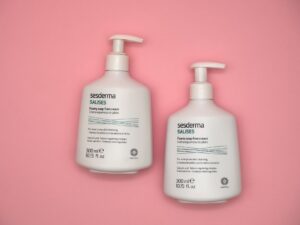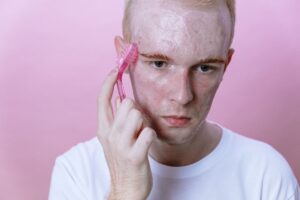
A significant portion of adults battling acne end up spending thousands of dollars on skincare products throughout their lives. According to skincare research, Americans spend an average of $322.88 per year on skincare products alone, which over a lifetime amounts to approximately $15,000.
For those with persistent acne, this figure can be even higher, especially when accounting for prescription treatments and dermatological interventions. The spending accumulates quietly—a few hundred dollars here for over-the-counter treatments, another few thousand there for professional treatments—until many adults realize they’ve invested substantial sums with mixed results. This article examines why adults with acne spend so much on skincare, where that money actually goes, and how to make smarter purchasing decisions going forward.
Table of Contents
- How Much Do Adults With Acne Actually Spend on Skincare Products?
- Why Does Acne Spending Consume Such a Large Share of Skincare Budgets?
- Breaking Down the Types of Acne Spending
- When Is High Acne Spending Justified vs. When Is It Wasteful?
- The Hidden Costs Beyond Product Prices
- How to Make Smarter Financial Decisions About Acne Treatment
- The Future of Acne Treatment Costs
- Conclusion
How Much Do Adults With Acne Actually Spend on Skincare Products?
Adults with acne typically spend between $150 and $200 per year on over-the-counter acne products alone. Over a 20-year period of dealing with acne—from teenage years into early adulthood—that translates to $3,000 to $4,000 in OTC products. For those who pursue prescription treatments, the costs climb substantially. Isotretinoin (Accutane), the most powerful acne medication available for severe cases, costs approximately $2,500 to $3,000 per treatment course when accounting for the required lab tests, dermatologist visits, and the medication itself.
This single treatment can represent years’ worth of OTC spending condensed into several months. When you add in dermatology visits, specialized cleansing routines, supplementary products recommended by professionals, and periodic splurges on trending skincare items (often encouraged by social media), the lifetime total becomes substantial. Many adults don’t track their cumulative spending until they look back and realize they’ve invested thousands. The problem is compounded for millennials and Gen Z consumers, who studies show are more likely to overspend on beauty products driven by social media influences and targeted advertising, often purchasing products that don’t actually address their specific acne concerns.

Why Does Acne Spending Consume Such a Large Share of Skincare Budgets?
Acne accounts for approximately 31% of the medicated skincare market, making it the dominant driver of specialized skincare spending. This reflects both the prevalence of the condition and the desperation many sufferers feel to find a solution. Unlike general skincare—which is more about maintenance and aesthetics—acne treatment is often framed as a medical and psychological necessity. The psychological burden of visible acne on the face motivates higher spending, as people will invest substantially to address a condition affecting their appearance and self-confidence.
However, the high percentage also reveals a troubling pattern: most acne sufferers cycle through multiple products before finding what works, meaning they’re paying for trial-and-error treatment. A person might spend $50 on one cleanser, $60 on a different acne serum, $40 on a spot treatment, then abandon all three when they don’t see results within two weeks. Over a year, this experimentation easily reaches $200+, and most of that money goes to products that never solved the underlying problem. The acne industry profits from this trial-and-error approach, continuously marketing new products while most consumers never address the root causes of their acne—whether that’s hormonal, bacterial, or lifestyle-related.
Breaking Down the Types of Acne Spending
Acne spending falls into several distinct categories, each with different price points and effectiveness levels. OTC products—cleansers, benzoyl peroxide treatments, salicylic acid exfoliants, and spot treatments—represent the lowest-cost tier, typically ranging from $10 to $50 per product. These are accessible but often ineffective for moderate to severe acne, which is why many people move on to higher-cost options.
Prescription topical treatments (retinoids, antibiotics, or combination formulas) cost between $50 and $300 per prescription depending on your insurance coverage and whether you’re using brand-name or generic versions. Then there are oral medications—antibiotics like doxycycline, or hormonal treatments for those with hormonal acne—which can cost anywhere from $20 to $200 per month. The most expensive tier is systemic treatments like isotretinoin (Accutane), which at $2,500 to $3,000 represents a significant financial commitment. Professional treatments like chemical peels, laser therapy, or dermatologist extractions add another layer of expense, often ranging from $100 to $500 per session with multiple sessions needed for results.

When Is High Acne Spending Justified vs. When Is It Wasteful?
Spending money on acne treatment is justified when it’s addressing a genuine medical condition affecting your health or quality of life, and when you’re using evidence-based treatments under professional guidance. If you have severe cystic acne causing scarring, or moderate inflammatory acne that hasn’t improved with OTC treatments after 8-12 weeks, consulting a dermatologist and investing in prescription treatments is reasonable. A $2,500 Accutane course that clears your acne permanently is a better investment than spending $200 annually on ineffective products for the next 10 years. Where spending becomes wasteful is in the cycle of constant product-switching without professional guidance.
Buying the latest trending acne product on social media, using it for two weeks, then buying something else because you expected overnight results—that’s wasteful. The research shows this pattern is particularly common among Gen Z and millennials influenced by social media marketing. Another wasteful pattern: combining too many active ingredients at once (mixing retinoids, vitamin C, benzoyl peroxide, and acids simultaneously) without understanding skin barrier health, which often makes acne worse and leads to buying even more products to “fix” the irritation. A practical approach: establish one solid routine of proven ingredients, give it 6-8 weeks to work, then adjust based on results.
The Hidden Costs Beyond Product Prices
Most people tracking acne spending only count the products themselves, but the true lifetime cost includes dermatology co-pays, lab work for prescription monitoring, transportation to appointments, and opportunity costs. If you’re visiting a dermatologist monthly at $40 per co-pay, that’s $480 annually. Many acne medications require periodic blood tests (isotretinoin requires monthly monitoring), which adds another $100-$200 per year in lab costs even after insurance.
There’s also the psychological cost of chronic spending without results—the frustration of investing money only to see minimal improvement can lead to impulsive purchases of more expensive “solutions.” Some adults end up trying dermatological procedures like laser treatments or chemical peels ($200-$500 per session) after years of failed product-based approaches, essentially starting the financial investment cycle over at a higher price point. A warning: if you’re spending over $500 annually on acne products and treatments without professional dermatological oversight, you should pause and seek professional guidance instead. Many people could resolve their acne with a $20-$50 prescription medication combined with basic skincare, rather than the thousands they’re currently spending on unguided product purchasing.

How to Make Smarter Financial Decisions About Acne Treatment
The first step in controlling acne spending is getting a professional diagnosis. A dermatologist can identify what type of acne you have—bacterial, hormonal, comedonal, inflammatory, or cystic—which immediately narrows the treatment options and prevents wasteful spending on irrelevant products. A single consultation might cost $100-$200 out-of-pocket, but it can save thousands by pointing you toward effective treatments while eliminating ineffective ones. Second, commit to the 6-8 week rule: once you start a treatment regimen recommended by a professional, stick with it for at least 6-8 weeks before evaluating results or making changes.
This prevents the costly cycle of abandoning products prematurely. Third, prioritize evidence-based treatments. The most effective acne treatments are well-established: benzoyl peroxide for bacterial acne, salicylic acid for comedonal acne, retinoids for inflammatory acne, and hormonal treatments or isotretinoin for severe cases. These options have decades of research backing them and cost far less than trendy alternatives. Many people spend $100+ monthly on new products when a generic benzoyl peroxide cleanser ($8) combined with a generic tretinoin prescription ($15-$30) would provide better results.
The Future of Acne Treatment Costs
As acne treatment becomes increasingly personalized and driven by dermatological science rather than general skincare marketing, the cost structure may shift. Genetic testing to identify predisposition to certain acne types, and AI-driven treatment matching, could reduce wasteful trial-and-error spending. However, this technology will likely be expensive initially, potentially adding to costs for early adopters.
Conversely, as prescription retinoids and other effective medications go generic, their costs continue to drop, making evidence-based treatment more accessible. The trend toward telehealth dermatology appointments also reduces the cost barrier to professional guidance—many insurance plans now cover virtual dermatology consultations at lower co-pays than in-person visits. If you’re currently in the cycle of high spending on acne products, shifting toward professional guidance and evidence-based treatments now could pay dividends both financially and in terms of actual results.
Conclusion
The reality that many adults spend thousands of dollars on acne treatment over their lifetimes is driven by a combination of the condition’s prevalence, its psychological impact, and the acne industry’s marketing of new products faster than most consumers can evaluate their effectiveness. While some of this spending is justified—particularly when working with dermatologists on prescription treatments—much of it stems from trial-and-error product purchasing that could be avoided with professional guidance and commitment to evidence-based treatments. The most important finding is that effective acne treatment doesn’t require high spending; it requires the right treatment matched to your specific acne type, applied consistently for sufficient time to show results.
If you’re currently spending over $200 monthly on acne products without professional oversight, the most cost-effective step you can take is consulting a dermatologist. The initial cost of a consultation could be offset within months by eliminating wasteful product spending and focusing your resources on treatments that actually address your acne’s underlying cause. Acne is solvable, and it doesn’t have to drain your budget indefinitely.