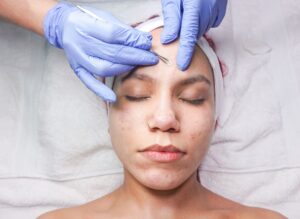
Sarah spent five years dealing with painful bumps and inflammation across her scalp, trying countless shampoos and home remedies before finally seeing a dermatologist who identified the problem: acne vulgaris on the scalp, a condition that dermatologists increasingly recognize as significantly underdiagnosed and undertreated. Her experience is far from unique. What makes scalp acne particularly frustrating is that most people and even many general practitioners don’t think to look there, assuming acne only belongs on the face, chest, and back.
By the time someone like Sarah reaches a dermatologist, they’ve often suffered through years of ineffective treatment attempts, worsening inflammation, and sometimes permanent scarring or hair loss that could have been prevented with proper early intervention. This article explores why scalp acne remains largely invisible in common acne discussions, how it gets misidentified as dandruff or other scalp conditions, and what dermatologists now understand about its prevalence and treatment. We’ll walk through the symptoms that distinguish scalp acne from other scalp problems, the reasons over-the-counter products typically fail to address it, and the professional treatments that actually work when the condition is finally properly diagnosed.
Table of Contents
- Why Is Scalp Acne So Commonly Missed by Patients and Healthcare Providers?
- Scalp Acne vs. Other Scalp Conditions—Why Misdiagnosis Happens
- Who Gets Scalp Acne and What Actually Causes It?
- Why Over-the-Counter Scalp Treatments Don’t Work for Acne
- The Risk of Permanent Scarring and Hair Loss from Untreated Scalp Acne
- What Professional Scalp Acne Treatment Actually Looks Like
- The Growing Recognition of Scalp Acne in Dermatology
- Conclusion
Why Is Scalp Acne So Commonly Missed by Patients and Healthcare Providers?
Scalp acne flies under the radar because of a fundamental assumption: acne happens on the face and exposed skin, not where hair grows. patients with scalp breakouts often misattribute their symptoms to dry scalp, dandruff, product buildup, or an allergic reaction to their shampoo. They switch products repeatedly, buy scalp treatments designed for completely different conditions, and gradually assume they simply have a chronically irritated scalp they need to manage. Healthcare providers without dermatology training may offer similar guesses, suggesting antifungal shampoos or recommending gentler hair care—advice that misses the actual problem entirely.
The visibility issue matters too. Unlike facial acne, which you see in the mirror daily, scalp acne hides under hair. People often don’t inspect their scalp closely enough to notice the early signs: small inflammatory bumps, comedones (blackheads or whiteheads) at hair follicles, or mild redness. By the time the condition becomes noticeable—through pain when touching the scalp, visible flaking, or hair loss in affected areas—weeks or months may have passed. This delayed recognition means the acne has had time to progress from occasional breakouts to chronic inflammation, making it harder to treat and more likely to cause scarring.

Scalp Acne vs. Other Scalp Conditions—Why Misdiagnosis Happens
When someone finally seeks professional help, another layer of complexity emerges: scalp acne can closely resemble other scalp conditions, and sometimes what looks like acne isn’t acne at all. Bacterial folliculitis—inflammation of hair follicles from bacterial infection—produces very similar bumps and can occur alongside true acne. Dissecting cellulitis of the scalp (DCS), a more serious inflammatory condition, also presents as painful nodules and scar-forming lesions. This is why professional diagnosis matters: a dermatologist can examine the pattern of lesions, their relationship to hair follicles, and sometimes use dermoscopy to determine whether you’re dealing with acne vulgaris, folliculitis, a fungal infection, or something else entirely.
However, even a general practitioner’s visual examination can miss acne on the scalp simply because they’re not looking for it. The expectation that acne means “teenage facial breakouts” is so ingrained that scalp lesions often don’t trigger an acne diagnosis. This is particularly true for adults, where scalp acne is just as common but even less expected. When dermatologists review cases of chronic scalp inflammation that went undiagnosed for years, they frequently find evidence of acne that should have been recognized much earlier—missed not because diagnosis is difficult, but because no one considered it in the differential.
Who Gets Scalp Acne and What Actually Causes It?
Scalp acne can develop at any age, though it often affects adults more than teenagers, which defies the common belief that acne is a teenage problem. The causes are the same as facial acne: excess sebum production, bacteria (primarily Cutibacterium acnes), follicular plugging, and inflammation. The scalp environment actually creates ideal conditions for acne: it’s warm, often covered by hair that traps moisture, and hair care products can clog follicles just as easily as facial moisturizers can.
Some people develop scalp acne triggered by sensitivity to shampoo ingredients, hair styling products, or even sweat trapped under hats and helmets. Certain risk factors increase the likelihood of scalp acne. People with oily or combination skin types are more prone to it, as are those with hormonal fluctuations (particularly women approaching or during menstruation, or those on certain hormonal medications). Anyone with a history of facial acne may be at higher risk for scalp acne, though not everyone with face acne develops it on the scalp. Genetic predisposition plays a role too—if your parents struggled with acne, your skin may be similarly prone to follicular inflammation wherever it develops.

Why Over-the-Counter Scalp Treatments Don’t Work for Acne
The drugstore aisle is full of scalp treatments, but almost none of them are formulated to treat acne specifically. Most are designed for dandruff (usually a fungal issue), dryness, or general scalp health. Even acne-fighting shampoos with ingredients like salicylic acid or benzoyl peroxide are typically formulated for face use and applied wrong on the scalp: they rinse off too quickly to be effective, the active ingredients don’t penetrate adequately through a full head of hair, and the concentrations may be too low for deep follicular inflammation.
This is the crucial limitation: treating scalp acne at home with over-the-counter products rarely works because the condition is often more severe than it appears and requires medication that penetrates the scalp effectively. A dermatologist may recommend topical antibiotics (like clindamycin), prescription-strength retinoids, or topical corticosteroids to reduce inflammation—medications that are significantly more potent than what’s available without a prescription. For chronic or severe cases, oral antibiotics, oral retinoids (isotretinoin in severe cases), or even intralesional steroid injections into individual lesions may be necessary. The comparison is stark: what works for mild facial acne won’t address moderate to severe scalp acne that’s been inflamed for months or years.
The Risk of Permanent Scarring and Hair Loss from Untreated Scalp Acne
One reason dermatologists emphasize the seriousness of untreated scalp acne is that chronic inflammation in this location can cause permanent damage. Unlike facial acne lesions that typically heal without lasting marks, inflammatory lesions on the scalp can scar the hair follicles themselves, potentially causing permanent hair loss in the affected area. This scarring alopecia (hair loss caused by scalp inflammation) is particularly concerning because it’s often irreversible; even after the acne is treated, hair in severely scarred areas may never grow back.
The longer acne on the scalp goes untreated, the higher this risk becomes. A case that could have been managed with several months of topical treatment might, after two or three years of inflammation, require hair transplantation or acceptance of permanent bald patches. This is why the emphasis on early professional diagnosis and treatment is so important. If you’ve had scalp inflammation for longer than a few months, or if you notice areas where hair isn’t growing back despite treating your scalp, it’s critical to see a dermatologist promptly to determine whether you’re dealing with acne-related scarring or another scarring process that requires different treatment.

What Professional Scalp Acne Treatment Actually Looks Like
A dermatologist’s approach to scalp acne begins with confirming the diagnosis, then matching the treatment intensity to the severity of the condition. For mild cases, a topical retinoid applied a few times weekly combined with a gentle, acne-safe shampoo may be sufficient. Moderate cases typically require topical antibiotics (applied directly to lesions) combined with either a topical retinoid or a topical corticosteroid to reduce inflammation.
More severe or persistent cases often warrant oral antibiotics taken daily for several months, sometimes combined with topical medications. In cases that don’t respond to standard treatments, dermatologists may recommend phototherapy (using specific light wavelengths to reduce acne-causing bacteria and inflammation) or, in severe cases, oral isotretinoin—the most potent acne medication available, used only when other treatments have failed. The treatment course typically lasts several months, with follow-up appointments to assess progress and adjust the plan as needed. Importantly, treatment often needs to continue even after visible lesions disappear, because acne on the scalp can be prone to recurrence if medication is stopped too early.
The Growing Recognition of Scalp Acne in Dermatology
In recent years, dermatology literature increasingly documents what practitioners have suspected: scalp acne is far more common than general awareness suggests, and it’s frequently missed or undertreated. This recognition is shifting how dermatologists approach scalp complaints and how they educate patients about where acne can appear. Medical conferences now include presentations on scalp acne diagnosis and management, and dermatologists are more proactive about asking patients with a history of acne whether they’ve experienced scalp breakouts.
This growing attention has practical implications for anyone struggling with scalp inflammation. If your first dermatology visit doesn’t result in a clear diagnosis, it’s worth explicitly asking whether acne might be involved—or seeking a second opinion from a dermatologist who specializes in acne. The field’s increased focus on scalp acne means more clinicians are trained to recognize it, and more treatment protocols are being refined specifically for this location. For people like Sarah who suffered for years before getting answers, this shift represents a real change in outcomes for future patients.
Conclusion
Scalp acne remains underdiagnosed primarily because patients and healthcare providers don’t expect to find acne where hair grows, leading many people to spend years managing the wrong condition with ineffective treatments. The path from chronic scalp inflammation to proper diagnosis and treatment often takes far longer than it should, sometimes resulting in permanent damage like scarring or hair loss that could have been prevented with early professional intervention. Recognizing scalp acne for what it is—a legitimate form of acne vulgaris that requires dermatological treatment—is the crucial first step.
If you’ve been managing scalp bumps, inflammation, or itching with over-the-counter shampoos and home remedies for more than a few weeks without improvement, or if you notice areas of hair loss that don’t improve with general scalp care, schedule an appointment with a dermatologist and specifically mention the possibility of acne. Bring up your history with facial acne if you have one, describe exactly when your scalp symptoms started and how they’ve evolved, and ask directly whether acne might be involved. Early diagnosis and professional treatment can prevent years of frustration and protect against the permanent scarring and hair loss that untreated scalp acne can cause.