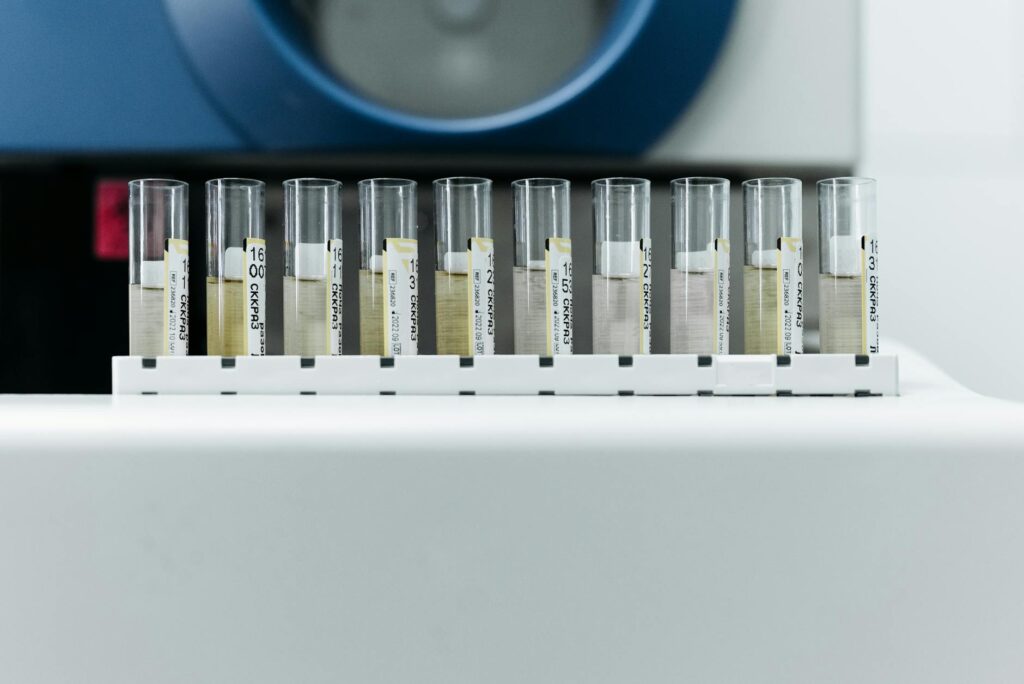
Organic acid testing can reveal important information about your gut microbiota composition and metabolic function—markers that research increasingly links to acne severity and treatment response. When your test results show reduced short-chain fatty acid production, elevated inflammatory metabolites like TMAO, or shifts in bacterial ratios (particularly lower Bacteroidetes relative to Firmicutes, or higher Streptococcus levels), these patterns suggest dysbiosis that may be contributing to skin inflammation. For example, a patient with moderate acne and elevated fecal markers indicating low butyrate production might benefit from dietary changes designed to feed beneficial bacteria—a completely different intervention than topical acne treatments alone.
This article explores what organic acid testing actually reveals about the gut-acne connection, which tests have real clinical merit, how to interpret the results, and why the link between your gut microbiota and your skin is more mechanistic than marketing hype. The relationship between your gut and your skin is mediated by specific metabolites—particularly short-chain fatty acids produced when beneficial bacteria ferment dietary fiber. These fatty acids don’t just support gut barrier function; they shape your skin’s immune response, microbial composition, and barrier integrity. Understanding what your organic acid test reveals requires knowing both what these markers legitimately indicate and what they don’t, since the functional medicine testing landscape includes some overstated claims about microbial metabolites.
Table of Contents
- How Does Organic Acid Testing Measure the Gut-Acne Connection?
- The Microbial Shifts That Drive Acne-Related Dysbiosis
- How Short-Chain Fatty Acids Directly Protect Your Skin
- Interpreting Dysbiosis Markers and Building a Treatment Strategy
- Important Limitations and Accuracy Concerns with Organic Acid Testing
- Chemical and Topical Organic Acids—A Different Application
- Moving Forward—Integrating Organic Acid Testing Into Your Acne Strategy
- Conclusion
How Does Organic Acid Testing Measure the Gut-Acne Connection?
Organic acid testing measures metabolites—the end products of bacterial fermentation and human metabolism—in urine and sometimes stool samples. The most relevant markers for the acne-gut connection are short-chain fatty acids (SCFAs), particularly butyrate, propionate, and acetate. These fatty acids are produced when beneficial bacteria like Bifidobacterium and Lactobacillus ferment soluble fiber in your colon. When your organic acid test shows low levels of these markers, it suggests reduced production capacity—a sign that either your bacterial population lacks these fiber-fermenting species, or you’re not consuming enough fiber for them to process. Research published in Frontiers in Microbiology confirms that SCFAs appear to be the key mechanism linking microbiome composition to skin health, influencing both your skin’s microbial profile and your cutaneous immune defense. The test also captures other metabolic markers relevant to skin inflammation.
Elevated trimethylamine N-oxide (TMAO), for example, has been found in elevated serum levels among acne vulgaris patients, suggesting a potential connection between dysbiosis-driven metabolite production and acne development. Similarly, markers showing impaired carbohydrate or amino acid metabolism can indicate dysbiosis patterns that correlate with the microbial shifts observed in acne patients—specifically lower Actinobacteria, higher Proteobacteria, and reduced Bacteroidetes-to-Firmicutes ratios. However, there’s an important limitation: most “microbial” markers on standard organic acid tests don’t directly measure the bacterial species themselves. The OAp Organic Acids Profile does provide genuine insights into metabolism and gut health, but it’s indirect. You’re measuring what bacteria are producing, not confirming which bacteria are present. For definitive microbial composition, a 16S rRNA stool test is more accurate than inferring species from organic acid metabolites alone.

The Microbial Shifts That Drive Acne-Related Dysbiosis
Research demonstrates that acne patients consistently show distinct gut microbiota patterns compared to healthy individuals, with measurably less microbial diversity overall. More specifically, acne patients exhibit higher abundance of Proteobacteria, lower Actinobacteria, and a decreased Bacteroidetes-to-Firmicutes ratio—alterations that associate strongly with Western diet patterns high in processed foods and low in fiber. Studies published by the NIH and Oxford Academic confirm these compositional differences exist and support a causal relationship, meaning the dysbiosis isn’t just correlated with acne; it appears to contribute to development. The clinical significance is this: when your organic acid test shows patterns consistent with dysbiosis (low SCFA markers, elevated inflammatory metabolites), you’re likely looking at a microbiota composition that skews toward these acne-associated bacterial ratios.
Even more specifically, higher Bifidobacterium levels are associated with reduced acne risk, while higher Streptococcus levels correlate with increased acne risk—and these associations remain robust even after accounting for dietary factors. This means the microbial composition itself carries predictive value beyond just diet. A patient whose organic acid test shows good butyrate and propionate production, combined with dietary analysis suggesting adequate fiber intake, is more likely harboring a favorable Bifidobacterium-dominant microbiota. However, if the same test shows low SCFA production despite adequate fiber intake, it suggests the bacterial population itself may lack sufficient fiber-fermenting capacity—requiring either probiotic support or time for the microbiota to shift in response to dietary changes. The timeline for this shift varies considerably; microbial composition can change within weeks of dietary intervention, but establishing stable new patterns typically takes months.
How Short-Chain Fatty Acids Directly Protect Your Skin
The mechanism connecting SCFAs to skin health operates through multiple pathways, all documented in recent research. Propionic acid—one of the three primary SCFAs—is directly toxic to Staphylococcus aureus and affects skin resistance to both S. aureus and Cutibacterium acnes, the bacterium most strongly implicated in acne pathogenesis. When your organic acid test shows low propionate levels, your skin loses this bacterial-suppressing benefit, leaving you more vulnerable to acne pathogen colonization. Additionally, propionate increases lipid content in skin cells, which reduces water loss through the skin and enhances barrier function—a critical factor since many acne patients have compromised skin barriers that accelerate inflammation and secondary infections. Butyrate operates somewhat differently; it strengthens your intestinal barrier by supporting tight junction integrity and feeding intestinal epithelial cells, which indirectly benefits skin by reducing the “leaky gut” condition where incompletely digested particles and bacterial toxins cross into the bloodstream.
This dual action—direct antimicrobial benefit plus barrier restoration—is why organic acid testing can reveal meaningful information about your acne trajectory. A test showing depressed SCFA production, even in the absence of specific bacterial identification, suggests you’re missing both the direct skin-protective effect and the systemic inflammatory reduction that adequate SCFA production provides. The practical example: two patients with similar acne severity might show very different organic acid profiles. Patient A has robust butyrate and propionate production, suggesting their dysbiosis is mild or their fiber intake compensates for microbial changes. Patient B shows severely depressed SCFA markers. The latter patient likely needs more aggressive dietary and possibly probiotic intervention to restore SCFA production, while the former might benefit more from targeted antimicrobial approaches or barrier repair. Testing reveals which situation each patient faces.
Interpreting Dysbiosis Markers and Building a Treatment Strategy
When your organic acid test comes back showing dysbiosis patterns—elevated inflammatory markers like TMAO, reduced SCFA production, or metabolic evidence of incomplete carbohydrate fermentation—you now have biochemical evidence to support a gut-focused intervention alongside traditional acne treatments. The strategic advantage is that you’re not guessing whether your acne has a dysbiosis component; the test results provide direction. A comprehensive approach combines organic acid testing findings with dietary analysis. If your test shows low propionate and butyrate despite reported high fiber intake, you may have inadequate fiber-fermenting bacteria, making a targeted probiotic (particularly Bifidobacterium and Lactobacillus strains) a logical addition. If the test shows low SCFA markers and your dietary history reveals minimal fiber intake, the primary intervention is dietary—increasing soluble fiber sources like oats, beans, resistant starch, and prebiotic foods that feed existing beneficial bacteria. One important distinction: some patients show normal organic acid markers but still have dysbiosis revealed by direct microbial testing.
This scenario occurs because SCFA production capacity can be preserved by alternate pathways even when microbial diversity is reduced. Conversely, some patients have abnormal organic acid markers that resolve quickly with dietary intervention, suggesting the dysbiosis was mild and metabolically reversible. The comparison matters for pacing expectations. Someone with severely abnormal organic acid patterns may need 8-12 weeks of consistent intervention before seeing acne improvement, since microbiota shifts take time and skin turnover itself requires 4-6 weeks per cycle. Someone with mild dysbiosis markers might see improvement in 4-6 weeks. Testing doesn’t predict the timeline precisely, but it does reveal the severity and suggest the likely intervention class needed.
Important Limitations and Accuracy Concerns with Organic Acid Testing
Before investing heavily in organic acid testing for acne, understand a critical limitation: most “microbial” markers on these tests do not measure what they claim to. They measure metabolite production, which infers microbial activity indirectly. For acne specifically, this limitation matters because acne-relevant dysbiosis involves specific bacterial shifts—lower Actinobacteria, higher Proteobacteria—that you cannot confirm from organic acids alone. You can infer them if the metabolic patterns align with what those bacteria would produce, but you cannot confirm them. Lucy Mailing, PhD, a prominent functional medicine researcher specializing in organic acid testing, has published detailed critiques noting that while the OAp Organic Acids Profile does provide legitimate insights into metabolism and nutrition, practitioners and patients often overinterpret individual markers or assume greater predictive specificity than the evidence supports. For acne diagnosis and monitoring, a 16S rRNA stool test directly measures bacterial composition and is more definitive than inferring bacteria from metabolites.
Additionally, the relationship between organic acid test results and acne severity is correlational in the research literature, not yet predictively validated. Research confirms that acne patients show dysbiosis, and dysbiosis involves SCFA-related changes, but the research establishing that “your organic acid test score X predicts your acne improvement Y after intervention” is still limited. Furthermore, rigorous randomized controlled trials comparing different organic acid treatment approaches for acne specifically are lacking. Most acne treatment research focuses on topical retinoids, antibiotics, hormonal therapies, or chemical peels—not gut interventions. The gut-acne research is growing, but the acne treatment literature hasn’t yet validated organic acid testing as a standard diagnostic tool the way it has for other conditions. Use organic acid testing as supporting evidence for a dysbiosis-focused intervention, but don’t rely on it as your primary acne diagnosis tool.

Chemical and Topical Organic Acids—A Different Application
It’s important not to confuse systemic organic acids (what your gut bacteria produce) with topical organic acids used in acne treatments. Glycolic acid, salicylic acid, mandelic acid, and pyruvic acid are widely used in chemical peels and acne-focused skincare, and research demonstrates significant efficacy—these treatments reduce acne lesions, post-acne hyperpigmentation, decrease sebum production, and have antibacterial and anti-inflammatory properties. Salicylic acid is particularly effective for noninflammatory lesions and comedones because it penetrates the follicle, while mandelic acid (a gentler alpha hydroxy acid) tends to work better for inflammatory lesions because it’s less irritating. However, topical organic acids operate through completely different mechanisms than the systemic SCFAs produced by your microbiota—they’re exfoliating and antimicrobial, not metabolic signaling molecules.
The distinction matters for strategy: topical organic acid peels address surface dysbiosis (excess Cutibacterium acnes on skin) and follicle obstruction, while systemic organic acids from your gut microbiota address internal inflammation and immune dysfunction. Many patients benefit from both—topical treatments for immediate lesion reduction and bacterial suppression, plus gut-focused interventions for underlying dysbiosis and lasting resilience. Someone with dysbiosis markers on their organic acid test might use salicylic acid topically while simultaneously increasing dietary fiber and introducing probiotics to restore gut SCFA production. The two approaches work on different levels and aren’t mutually exclusive; in fact, they’re complementary for many acne patients.
Moving Forward—Integrating Organic Acid Testing Into Your Acne Strategy
If you’re considering organic acid testing as part of an acne treatment plan, frame it as one data point among several. The test is most valuable when it provides confirmation of suspected dysbiosis or reveals unexpected metabolic dysfunction that might explain why standard acne treatments aren’t working. Someone with severe treatment-resistant acne, digestive symptoms suggesting dysbiosis, or a history of antibiotic use (which disrupts microbiota) is a stronger candidate for testing than someone with mild acne and no other health concerns. The test results should drive specific interventions—dietary adjustments, probiotic selection, potential antimicrobial herbs, or referral for further evaluation—rather than serving as a standalone diagnostic tool.
The research landscape is evolving. As the gut-acne connection receives more attention and more rigorous clinical trials are conducted, organic acid testing may become more predictively validated. For now, it functions best as a supporting diagnostic tool that helps confirm dysbiosis and suggests the magnitude of intervention needed. Combined with dietary analysis, symptom history, and skin assessment, organic acid testing can help shift your acne management strategy from purely topical to a more integrated approach addressing both the skin itself and the systemic factors driving inflammation.
Conclusion
Organic acid testing reveals information about your gut microbiota’s metabolic output, particularly short-chain fatty acid production, that correlates with dysbiosis patterns associated with acne. When test results show reduced SCFA production, elevated inflammatory metabolites like TMAO, or metabolic markers of dysbiosis, they provide biochemical evidence supporting a gut-focused intervention component alongside traditional acne treatments. The mechanism is documented: short-chain fatty acids, particularly propionate and butyrate, are directly antimicrobial against acne pathogens and support skin barrier function, while dysbiosis-associated bacterial shifts reduce this protective output. This makes organic acid testing a potentially useful diagnostic tool for understanding whether your acne has a significant dysbiosis component. However, approach organic acid testing with realistic expectations about its limitations.
The test measures metabolites, not microbes directly, and cannot confirm specific bacterial species—it can only infer them. The research linking organic acid testing to acne improvement is still developing, and treatment approaches based on these results lack the rigorous trial validation of established acne therapies. Use organic acid testing to confirm suspected dysbiosis, guide dietary and probiotic interventions, and monitor whether your microbiota is responding to treatment. Combine it with direct bacterial testing (16S rRNA) if you need definitive microbial identification, and integrate it into a comprehensive acne strategy that also addresses topical factors, hormonal influences, and other known acne drivers. The gut-skin axis is real, but it’s one axis among several; testing should inform strategy, not replace it.