
At $100 per month, Aczone (azelaic acid 20%) appears expensive compared to over-the-counter acne treatments, but dermatologists frequently recommend it for women with sensitive skin because it delivers results without the irritation that comes with harsher alternatives like benzoyl peroxide or retinoids. A woman with rosacea-prone, acne-prone skin might spend the same amount trying various drugstore products that either don’t work or cause redness and peeling, then end up spending more on additional products to calm inflammation—making Aczone’s consistent, gentler approach more cost-effective in practice. The prescription medication works by reducing acne-causing bacteria while minimizing the side effects that force many women with sensitive skin to abandon their treatment routines.
The reason dermatologists prioritize Aczone for this population comes down to mechanism. While benzoyl peroxide aggressively kills bacteria but often triggers dryness and irritation, and salicylic acid can compromise sensitive skin barriers, azelaic acid accomplishes acne control through multiple pathways: it reduces bacterial populations, normalizes skin shedding, and has anti-inflammatory properties that actually calm existing irritation. For women whose skin reacts badly to standard treatments—those who develop persistent redness, burning, or peeling—Aczone often succeeds where other options have failed.
Table of Contents
- Why Is Azelaic Acid the Preferred Treatment for Women With Sensitive Skin and Acne?
- How Aczone Works and What Dermatologists Say About Its Effectiveness
- Is Aczone Appropriate for Every Type of Sensitive Skin?
- Cost, Insurance, and Making the $100 Monthly Price Practical
- Common Side Effects and Temporary Challenges When Starting Aczone
- Layering Other Products and Skincare Routines With Aczone
- When to Expect Results and Long-Term Outcomes With Aczone Treatment
- Conclusion
Why Is Azelaic Acid the Preferred Treatment for Women With Sensitive Skin and Acne?
Azelaic acid has a unique profile that sets it apart in acne treatment. Unlike benzoyl peroxide, which can be bleaching and drying, or salicylic acid, which sometimes over-exfoliates delicate skin, azelaic acid addresses acne while actively reducing redness and calming inflammation. This dual action—treating the problem and reducing irritation simultaneously—makes it particularly valuable for women whose skin can’t tolerate conventional acne medications. The ingredient originated in dermatology specifically for treating rosacea, a condition marked by facial redness and sensitivity, so it was designed from the start to work on reactive, easily-irritated skin.
The scientific evidence supports this approach. Studies show that azelaic acid is effective against acne-causing bacteria (specifically *Cutibacterium acnes*) while also reducing melanin production and normalizing follicular keratinization—essentially helping skin cells shed properly without triggering inflammation. For comparison, a woman using benzoyl peroxide might see her acne clear but develop persistent dryness and facial tightness within weeks; the same woman using Aczone typically experiences gradual improvement with minimal side effects. This difference matters significantly over months of use, when minor irritation compounds into damaged skin barriers and abandoned treatments.

How Aczone Works and What Dermatologists Say About Its Effectiveness
Aczone’s formulation as a foam gel gives it another advantage for sensitive skin: the vehicle doesn’t strip moisture the way harsher creams can. The foam disperses the active ingredient across skin while minimizing occlusion, so it works without trapping heat or sweat underneath. Dermatologists note that women often see visible improvement within 4-8 weeks, though full results typically take 12 weeks—a timeline that requires patience but aligns with how skin actually turns over and heals. One limitation to understand: azelaic acid works best for inflammatory acne and is less effective for stubborn cystic lesions or severe comedonal acne, so some women benefit from combining it with other treatments rather than using it alone.
The dermatologist consensus on Aczone comes from real-world experience seeing patients tolerate it better than alternatives. In clinical studies, azelaic acid showed efficacy comparable to benzoyl peroxide and clindamycin but with fewer withdrawals due to side effects—meaning women actually stick with the treatment long enough for it to work. A key warning: azelaic acid can cause temporary mild burning or stinging in the first 1-2 weeks as skin adjusts, and some women experience darkening of treated areas if they’re predisposed to post-inflammatory hyperpigmentation (though this is less common than with harsher treatments). Starting with the lowest effective frequency—often twice daily—helps minimize this transition phase.
Is Aczone Appropriate for Every Type of Sensitive Skin?
Aczone works well for reactive, easily-irritated skin but less predictably for skin that’s sensitive due to other causes. A woman whose sensitivity stems from a compromised moisture barrier (from overuse of actives or frequent irritation) may need hydration support alongside Aczone rather than expecting the medication alone to resolve sensitivity. Conversely, women with baseline sensitivity who’ve never tolerated benzoyl peroxide or salicylic acid usually find Aczone tolerable from day one, though they should introduce it gradually rather than jumping to twice-daily application.
The demographic profile matters here. Dermatologists report that women in their 20s and 30s with mild-to-moderate inflammatory acne and rosacea-prone or easily-irritated skin see the most reliable results. Women with very oily skin sometimes feel that Aczone doesn’t cut through excessive sebum production effectively, and they may need to layer other treatments underneath. A specific example: a woman with combination skin that’s oily in the T-zone but sensitive on the cheeks can often apply Aczone only to the inflamed zones rather than across the entire face, maximizing benefit while avoiding irritation in already-balanced areas.

Cost, Insurance, and Making the $100 Monthly Price Practical
At $100 monthly without insurance, Aczone occupies the middle ground between cheap drugstore options and expensive specialty treatments. However, most insurance plans cover Aczone as a prescription medication, typically with a copay of $15-$50 per month, making it far more accessible than the sticker price suggests. Women without insurance have other options: GoodRx and similar coupon platforms often reduce the cash price to $50-$75, and some dermatology offices participate in manufacturer patient assistance programs that reduce cost further. The practical comparison reveals Aczone’s value.
Consider a woman spending $15 monthly on tretinoin (if she can tolerate it) plus $10 on a gentle moisturizer plus $8 on a calming serum to manage irritation—she’s already at $33 and still not addressing acne with the same efficacy as Aczone alone. Another woman might buy three different over-the-counter products ($30-$50 total) that don’t work, cycling through them every few weeks. By contrast, $100 out-of-pocket for proven effectiveness, or $15-$50 with insurance, becomes competitive once you factor in reduced trial-and-error spending. The limitation: full results take 12+ weeks, so commitment and patience are required before deciding it’s worth the ongoing cost.
Common Side Effects and Temporary Challenges When Starting Aczone
The most frequent complaint during the first 1-2 weeks is mild stinging or burning, particularly if skin is already irritated from other products. Many women interpret this as the medication “not being for them” and stop using it, when in fact the sensation typically resolves as skin acclimates. Starting with once-daily application in the evening, allowing two weeks before adding a morning dose, significantly reduces the likelihood of experiencing bothersome irritation. A critical warning: azelaic acid can rarely cause exacerbation of acne in the very short term (the “purge” effect seen with other acne treatments), though this usually resolves within 4 weeks.
Less common but worth knowing: some women report mild dryness or peeling, though this is significantly less severe than side effects from benzoyl peroxide. A few users notice slight yellowing or staining of light fabrics if the foam transfers during sleep—this is typically avoidable by allowing the medication to dry completely (5-10 minutes) before contact with bedding. Some women with deep skin tones have reported temporary hyperpigmentation after using azelaic acid, though the risk is lower than with many acne treatments and typically resolves after discontinuation. If any of these side effects develop, communicating with a dermatologist about adjusting frequency or adding complementary products (like a nourishing night cream) usually resolves the issue.
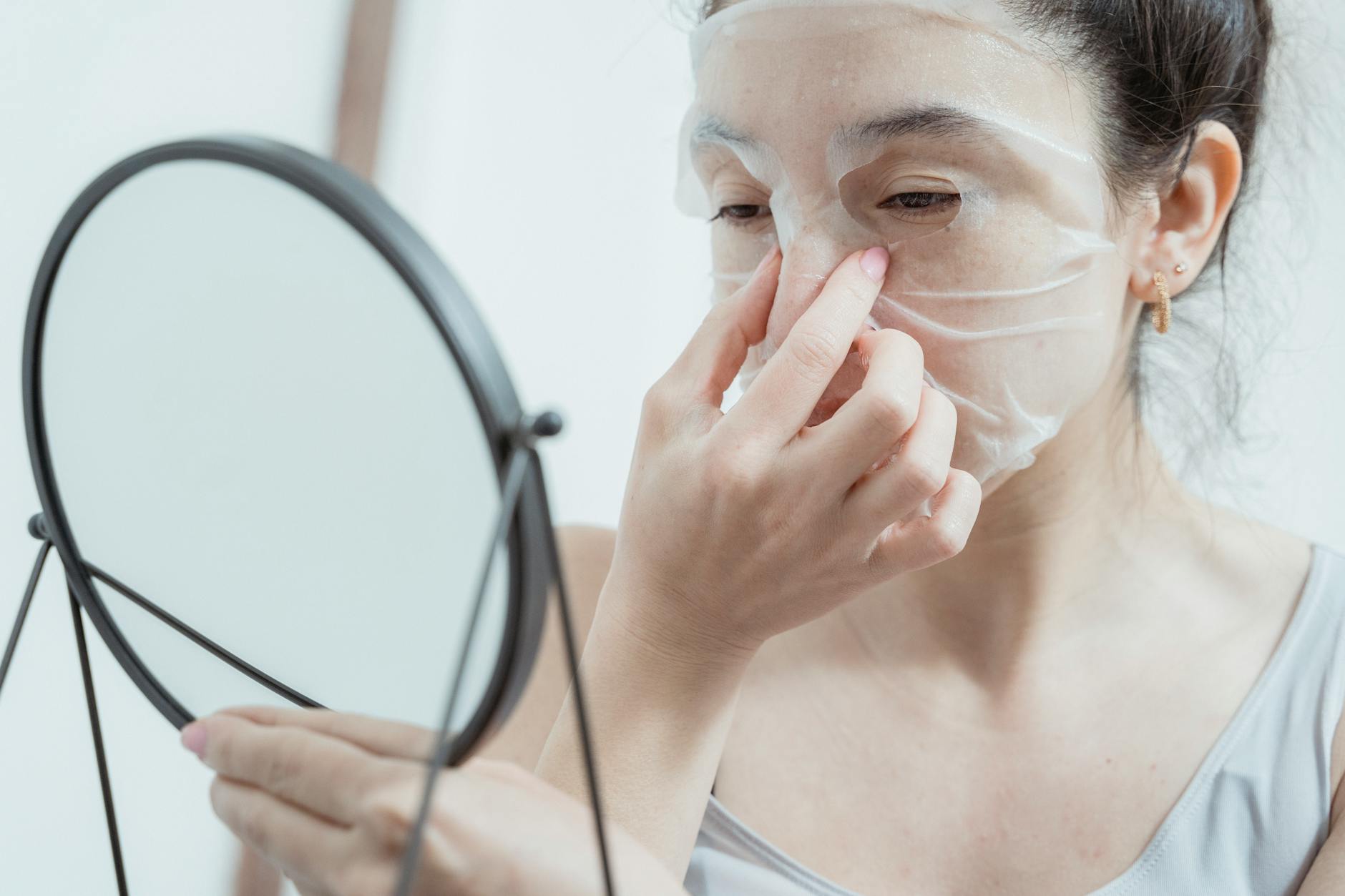
Layering Other Products and Skincare Routines With Aczone
Because Aczone is relatively gentle, it layers well with supportive products that sensitive skin requires. Most dermatologists recommend a basic routine: a non-stripping cleanser, Aczone applied to clean skin, and a gentle moisturizer layered on top once Aczone dries. Adding a broad-spectrum SPF 30+ daily is non-negotiable because azelaic acid can increase sun sensitivity slightly, and unprotected sun exposure can negate treatment progress.
Some women successfully add a hydrating serum or niacinamide product between moisturizer and SPF without irritation, though restraint is important—the goal is supporting Aczone’s function, not over-layering actives. One specific example of successful layering: a woman with rosacea and acne might use Aczone twice daily, add a calming ceramide-based moisturizer, incorporate weekly gentle hydrating masks, and use a niacinamide toner in the morning—this combination addresses sensitivity, maintains barrier function, and allows Aczone to work optimally. A mistake to avoid: combining Aczone with other prescription-strength acne treatments (like tretinoin or oral antibiotics) should only happen under dermatologist guidance, even though Aczone is gentle, because the cumulative effect may be unpredictable.
When to Expect Results and Long-Term Outcomes With Aczone Treatment
Most dermatologists counsel that visible improvement appears around week 4-6, with more dramatic results by week 8-12. This timeline requires patience in an era when many acne treatments promise faster results, but the slower timeline is partly why Aczone causes fewer side effects and doesn’t compromise skin barrier function. Many women who achieve clear skin on Aczone maintain it through long-term use—staying on the medication indefinitely rather than cycling off, which prevents acne recurrence.
The forward-looking insight: as more dermatologists recognize the connection between barrier health and treatment adherence, medications like Aczone that work gently are gaining favor over harsher approaches, even though they may take slightly longer to show results. For women considering stopping treatment after achieving clear skin, it’s important to know that acne typically returns once medication stops, so maintenance therapy is usually necessary. Some dermatologists recommend tapering to once-daily use for maintenance rather than twice daily, which reduces cost and product use while keeping acne suppressed. Long-term safety data supports extended use of azelaic acid—it’s not a medication with declining efficacy or increasing side effects over months or years of continuous use.
Conclusion
The $100 monthly price of Aczone reflects both the medication’s effectiveness and the value of avoiding the irritation and skin damage that often accompany conventional acne treatments. For women with sensitive skin, the real cost-benefit analysis includes avoiding failed experiments with harsher medications, preventing worsened skin barriers, and achieving lasting results without constant side effect management. Dermatologists recommend Aczone in this population not because it’s the cheapest option, but because it’s the option most likely to work without making skin worse in the process.
If you have sensitive skin and acne that hasn’t responded well to over-the-counter treatments or proved too irritating for prescription alternatives, a conversation with a dermatologist about Aczone is worthwhile. Ask about starting low (once daily) to minimize adjustment side effects, confirm your insurance coverage or seek discount programs if paying out-of-pocket, and commit to the 12-week timeline before deciding whether it’s effective. This approach converts the $100 monthly investment into a logical choice rather than just another expensive acne product.
You Might Also Like
- She Had a $50,000 Wedding and Spent $8,000 on Pre-Wedding Skin Treatments to Clear Her Acne
- At Least 49% of Teens With Moderate-to-Severe Acne Report Being Bullied or Teased About Their Skin
- Oral Isotretinoin Shrinks Sebaceous Glands by Up to 90%…The Only Treatment That Addresses All Four Causes of Acne